
Key takeaways
- Formal hedge shaping needs a steady hand and a long, even cutting edge. Compare seven long reach trimmers that hold a straight line across flat tops and faces.
As an Amazon Associate I earn from qualifying purchases. This post may contain affiliate links at no extra cost to you.
Our top picks at a glance
3 products from this guide, in the order reviewed below.


As an Amazon Associate we earn from qualifying purchases. Prices and availability can change.
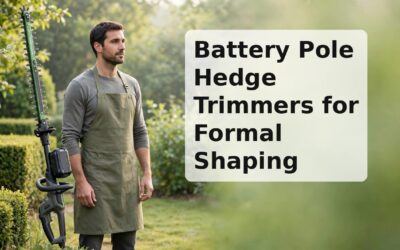
Formal hedges are judged by their lines. A flat top, straight sides, and crisp corners are the whole point, and any wave or dip in the surface shows at once. That makes formal shaping the most demanding kind of hedge work: the blade has to stay level across a long run, the cut has to be even from one end to the other, and the top of the hedge has to be reached without a ladder. The best long reach hedge trimmers for formal hedge shaping give the operator the reach to cover the top from the ground and the blade length to hold a straight line across a wide face.
The tools for this work are different from the tools for rough cutting. A long blade matters more than raw power, because a long blade bridges small dips and leaves a flatter surface. An articulating head matters, because the blade has to lie flat on the top and stand vertical on the face, and the angle has to change without twisting the shaft. Weight matters too, because a steady hand needs a tool that does not shake, and a heavy pole held overhead for a long pass will wander. The models in this guide were chosen for length, balance, and control rather than for brute cutting force.
This guide compares seven long reach models drawn from battery, corded, and gas lines. Four are pole or shafted models that lift the blade to the top of a formal hedge, and three are long-blade handheld models that hold a straight line across a wide face. Every specification comes from a maker or retailer page, and the guide notes where two sources disagree on a figure.
Quick verdict
For formal shaping, the DeWALT DCPH820M1 is the pick that balances reach, control, and price: a 22-inch pole blade, a 7-position articulating head, and a bare weight of 7.9 pounds. If the hedge is very tall, the Husqvarna 525HE4 reaches up to thirteen feet with a 24-inch blade and a cutting thickness of 30 mm. For the longest handheld blade in this guide, the Makita EH7500W stretches to 29.5 inches and holds a straight line across a wide formal face, while the ECHO HCS-2810 gives a 28-inch single-sided blade with a debris shield for long, even passes.
| product | key spec | best for |
|---|---|---|
| — | — | — |
| DeWALT 20V MAX 22-Inch Pole Hedge Trimmer DCPH820M1 | 22 in blade, 20V, 12 ft reach | best all-round pick for formal shaping |
| Ryobi 40V 18-Inch Pole Hedge Trimmer RY40603BTL | 18 in blade, 40V, 8 ft reach | light pole pick for smaller formal hedges |
| Earthwise CVPH43018 2-in-1 Convertible Pole Hedge Trimmer | 18 in blade, 2.8 amp, converts handheld/pole | converts between pole and handheld work |
| ECHO SHC-2620 | 21 in blade, 25.4 cc, 51 in shaft | gas power for long formal runs |
| Husqvarna 525HE4 | 24 in blade, 25.4 cc, 13 ft reach | tallest reach for high formal hedges |
| ECHO HCS-2810 | 28 in blade, 21.2 cc, 10.2 lb | long single-sided blade for flat faces |
| Makita EH7500W | 29.5 in blade, 22.2 cc, 11.4 lb | longest handheld blade for wide faces |
How we chose
Formal shaping rewards a long, straight blade and a steady hand, so we looked for models with blades of 18 inches or more and with heads that adjust to meet the hedge at the right angle. An articulating or pivoting head lets the blade lie flat on the top of the hedge, which is the hardest cut to get right, and it lets the blade stand vertical on the face without twisting the shaft. Pole models earn their place because they reach the top of a formal hedge from the ground, and long-blade handheld models earn theirs because a long blade leaves a flatter surface in fewer passes.
Weight and balance matter more here than in rough cutting, because a formal cut is made slowly and carefully, with the blade held level for a long time. A tool that pulls forward or shakes will leave a wavy line, and no amount of going back over the hedge will fully fix it. The guide notes the weight of each model and favours tools that balance well over the handle. Every specification comes from a maker or retailer page, and the guide notes where sources disagree.
DeWALT 20V MAX 22-Inch Pole Hedge Trimmer DCPH820M1
- Blade length: 22 inches
- Battery system: 20V MAX
- Motor: brushed
- Pole length: 7 feet, up to 12 feet reach
- Weight: 7.9 lb bare
- Cutting capacity: 1 inch
- Blade action: dual-action blades
- Blade speed: 2800 strokes per minute
- Head: 7-position, 180-degree articulating head
The DCPH820M1 leads this guide because its articulating head is the most flexible in this group, with seven positions across 180 degrees, and that flexibility is what formal shaping demands. The blade can lie flat on the top of the hedge, stand vertical against the face, or meet the shrub at any angle in between, all while the pole stays in a comfortable position. The 22-inch blade is long enough to leave a flat surface in a single pass, and the cutting capacity of 1 inch handles the stems on a mature formal hedge. At 7.9 pounds bare, it is the lightest pole model in this guide, and that light weight keeps the blade steady during a long, careful pass. The motor is brushed rather than brushless, so it is less efficient than the brushless models elsewhere, but the 20V MAX battery is shared with a huge range of DeWALT tools. For a formal hedge that needs its top levelled and its corners crisp, the DCPH820M1 gives the reach and the angles to do the job from the ground.
Pros: 7-position articulating head, lightest pole model here, good cutting capacity.
Cons: brushed motor rather than brushless, battery adds weight and may be sold separately.
Ryobi 40V 18-Inch Pole Hedge Trimmer RY40603BTL
- Blade length: 18 inches
- Battery system: 40V lithium-ion
- Pole length: extends to 8 feet
- Weight: 11.48 lb assembled
- Cutting capacity: 5/8 inch
- Blade action: dual-action blades
- Head: pivoting head
- Sold as: tool only
The RY40603BTL is the compact pole pick for smaller formal hedges, where an 18-inch blade is enough to shape the top and the faces without overreaching. Its pole extends to eight feet, which covers most garden formal hedges, and its pivoting head lets the blade meet the hedge at an angle. The cutting capacity of 5/8 inch suits the soft growth of a well-kept formal hedge, which is trimmed often and rarely grows woody. At 11.48 pounds assembled, it is heavier than the DeWALT, and that weight is worth noting, since a heavy pole is harder to hold steady during a long formal pass. The tool-only listing means the battery and charger are sold separately, so a buyer already on the Ryobi 40V platform will get the most from this model. For a small formal hedge that needs a light touch rather than brute power, the RY40603BTL gives enough reach at a fair size.
Pros: compact 18-inch pole blade, pivoting head, shares 40V batteries.
Cons: heavy at 11.48 lb assembled, sold as tool only.
Earthwise CVPH43018 2-in-1 Convertible Pole Hedge Trimmer
- Blade length: 18 inches
- Motor: 2.8 amp corded per Northern Tool, other pages list 4.5 amp
- Weight: 9.7 lb
- Cutting capacity: 3/4 inch
- Blade action: dual-action blades
- Head: 6-position adjustable head, telescoping pole
- Converts: handheld and pole use
The CVPH43018 is the most flexible tool in this guide, because it converts between a handheld trimmer and a pole trimmer, so one tool can shape the faces of a formal hedge by hand and then extend to level the top. The 6-position adjustable head lets the blade meet the hedge at the right angle in either mode, and the telescoping pole adjusts to the height of the hedge. One figure needs stating plainly: Northern Tool lists the motor as 2.8 amp, while other pages list 4.5 amp, and this guide does not choose between them, since the maker page did not settle the question. The cutting capacity of 3/4 inch handles the stems on a well-kept formal hedge, and the dual-action blades leave a clean edge. At 9.7 pounds it is a heavy tool for handheld work, and the cord needs managing around the hedge, but for a gardener who wants one tool for both the faces and the top, the CVPH43018 is the only convertible pick in this guide.
Pros: converts between handheld and pole use, 6-position adjustable head, good cutting capacity.
Cons: sources disagree on the motor rating, heavy for handheld work.
ECHO SHC-2620
- Blade length: 21 inches
- Engine: 25.4 cc gas
- Weight: 13.2 lb
- Shaft: 51 inches
- Blade action: double-sided, double-reciprocating blades
- Cutting capacity: not stated by maker
The SHC-2620 is the gas shafted pick for long formal hedges that need steady power over a full session. Its 25.4 cc engine drives a 21-inch double-sided blade through a 51-inch shaft, which gives enough reach for the top of a tall formal hedge and the torque to keep the blade moving through dense growth. The double-reciprocating blades cut cleanly on both strokes, which leaves an even finish on a formal face, and the gas engine never fades or needs charging, so a long hedge can be shaped in a single session. At 13.2 pounds it is the heaviest tool in this guide, and holding it overhead for a long formal pass takes strength and a steady stance. The maker does not state a cutting capacity, so the guide does not invent one. For a long, tall formal hedge that needs gas power and reach, the SHC-2620 has the stamina to finish the job.
Pros: steady gas power, long 51-inch shaft, double-sided blades.
Cons: heaviest tool in this guide, maker does not state cutting capacity.
Husqvarna 525HE4
- Blade length: 24 inches (600 mm cutting length)
- Engine: 25.4 cc gas
- Weight: 13.9 lb
- Reach: up to 13 feet
- Cutting capacity: maximum cutting thickness 30 mm
- Blade action: double-sided, dual-action blades
- Type: pole and shafted model
The 525HE4 reaches further than any other model in this guide, up to thirteen feet, which makes it the pick for very tall formal hedges that no other tool can top from the ground. Its 24-inch blade and 25.4 cc engine give it the length and the torque to shape a high hedge cleanly, and its cutting thickness of 30 mm handles the woody stems that grow on older formal hedges. The double-sided, dual-action blades cut on both strokes and leave an even finish, which matters when the blade is working far above the operator and each pass has to count. At 13.9 pounds it is the heaviest tool here, and it needs a strong, steady grip and frequent breaks, but for a formal hedge that towers over the garden, the 525HE4 is the only model in this guide that can reach the top and shape it properly from the ground.
Pros: longest reach in this guide at 13 feet, strong engine, wide cutting thickness.
Cons: heaviest tool in this guide, gas engine needs fuel and maintenance.
ECHO HCS-2810
- Blade length: 28 inches
- Engine: 21.2 cc gas
- Weight: 10.2 lb
- Blade action: single-sided, double-reciprocating blade
- Shield: full-length debris shield
The HCS-2810 is the long single-sided pick for formal faces, with a 28-inch blade that holds a straight line across a wide stretch of hedge in a single pass. That length is what formal shaping needs, since a long blade bridges small dips and leaves a flatter surface than a short blade can. The single-sided, double-reciprocating blade cuts cleanly in one direction, which suits long, straight runs along the face of a formal hedge, and the full-length debris shield keeps cuttings from flying back toward the operator. At 10.2 pounds it is the lightest of the long-blade gas models here, and the 21.2 cc engine is enough for the soft and semi-woody growth of a well-kept formal hedge. The single-sided blade is less suited to rounding and fine shaping than a double-sided one, so this model earns its place on long, flat faces rather than on curved topiary.
Pros: 28-inch blade for straight faces, debris shield, lightest long-blade gas model here.
Cons: single-sided blade, less suited to fine shaping.
Makita EH7500W
- Blade length: 29.5 inches (750 mm)
- Engine: 22.2 cc gas
- Weight: 11.4 lb
- Cutting capacity: maximum branch diameter 21.5 mm
- Blade action: double-sided blade
The EH7500W carries the longest handheld blade in this guide, at 29.5 inches, and that length makes it the best handheld pick for a wide formal face. A blade of this length covers a huge stretch in each pass, and it stays flat across small dips, which leaves a straighter line than a shorter blade can. The double-sided blade cuts on both edges, which suits shaping work where the blade moves back and forth, and the cutting capacity of 21.5 mm handles the stems on a mature formal hedge. At 11.4 pounds it is a heavy handheld tool, and the long blade needs a firm two-handed grip and a steady stance to keep it level. The 22.2 cc engine is strong enough for woody growth, and the balance is good for a blade of this length. For a wide formal hedge that needs a straight, even face, the EH7500W gives the longest reach of any handheld model here.
Pros: longest handheld blade in this guide, double-sided blade, good cutting capacity.
Cons: heavy for a handheld model, long blade needs a firm grip.
Buying guide
Start with the height of the hedge. A formal hedge that stands under eight feet can be shaped with a long-blade handheld model held overhead, but anything taller needs a pole or shafted model that reaches the top from the ground. The Husqvarna 525HE4 reaches furthest at thirteen feet, while the DeWALT DCPH820M1 reaches up to twelve feet, and both let the operator shape the top without a ladder. Working from a ladder with a running trimmer is risky and leaves a wavy line, since the operator cannot step back to judge the cut, so a pole model is worth its weight for any hedge over eight feet tall.
Blade length decides the flatness of the finish. A long blade bridges small dips and leaves a straighter line, while a short blade follows every bump and leaves a wavy surface. For a formal hedge, choose the longest blade you can control: 22 to 24 inches on a pole model, and 28 to 30 inches on a handheld model for a wide face. The trade is control, since a long blade is harder to keep level, and a heavy blade will wander if the arms tire. Practice the pass on a less visible stretch first, and keep the blade moving steadily rather than stopping and starting, which leaves marks.
An articulating or adjustable head is worth seeking out for formal work, because the top and the face of the hedge need the blade at different angles. A head that pivots through several positions lets the blade lie flat on the top and stand vertical on the face without twisting the shaft, and that keeps the cut even. The DeWALT DCPH820M1 offers seven positions across 180 degrees, which is the most flexible head in this guide, while the Earthwise CVPH43018 offers six positions and the Ryobi RY40603BTL offers a pivoting head. A fixed head can still shape a formal hedge, but it asks more of the operator's wrists and shoulders.
Weight and balance decide whether the line stays straight. A pole trimmer held overhead for a long pass will wander if it is too heavy, so look for the lightest model that still has the reach and the blade length the hedge needs. Battery pole models are lighter than gas shafted models, and the DeWALT at 7.9 pounds bare is the lightest pole pick here, while the gas models run from thirteen pounds and up. Take breaks often, and work in short passes, checking the line from a few steps back after each pass. A string line stretched along the hedge is a simple aid: run it at the height you want, and trim to it, and the top will come out level.
A few habits make formal shaping easier. Trim on a calm, overcast day, when the light is even and the cuttings do not dry out in the sun. Work from the bottom up on the faces, so the cuttings fall clear, then level the top last, moving steadily along the hedge. Step back often to judge the line, since a hedge that looks straight from close up can show a wave from a few steps away. Keep the blades clean and sharp, since a dull blade tears leaves and leaves a ragged edge that shows at once on a formal hedge. With a long blade, a steady hand, and a habit of stepping back to look, a formal hedge can be kept crisp and level all season.
FAQ
What makes a hedge trimmer good for formal shaping?
A long blade, an adjustable head, and good balance. A long blade leaves a flatter surface, because it bridges small dips instead of following them. An adjustable head lets the blade lie flat on the top and stand vertical on the face. Good balance keeps the blade steady during a long, careful pass, so the line stays straight. Cutting power matters less than control, since formal hedges are trimmed often and the growth is soft.
How do I get a flat top on a formal hedge?
Use a pole trimmer with an articulating head, set the blade flat, and move steadily along the hedge in a single pass. A string line stretched at the height you want is a simple guide: trim to the line, and the top will come out level. Work from the ground, not a ladder, so you can step back and judge the line. Take light passes and check the result from a few steps away before going back over any high spots.
Is a pole trimmer or a long-blade handheld better for formal hedges?
It depends on the height of the hedge. A pole trimmer is better for hedges over eight feet tall, since it reaches the top from the ground. A long-blade handheld model is better for wide, low formal hedges, since a 28 to 30-inch blade covers a broad face in a single pass and leaves a very flat finish. Many gardeners use both: a pole model for the top and a long-blade handheld for the faces.
How often should a formal hedge be trimmed?
Most formal hedges need trimming two or three times during the growing season, with a shaping cut in late spring and another in midsummer. Fast-growing hedges like privet may need a third cut in early autumn. Trimming little and often keeps the lines crisp and the growth dense, and it stops the hedge from growing out of shape. Avoid heavy cutting in late autumn, when soft new growth may not harden before cold weather.
Can a single-sided blade shape a formal hedge?
Yes, for long, straight faces. A single-sided blade cuts in one direction and leaves a flat, even surface on a straight run, which is exactly what a formal face needs. It is less suited to rounding and fine shaping, where a double-sided blade, which cuts on both edges, is more flexible. The ECHO HCS-2810 in this guide uses a single-sided blade and suits long, flat faces, while the double-sided models suit shaping work and corners.
Conclusion
Formal hedge shaping is a test of steadiness, and the seven models in this guide pass it in different ways. The DeWALT DCPH820M1 is the best all-round pick, with a 7-position articulating head, a 22-inch blade, and the lightest pole body in this guide. The Husqvarna 525HE4 reaches furthest at thirteen feet for the tallest formal hedges, while the ECHO SHC-2620 brings steady gas power to long formal runs. The Earthwise CVPH43018 converts between handheld and pole work for gardeners who want one tool for both, and the long-blade handheld models, the ECHO HCS-2810 and the Makita EH7500W, hold a straight line across wide formal faces.
Measure the hedge first, choose a tool that reaches its top from the ground, and pick the longest blade you can hold steady. A trimmer with enough reach, a flat-lying blade, and a steady balance will keep a formal hedge crisp, level, and sharp all season long.
Related guides
More from Amazon
Programs that pair well with the guide above. Offers and eligibility are set by Amazon and may change.
Collect the home and kitchen items you want in one registry that guests can shop from.
Create a wedding registrySet up recurring deliveries of everyday items on eligible products. Terms and savings are set by Amazon.
Explore Subscribe & SaveFree shipping on eligible items, Prime Video and more. Eligible new members can start with a free trial.
Start a Prime free trialAudiobooks and podcasts to listen to on the go. Eligible new members can start with a free trial.
Try Audible freeAs an Amazon Associate we earn from qualifying purchases.
More ways to save on your garden
Programs that pair well with the guide above. Offers and eligibility are set by Amazon and may change.
Fast, free shipping on eligible items, plus Prime Video and more. Eligible new members can start with a free trial.
Start a Prime free trialSet up recurring deliveries of everyday items on eligible products. Terms and savings are set by Amazon.
Explore Subscribe & SaveRead from a huge library of eBooks, including how-to guides and cookbooks. Eligible new members can start with a free trial.
Try Kindle UnlimitedAudiobooks and podcasts for the commute, the garage or the kitchen. Eligible new members can start with a free trial.
Try Audible freeAs an Amazon Associate we earn from qualifying purchases. Using these links costs you nothing extra.



Write Your Review
No reviews yet. Be the first to share your experience!