
Key takeaways
- Compare the best long handled gardening tools for first time gardeners, with easy weeders, extendable handles, and tools that save bending and strain at home.
What's inside
As an Amazon Associate I earn from qualifying purchases. This post may contain affiliate links at no extra cost to you.
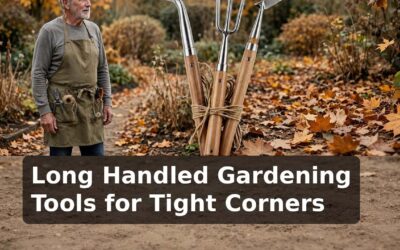
A first garden is exciting, but it can also be tiring. New gardeners often buy short hand tools, bend low to use them, and finish the first session with an aching back and sore knees. Long handled tools change that. They let the gardener stand upright, reach across a bed without stepping into the soil, and work with the legs rather than the lower back. The best long handled gardening tools for first time gardeners are built for that easy start. They are light, simple to use, and forgiving of the mistakes every new gardener makes, like gripping too hard, digging too deep, or weeding too close to the plant.
First-time gardeners need tools that do the basic jobs well without demanding skill. Weeding, digging, loosening, trimming, and levelling cover most of the first season, and a good set handles those jobs with tools that are easy to hold, easy to control, and easy to store. The seven tools in this guide each answer that need in a different way: a stand-up weeder that pulls weeds without bending, extendable tools that change length to suit the job, telescopic shears that reach high hedges, a digging shovel for planting holes, a spade with a cushioned grip, and a wide rake for levelling. All seven are real tools with specifications from the product pages, and the comparison below lines them up so the right first kit is easy to spot.
Quick verdict
For most first-time gardeners, the Fiskars 4-Claw Stand-Up Weeder is the best place to start. Its four serrated claws grip weeds, its foot platform drives the claws in, and the easy-slide ejection drops the weed without bending down. Gardeners who want tools that change length should look at the Corona GT3060 Extendable Cultivator and the Corona GT3070 Extendable Trowel, which telescope from 18 to 32 in to suit the job. The Tabor Tools Telescopic Hedge Shears reach high hedges, the Fiskars Long Handle Digging Shovel opens planting holes, the Spear Head Spade suits digging with a cushioned grip, and the Structron 36 in Head Rake levels beds and clears debris.
| Product | Key spec | Best for |
|---|---|---|
| Fiskars 4-Claw Stand-Up Weeder | 4 serrated claws; 39 in; 3.8 lb | Weeding without bending |
| Corona GT3060 Extendable Cultivator | 3 steel tines; 18 to 32 in; 1.4 lb | Loosening soil, adjustable length |
| Corona GT3070 Extendable Trowel | Telescopes 18 to 32 in; 1.2 lb | Planting holes, adjustable length |
| Tabor Tools Telescopic Hedge Shears | Extends 25 to 33 in; 3 lb | Trimming hedges, reaching high |
| Fiskars Long Handle Digging Shovel | 57.5 in; all-steel; 6.3 lb | Digging holes, general digging |
| Spear Head Spade Reinforced Fiberglass with Cushioned D-Grip | 41 in; 3.6 lb; cushioned D-grip | Comfortable digging, lighter work |
| Structron 36 in Head Rake | 66.5 in; 36 in head; 4.4 lb | Levelling beds, clearing debris |
How we chose
We picked tools that suit a new gardener: light enough to use all afternoon, simple enough to use without instruction, and forgiving of the common mistakes of a first season. The product pages list lengths, weights, handle types, and head materials for each tool, and tools with features that save bending rank higher, like a stand-up weeder with a foot platform and extendable handles that change length. We also weighed how each tool handles the jobs a first garden needs most: weeding, digging, loosening, trimming, and levelling. Tools with clear, simple designs scored well, since a new gardener should spend time gardening, not learning a complex tool.
Fiskars 4-Claw Stand-Up Weeder
- 4 serrated stainless-steel claws
- Aluminum shaft
- 39 in long
- 3.8 lb
- Foot platform; easy-slide weed ejection
The Fiskars 4-Claw Stand-Up Weeder leads this guide because it solves the hardest job for a new gardener: weeding without bending. The gardener stands upright, places the four serrated claws over the weed, steps on the foot platform to drive them in, and pulls the handle to lift the weed with its roots. The easy-slide ejection drops the weed into a bucket without the gardener touching it. At 39 in long and 3.8 lb it is light enough for a long session, and the aluminum shaft keeps the weight down. It suits gardeners with lawns or beds full of tap-rooted weeds, and it suits anyone whose back or knees make bending hard. For a first garden, it is the tool that makes the biggest difference to comfort.
Pros: Weeds without bending; foot platform drives claws in; easy-slide ejection drops weeds cleanly.
Cons: A weeder only, so digging and loosening need other tools.
Corona GT3060 Extendable Cultivator
- 3 heavy-duty angled steel tines
- Extendable aluminum handle 18 to 32 in, twist-lock
- 1.4 lb
- Non-slip foam comfort grip
- Loosens soil at any length
The Corona GT3060 Extendable Cultivator is the adjustable tool for a first garden. Its three heavy-duty angled steel tines loosen soil, break crust, and mix compost into the top layer, and the aluminum handle extends from 18 to 32 in with a twist-lock, so the gardener can work close in a pot or reach across a bed without changing tools. At 1.4 lb it is the lightest tool in this guide, and the non-slip foam comfort grip stays comfortable even when the hands are damp. It suits new gardeners who are still learning how long a handle should be, since the length changes with the job. It also suits small gardens with mixed spaces, since one tool covers pots, borders, and beds.
Pros: Handle extends 18 to 32 in; light at 1.4 lb; foam grip stays comfortable in damp hands.
Cons: Three tines suit loosening, not digging deep holes.
Corona GT3070 Extendable Trowel
- Telescopes 18 to 32 in
- 1.2 lb
- Rustproof die-cast aluminum head
- Soft non-slip textured foam grip
- Digs planting holes at any length
The Corona GT3070 Extendable Trowel pairs with the cultivator as the adjustable planting tool. It telescopes from 18 to 32 in, so the gardener can dig planting holes close in a pot or reach across a bed, and the rustproof die-cast aluminum head resists the damp conditions of a new garden. At 1.2 lb it is the lightest tool in this guide, and the soft non-slip textured foam grip keeps the hand comfortable during long planting sessions. It suits new gardeners who plant seedlings and bulbs, since the trowel digs a clean hole and the adjustable length means the gardener can work standing or kneeling. It also suits gardeners who store tools in a small shed, since the telescoping handle packs down short.
Pros: Handle telescopes 18 to 32 in; rustproof aluminum head; light at 1.2 lb.
Cons: A trowel digs holes but cannot loosen wide areas, so a cultivator is still needed.
Tabor Tools Telescopic Hedge Shears

- Extends 25 to 33 in
- 3 lb
- 9 in wavy high-carbon steel blades
- Shock-absorbing bumpers
- Ergonomic non-slip grips
The Tabor Tools Telescopic Hedge Shears bring trimming within reach for a first-time gardener. The handles extend from 25 to 33 in, so the gardener can trim a low hedge close in or reach the top of a taller hedge without a step stool. The 9-in wavy high-carbon steel blades cut cleanly through stems, and the shock-absorbing bumpers soften the jolt when the blades close. At 3 lb the shears are light enough for a long trimming session, and the ergonomic non-slip grips stay comfortable even when the hands are damp. They suit gardeners with hedges or shrubs that need shaping, and they suit anyone who wants to trim without climbing. The telescoping handles also pack down short for storage in a small shed.
Pros: Handles extend to reach high hedges; wavy blades cut cleanly; bumpers soften the closing jolt.
Cons: Shears trim hedges only, so other tools are needed for digging and weeding.
Fiskars Long Handle Digging Shovel
- 57.5 in long
- 6.3 lb
- Hardened steel shaft
- All-steel construction
- Digs planting holes and general holes
The Fiskars Long Handle Digging Shovel is the digging tool for a first garden. At 57.5 in long it is the longest tool in this guide, which lets the gardener stand upright and put weight on the blade, and the all-steel construction means there is no joint to bend or break. The hardened steel shaft adds strength where the handle meets the blade, which matters when the soil is firm. It suits gardeners who dig planting holes for shrubs and trees, who turn beds, or who move soil. At 6.3 lb it is the heaviest tool in this guide, so it suits gardeners who want a strong shovel for the hardest jobs, and it rewards a good stance: stand tall, step on the blade, and lever with the legs.
Pros: Longest handle in this guide; all-steel build will not bend; hardened shaft adds strength.
Cons: At 6.3 lb it is the heaviest tool here, so long sessions need breaks.
Spear Head Spade Reinforced Fiberglass with Cushioned D-Grip

- 41 in long
- 3.6 lb
- Reinforced fiberglass handle
- Cushioned D-grip
- Patented spade design
The Spear Head Spade is the comfortable digging tool for a first garden. Its reinforced fiberglass handle keeps the weight down to 3.6 lb, and the cushioned D-grip softens the pressure on the palm when the spade is pushed into the ground. At 41 in long it suits gardeners who prefer a shorter tool for close work, and the patented spade design cuts cleanly into soil. It suits new gardeners who dig planting holes for flowers and vegetables, who work in raised beds, or who want a spade that is easy to hold for a long session. The fiberglass handle resists damp conditions, which suits tools stored in a wet shed, and the cushioned grip makes the first season far more comfortable.
Pros: Cushioned D-grip softens pressure; fiberglass handle stays light; patented design cuts cleanly.
Cons: Shorter than the long shovel, so it suits close work best.
Structron 36 in Head Rake
- 66.5 in long
- 4.4 lb
- 36 in landscaping rake head
- Long lightweight handle
- Levels beds and clears debris
The Structron 36 in Head Rake is the levelling tool for a first garden. Its 36-in wide head spreads soil, levels beds, and clears debris in a few passes, and the 66.5-in long lightweight handle lets the gardener stand upright while working. At 4.4 lb it is light enough for a long session, and the wide head covers a large area quickly, which suits new gardeners who want to see progress fast. It suits gardeners who prepare beds for sowing, who clear leaves and stones, or who level soil after digging. The rake also suits paths and lawns, since the wide head moves material efficiently. It is a simple tool, but for a first garden it is the one that makes the ground look finished.
Pros: Wide 36-in head levels fast; long handle suits standing work; light enough for long sessions.
Cons: A rake levels and clears but cannot dig or turn soil, so it needs a fork or spade alongside.
Buying guide
Start with the jobs the first garden needs. Write down the list: weeding, digging, loosening, trimming, and levelling cover most of the first season. Then match the tools to that list. A gardener with a lawn and a few beds needs a weeder, a trowel, and a rake. A gardener with hedges needs shears as well. A gardener with vegetables needs a cultivator and a spade. The set should cover the jobs on the list without extra tools that never get used, since unused tools add weight and clutter.
Handle length is the first thing to check. Long handles let the gardener stand upright and work with the legs, which saves the back. A handle of 39 in or longer suits standing work, while a shorter handle suits close work in pots and raised beds. Extendable handles, like the Corona tools in this guide, offer the best of both: short for close work, long for reaching across a bed. When comparing tools, hold the handle length in mind: a long handle is worth more than a fancy head for a new gardener.
Weight is the next thing to weigh. A first garden asks for long sessions, and a light tool reduces the effort on every stroke. Tools under 2 lb suit fine work like planting and loosening, while tools of 3 to 4 lb suit general digging and weeding. A shovel at 6.3 lb suits short bursts of hard digging, but it will tire a new gardener fast if used all afternoon. The best first kit mixes light and medium tools, so the gardener can switch as the work changes.
Grip comfort matters more than most new gardeners expect. The hands do the guiding, and a grip that cushions the palm or stays non-slip in damp conditions will feel better by the end of the day than a hard handle. Foam grips soften pressure points, rubber grips add hold, and cushioned D-grips spread pressure across the palm. When comparing tools, think about the hands first: a comfortable grip is worth more than an extra tool that never leaves the shed.
Head material decides how the tools handle the soil. Forged steel heads hold an edge and resist bending, which matters when the ground is firm. Stainless steel resists corrosion, which suits damp conditions and tools stored in a wet shed. Aluminum heads are light and rustproof, which suits pots and raised beds. For a first garden, aluminum and stainless heads are the easiest choices, since they need less care than carbon steel. Check the product page for the head material before buying, and avoid tools that do not list it.
Storage deserves thought in a first garden. Tools with telescoping handles pack down short, which suits a small shed or a balcony box. A wide rake head needs wall space, while a weeder with a long handle needs a corner. A carrying tote keeps a set together, and a wall rack keeps handles straight and heads apart. The best first kit is the one that fits the storage space as well as the garden.
Finally, buy tools that grow with the gardener. A modular system lets heads change as the garden grows, while extendable handles change length as the gardener learns the right stance. A good first set should still be useful in the third season, not just the first. Match the tools to the jobs on the list, the storage space, and the gardener's strength, and the first garden will feel easy from the start.
Learning basic technique makes a first set work far better. Stand tall when digging, step on the blade with the full foot, and lever with the legs rather than pulling with the arms. Keep the back straight and let the tool do the cutting: a sharp edge needs a short push, not a hard shove. When weeding, grip the tool near the head for control and pull slowly so the root comes out whole. When raking, use long even strokes and let the head do the work rather than pressing down hard. A few minutes spent on stance and grip in the first week will save hours of aching muscles later in the season.
Storage for a first kit is simple: keep tools dry, clean, and together. A wall rack in a dry shed keeps handles straight and heads apart, while a carrying tote keeps a set in one place for the walk to the garden. Wipe soil from heads after use and dry them before storing, so rust has no damp surface to start on. Telescoping handles pack down short for a small shed or a balcony box, while a wide rake head needs wall space. A first kit that is stored well will still be in good shape when the second season starts, and the gardener will know exactly where each tool is.
Finally, set a small budget and stick to it. A first kit does not need the most expensive tools, and a mid-range set with solid heads and comfortable grips will last longer than a cheap set that bends in the first month. Buy the tools for the jobs on the list, skip the extras until a gap appears, and spend the money saved on good soil and plants. A first garden grows best when the tools are simple, the budget is clear, and the gardener spends time in the garden rather than in the shop.
FAQ
What tools does a first-time gardener need?
Most first gardens need a weeder for weeds, a trowel for planting holes, a cultivator for loosening soil, a shovel or spade for digging, and a rake for levelling. Five to seven tools cover those jobs. Shears help if the garden has hedges, while a stand-up weeder saves bending.
Why are long handled tools better for beginners?
Long handles let the gardener stand upright and work with the legs, which saves the back and knees. They also reach across a bed without stepping into the soil, which keeps the soil structure intact. For a new gardener, that means longer sessions with less strain.
How heavy should a first tool set be?
Light tools suit long sessions, while heavy tools suit short bursts of hard digging. Tools under 2 lb suit fine work, tools of 3 to 4 lb suit general digging, and a shovel over 6 lb suits strong gardeners for short jobs. A first kit should mix light and medium tools so the gardener can switch as the work changes.
Are extendable handles worth it for a beginner?
Yes. Extendable handles change length to suit the job, so one tool covers pots, borders, and beds. They also pack down short for storage in a small shed. A new gardener who is still learning the right stance will find an extendable tool more forgiving than a fixed-length one.
How do I keep new tools from rusting?
Wipe soil from heads after use and dry them before storing. Stainless steel and aluminum heads need less care, while carbon steel needs drying and a light oiling. A dry shed or wall rack beats an outdoor box, and a carrying tote keeps tools off damp surfaces.
When should I add more tools to my first kit?
Add tools when a gap appears: a hedge that needs trimming, a bed that needs a fork, or a border that needs a precision weeder. Buy one tool at a time and match it to the job, rather than buying a large set at once. A modular system makes adding heads easy over time.
Conclusion
A first garden should feel exciting, not tiring, and the right long handled tools make that possible. The Fiskars 4-Claw Stand-Up Weeder is the best place to start, with weeding that needs no bending and a foot platform that does the work. The Corona GT3060 and GT3070 bring extendable handles that change length to suit the job, the Tabor shears reach high hedges, and the Fiskars Long Handle Shovel opens planting holes. The Spear Head Spade brings cushioned comfort for digging, and the Structron Rake levels beds and clears debris. Match the set to the jobs on the list, the storage space, and the gardener's strength, and the first season will feel easy from the start.
Related guides
More from Amazon
Programs that pair well with the guide above. Offers and eligibility are set by Amazon and may change.
Collect the home and kitchen items you want in one registry that guests can shop from.
Create a wedding registrySet up recurring deliveries of everyday items on eligible products. Terms and savings are set by Amazon.
Explore Subscribe & SaveFree shipping on eligible items, Prime Video and more. Eligible new members can start with a free trial.
Start a Prime free trialAudiobooks and podcasts to listen to on the go. Eligible new members can start with a free trial.
Try Audible freeAs an Amazon Associate we earn from qualifying purchases.
More ways to save on your garden
Programs that pair well with the guide above. Offers and eligibility are set by Amazon and may change.
Fast, free shipping on eligible items, plus Prime Video and more. Eligible new members can start with a free trial.
Start a Prime free trialSet up recurring deliveries of everyday items on eligible products. Terms and savings are set by Amazon.
Explore Subscribe & SaveRead from a huge library of eBooks, including how-to guides and cookbooks. Eligible new members can start with a free trial.
Try Kindle UnlimitedAudiobooks and podcasts for the commute, the garage or the kitchen. Eligible new members can start with a free trial.
Try Audible freeAs an Amazon Associate we earn from qualifying purchases. Using these links costs you nothing extra.
Write Your Review
No reviews yet. Be the first to share your experience!