
Key takeaways
- Pruning tall trees from the ground needs the right bow saw and honest limits. Compare five manual frames and two battery helpers for lower limbs and firewood.
What's inside
As an Amazon Associate I earn from qualifying purchases. This post may contain affiliate links at no extra cost to you.
Pruning a tall tree with a bow saw is a job with a hard limit. A bow saw cuts well at arm height and below, and it handles the lower limbs and the fallen wood beneath a tall tree with ease. What it cannot do safely is cut above your head, and no frame length changes that. best bow saws under two hundred dollars for pruning tall trees are frames that cut the reachable limbs cleanly, with two battery-powered supplementary picks for the thickest lower limbs, and an honest note that anything beyond arm's reach belongs to a pole saw.
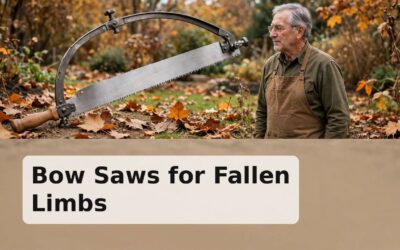
Tall trees drop a lot of wood. Lower limbs die and fall, storms snap branches, and the ground beneath a big tree fills with material that needs clearing. A bow saw is the right tool for that ground work: it cuts fallen limbs, trims lower branches from the ground, and turns the fallen wood into firewood. The five manual saws below cover blade lengths from 21 to 30 inches, so you can match the frame to the limb, and the two battery-powered supplementary picks add motor power for the thickest pieces.
Every model below has a price verified on an opened retailer page inside the band. Use the table to pick a frame length, then read the notes to match a saw to the trees in your yard. And remember the limit: if a limb is above your head, put the bow saw down and reach for a pole saw instead.
Quick verdict
For most tall-tree ground work, the Bahco 30-Inch Ergo Bow Saw (10-30-51) leads this list. Its 30-inch blade and 54-tooth dry-wood blade clear thick lower limbs and fallen wood fast, and the ERGO handle protects your knuckles through long sessions. The Bahco 24-Inch Ergo Bow Saw (10-24-23) gives a middle length for general pruning, and the Truper 30261 30-Inch Steel Handle Bow Saw offers a steel frame with cam-lever tension at a low cost. The two battery-powered supplementary picks, the SKIL PWR CORE 40 Brushless 40V 14-Inch Chainsaw CS4555-10 and the SEESII 16-Inch Cordless Electric Chainsaw 40V, cut the thickest lower limbs when arm power runs out.
| product | key spec | best for |
| Bahco 30-Inch Ergo Bow Saw (10-30-51) | 30 in blade; 54 tooth; ERGO handle | Thick lower limbs and fallen wood |
| Bahco 24-Inch Ergo Bow Saw (10-24-23) | 24 in blade; ERGO handle; knuckle guard | General pruning around tall trees |
| Truper 30261 30-Inch Steel Handle Bow Saw | 30 in blade; cam lever tension | Long strokes on thick limbs |
| Best Garden 30 In. Bow Saw | 30 in blade | Long strokes on a budget |
| Tool Essentials 21 Bow Saw with Quick Release Blade Tensioner | 21 in blade; quick release tensioner | Tight cuts near the trunk |
| SKIL PWR CORE 40 Brushless 40V 14-Inch Chainsaw CS4555-10 | 14 in bar; 40V; 2.5 Ah battery included | Supplementary power on thick limbs |
| SEESII 16-Inch Cordless Electric Chainsaw 40V | 16 in bar; 40V; two 4.0 Ah batteries | Supplementary power for firewood |
How we chose
We picked saws for the ground work under tall trees: lower limbs, fallen branches and firewood. Blade length runs from 21 to 30 inches so the list covers both open cuts and tight work near the trunk. We kept only models with a price verified on an opened retailer page inside the band, and we favored stiff frames, high blade tension and blades that clear chips. The two battery-powered picks are labelled supplementary because they are not bow saws; they sit in the list for cutting power on the thickest limbs, not as replacements for the manual frames. No saw in this list is meant for cutting above shoulder height.
Bahco 30-Inch Ergo Bow Saw (10-30-51)
- Blade: 30 in, 54 tooth blade for dry wood
- Frame: ERGO handle
- Blade tension: high
- Weight: –
- Blade variant: green wood raker tooth variant listed
The Bahco 10-30-51 leads this list because tall trees drop thick wood, and a 30-inch blade turns each stroke into real progress. The 54-tooth blade clears chips steadily through dry limbs, and the long frame lets you cut a fallen limb in fewer passes than a short saw. The ERGO handle keeps the grip comfortable through a long session, and the high-tension frame holds the blade straight in hard wood. The trade is size: a 30-inch frame needs open space, so use it on fallen limbs and lower branches with room to swing, and keep a shorter saw for the tight spots near the trunk. The weight is not stated on the pages we opened.
Pros: Longest stroke in the group; steady chip clearing; comfortable ERGO grip.
Cons: Needs open space; weight not stated on the pages opened; not for cutting overhead.
Bahco 24-Inch Ergo Bow Saw (10-24-23)
- Blade: 24 in, dry wood peg tooth blade and green wood raker tooth blade supplied
- Frame: ERGO handle with knuckle guard
- Blade tension: high, up to 120 kp per maker notes
- Weight: –
- Blade guard: plastic blade guard included
The 24-inch Bahco is the middle frame in this list, and it is the most flexible pick for work around tall trees. It reaches further than a 21-inch saw on each stroke, yet it still steers between lower branches without catching. The ERGO handle and knuckle guard protect the hand when a stroke runs close to bark, and the plastic blade guard covers the teeth in storage. Two blades come in the box, so you can switch between dry wood and green wood as the job changes. If you want one saw for the whole area under a tall tree, this is the pick. The weight is not stated on the pages we opened.
Pros: Middle length suits most limbs; two blades included; knuckle guard; blade guard included.
Cons: Weight not stated on the pages opened; shorter stroke than the 30-inch models.
Truper 30261 30-Inch Steel Handle Bow Saw
- Blade: 30 in, high speed steel blade
- Frame: steel handle and tubular steel frame
- Tension: cam lever tension
- Weight: –
- Cut capacity: cuts logs up to 8 in diameter per listing
The Truper 30261 gives you a second 30-inch frame, this time with a steel handle and a cam lever. Flip the lever to tension the blade, flip it back to change it, and the blade sits tight again in seconds. The high speed steel blade holds an edge through dry limbs, and the listing states it cuts logs up to 8 inches in diameter. The steel frame takes hard use without flexing, which matters when a stroke runs at an angle under a big tree. The weight is not stated on the pages we opened. Choose this saw when you want the longest stroke with the fastest blade changes.
Pros: Cam lever for fast blade changes; steel frame resists flexing; cuts logs up to 8 in per listing.
Cons: Weight not stated on the pages opened; long frame needs open space.
Best Garden 30 In. Bow Saw
- Blade: 30 in
- Frame: –
- Tension: –
- Weight: –
- Build: made in China per listing
The Best Garden 30-Inch Bow Saw is the budget long frame in this list. Its 30-inch blade gives the same long stroke as the Bahco and Truper models for clearing thick fallen limbs, at the lowest cost of the three long saws. The listing states little beyond the blade length and the country of origin, so the frame type, tension system and weight are not stated on the pages we opened; confirm them on the product page before you buy. What the saw offers is simple: length at a low cost for open cuts under a tall tree. Pair it with a short saw for tight work, and it covers the ground work well.
Pros: 30-inch blade at a low cost; long stroke for thick limbs.
Cons: Frame, tension and weight not stated on the pages opened; confirm details before buying.
Tool Essentials 21 Bow Saw with Quick Release Blade Tensioner
- Blade: 21 in
- Frame: ergonomic handle design per listing
- Tension: quick release blade tensioner
- Weight: –
- Build: ergonomic handle design per listing
The Tool Essentials 21-inch bow saw is the short frame in this list, and its quick-release tensioner is the feature to note. A quick-release tensioner lets you slacken the blade, swap it and re-tension it in moments, which helps when you switch between dry-wood and green-wood blades under a tall tree. The 21-inch blade fits between lower branches and near the trunk where long frames cannot swing, and the ergonomic handle keeps the grip steady. The weight is not stated on the pages we opened. Use this saw for the tight cuts near the trunk, and let the long saws handle the open fallen limbs.
Pros: Quick-release tensioner for fast blade changes; short frame fits tight spots; ergonomic handle.
Cons: Weight not stated on the pages opened; short blade means more strokes on thick limbs.
SKIL PWR CORE 40 Brushless 40V 14-Inch Chainsaw CS4555-10
- Bar: 14 in
- Motor: 40V digital brushless
- Battery: 2.5 Ah battery included
- Oiling: automatic chain lubrication
- Brake: anti kickback brake
- Weight: 11.5 lb
- Tensioning: tool free tensioning
The SKIL CS4555-10 is a supplementary pick, not a bow saw, and it earns its place on power alone. A 14-inch bar and a brushless 40V motor cut through a thick lower limb in seconds, and the 2.5 Ah battery comes in the box. Automatic chain lubrication keeps the chain fed, the anti kickback brake adds a layer of control, and tool-free tensioning lets you tighten the chain without tools. At 11.5 lb it is the heaviest saw in this list, and it stops when the battery runs out. Use it on the thickest limbs at ground level, where a bow saw would take minutes per cut, and keep a manual frame ready for the rest.
Pros: Battery included; 14-inch bar for thick limbs; automatic lubrication; anti kickback brake.
Cons: Heaviest saw in the list; needs a charged battery; supplementary pick, not a bow saw.
SEESII 16-Inch Cordless Electric Chainsaw 40V
- Bar: 16 in
- Motor: 40V 2000W brushless
- Batteries: two 4.0 Ah batteries and dual fast chargers
- Chain speed: 34.8 ft per sec
- Oiling: automatic chain oiler, 150 ml tank
- Runtime: up to 90 min per charge
- Brake: chain brake plus safety lock plus overload shielding
The SEESII 16-inch chainsaw, model M16 Ace, is the second supplementary pick, and it is the firewood saw of this list. A 16-inch bar and a 2000W brushless motor cut thick limbs fast, and two 4.0 Ah batteries with dual fast chargers come in the box, so one battery charges while the other works. The automatic oiler feeds the chain from a 150 ml tank, and the maker lists up to 90 minutes of runtime. The chain brake, safety lock and overload shielding add control. The maker page describes a two-battery kit while one listing field names only the saw, so check the box contents on the product page before you buy. Use this saw to turn fallen limbs into firewood, and keep a manual bow saw for the pruning cuts.
Pros: Two batteries and dual chargers included; 16-inch bar; long runtime; automatic oiler.
Cons: Maker page and listing field conflict on kit contents; needs charged batteries; supplementary pick, not a bow saw.
Buying guide
Start with the limit, not the saw. A bow saw cuts at arm height and below. Lower limbs, fallen branches and firewood are fair game; anything above your head is not. If a limb is out of reach, use a pole saw, and if the tree needs work high in the crown, call a tree service. No bow saw, however long, makes overhead cutting safe, because a falling limb can drop straight onto the person cutting it.
Match the frame to the limb. A 21-inch frame suits tight work near the trunk and thin lower branches. A 24-inch frame covers most ground work under a tall tree. A 30-inch frame suits thick fallen limbs and firewood, where each stroke needs to remove as much wood as possible. Tall trees drop a mix of sizes, so a two-saw kit, one short and one long, covers more ground than any single frame.
Tooth pattern matters on the mixed wood under a tall tree. Fallen limbs may be dry on top and green underneath, or dead for years in one section and alive in another. Peg-tooth blades suit dry wood, raker-tooth blades suit green wood, and a blade that clears chips well suits mixed wood best. The Bahco models in this list ship with both blade types, which is the right starting point for this job. If a saw ships with one blade only, check that the blade matches the wood you cut most.
Tension decides whether the blade tracks straight. A bow saw blade must sit tight or it will wander, bind and snap. The Truper cam lever and the Tool Essentials quick-release tensioner both let you re-tension the blade in seconds, while the Bahco high-tension frames hold the blade firm through a long session. Check the tension before the first cut and again after a few strokes, because a new blade stretches as it warms up.
Weight counts on a long day under a big tree. The manual frames in this list weigh little, while the battery-powered supplementary picks weigh 11.5 lb and more. A light manual saw lets you work for hours, while a heavy powered saw makes sense only when its motor does the cutting. If you carry the saw across a large property, favor the lightest frame that still cuts the thickest limb you face.
Battery-powered supplementary saws change the pace of firewood work. A chainsaw turns a fallen limb into rounds in minutes, but it adds weight, noise and batteries to keep charged. Keep the batteries charged before the job starts, keep the chain oiled, and keep a manual bow saw ready for the cuts the powered saw cannot reach. A battery saw with a dead battery is useless in the middle of a pile, while a bow saw works whenever you pick it up.
Storage matters more than most buyers expect. A bow saw blade stays sharp longer when it is covered, so use the guard if one is supplied and hang the saw where the blade cannot touch other tools. Keep the saw dry, wipe the blade after use, and oil the blade lightly before winter storage so rust does not start on the teeth. A little care keeps a low-cost saw cutting well for years.
Safety deserves a plain note. Never cut above shoulder height with a bow saw, and never stand under a limb you are cutting. Wear eye protection, because dry wood throws chips, and wear gloves to guard against splinters and thorns. A fallen limb may be under tension, so cut in stages and stand to the side. If a limb is too large or too tangled to cut safely, call a tree service.
Read the tree from the ground before you cut anything. A dead lower limb looks different from a live one: the bark peels or falls away, the small twigs snap dry instead of bending, and no leaves grow on it in season. Dead limbs are the first to come down, because they fall on their own sooner or later, and a bow saw handles them well from the ground. Live lower limbs need a reason to cut, such as rubbing against another limb, blocking a path, or shading a bed below. Cut live wood only where the tree can heal, and leave the crown alone.
Look at the lean of the tree and the shape of the crown before you work under it. A tree that leans hard in one direction may drop limbs on that side, so stand on the opposite side when you cut. Check for cracks in the trunk and for limbs that hang by a strip of bark; those are signs the tree needs a professional, not a bow saw. If the trunk shows a wide crack, a hollow sound when tapped, or a lean that grows worse each year, call a tree service and let them assess it.
Cut a lower limb in two stages to protect the bark. First cut from below, a short distance out from the trunk, to stop the bark from tearing when the limb falls. Then cut from above, just outside the branch collar, and let the limb drop cleanly. The collar is the raised ring where the limb meets the trunk, and the tree heals fastest when the collar stays intact. Never cut flush with the trunk, and never leave a long stub, because both slow healing and invite rot. A clean cut at the collar is the kindest cut you can make.
FAQ
Can I prune the top of a tall tree with a bow saw?
No. A bow saw cuts at arm height and below. Limbs above your head belong to a pole saw, and work high in the crown belongs to a tree service. Never cut overhead with a bow saw.
What blade length suits work under a tall tree?
A 21-inch blade suits tight work near the trunk, a 24-inch blade covers most ground work, and a 30-inch blade suits thick fallen limbs and firewood. Carry two lengths if the work mixes tight and open cuts.
Are peg-tooth blades better than raker-tooth blades for tall trees?
Peg teeth suit dry wood and raker teeth suit green wood. Tall trees drop mixed wood, so a saw that ships with both blades, like the Bahco models here, covers the job best.
Can a battery-powered chainsaw replace a bow saw under a tall tree?
It can help on the thickest limbs and on firewood, but it does not replace a manual frame. A battery saw needs charged batteries and oil, while a bow saw works any time. Use both together.
How do I keep a bow saw blade from binding?
Keep the blade tension high, let the teeth do the work, and use long smooth strokes. A dull blade binds more than a sharp one, so replace the blade when cuts slow down.
What should I check before buying a bow saw for tall trees?
Check the blade length, the tooth pattern, the tension system and the weight. Confirm the blade suits mixed wood, and confirm the price on the product page before you buy, since prices change.
Conclusion
Pruning around a tall tree is ground work, and a bow saw is the right tool for it as long as you respect the height limit. The Bahco 30-Inch Ergo Bow Saw (10-30-51) leads this list because its long blade and dry-wood teeth clear thick lower limbs fast, while the 24-inch Bahco and the Truper 30261 cover the middle ground with different strengths. The Best Garden and Tool Essentials frames give low-cost length and quick blade changes, and the two battery-powered supplementary picks turn the thickest fallen limbs into firewood when arm power runs out. Pick the frame that matches your thickest limb, never cut above your head, and the saw will do the rest.
Related guides
More ways to save on your garden
Programs that pair well with the guide above. Offers and eligibility are set by Amazon and may change.
Fast, free shipping on eligible items, plus Prime Video and more. Eligible new members can start with a free trial.
Start a Prime free trialSet up recurring deliveries of everyday items on eligible products. Terms and savings are set by Amazon.
Explore Subscribe & SaveRead from a huge library of eBooks, including how-to guides and cookbooks. Eligible new members can start with a free trial.
Try Kindle UnlimitedAudiobooks and podcasts for the commute, the garage or the kitchen. Eligible new members can start with a free trial.
Try Audible freeAs an Amazon Associate we earn from qualifying purchases. Using these links costs you nothing extra.




Write Your Review
No reviews yet. Be the first to share your experience!