
Key takeaways
- Find bow saws that cut dry branches cleanly without overspending. Compare blade length, tooth style, frame tension and weight before you pick one for yard work.
What's inside
As an Amazon Associate I earn from qualifying purchases. This post may contain affiliate links at no extra cost to you.
Dry branches ask more from a saw than green wood does. Seasoned wood is hard, brittle and full of knots, so a dull or loose blade skates across the surface instead of biting in. The right bow saw for this work holds its blade drum tight, carries teeth shaped to clear dry chips, and stays light enough to control through a long stroke. best bow saws under one hundred dollars for cutting dry branches come from a small group of manual frames that do exactly that, with two battery-powered saws added as supplementary choices for anyone who wants a motor to help on the thickest pieces.
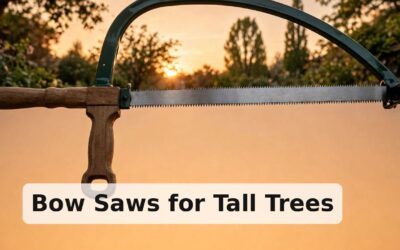
A bow saw earns its place in a yard shed because it needs no fuel, no cord and no charge. It works in the rain, it starts every time, and it stores in a narrow space between a rake and a shovel. The weakness of the design is the human arm behind it, so blade length, tooth pattern and frame stiffness decide whether a cut feels smooth or turns into a wrestling match. Dry branches punish a weak frame more than green limbs do, because the blade must stay straight through hard fibers that resist every stroke.
This guide compares seven saws that fit the price band, with five manual bow saws leading the way and two battery-powered saws listed as supplementary picks for extra cutting power. Every manual model below has a price verified on an opened retailer page inside the band, and every battery model has its battery included in the box. Use the table to narrow the list, then read the product notes to match a saw to the branches in your yard.
Quick verdict
For most yards, the Bahco 21-Inch Ergo Bow Saw (10-21-51) is the pick to start with. Its peg-tooth blade is made for dry wood, the frame holds high tension, and the handle guards your knuckles from rough bark. If you cut thicker limbs, step up to the Bahco 30-Inch Ergo Bow Saw (10-30-51) for a longer stroke, or take the Truper AJT-21 21-Inch Bow Saw when you want a steel frame with a cam lever at a low cost. The two battery-powered supplementary picks, the LinTimes 20V 8-inch mini chainsaw and the Seesii M6 Ace 6-inch mini chainsaw, cover the days when a big dry limb would take too long by hand.
| product | key spec | best for |
| Bahco 21-Inch Ergo Bow Saw (10-21-51) | 21 in blade; peg tooth; ERGO handle | Dry branches and tight cuts |
| Bahco 24-Inch Ergo Bow Saw (10-24-23) | 24 in blade; ERGO handle; knuckle guard | All-round dry branch work |
| Bahco 30-Inch Ergo Bow Saw (10-30-51) | 30 in blade; 54 tooth; ERGO handle | Thick dry limbs and firewood |
| Fiskars 21-Inch Bow Saw (7029) | 21 in blade; hardened carbon steel | Light pruning on a tight budget |
| Truper 30255 AJT-21 21-Inch Bow Saw | 21 in blade; cam lever tension | Quick blade changes in the yard |
| LinTimes 20V Brushless Wireless Mini Chainsaw 8-in | 20V; brushless; two 4.0 Ah batteries | Supplementary power on thick limbs |
| Seesii M6 Ace 6 in Mini Chainsaw | 6 in bar; 1000W brushless; two batteries | Supplementary power in tight spots |
How we chose
We picked saws with blade lengths from 21 to 30 inches, because dry branches need a frame that matches the limb. Short frames control better in dense shrubs, while long frames clear thick limbs with fewer strokes. We kept only models with a price verified on an opened retailer page inside the band, and we favored peg-tooth blades for dry wood, high blade tension, and handles that protect the hand. The two battery-powered picks are labelled supplementary because they are not bow saws; they sit in the list for cutting power on the hardest pieces, not as replacements for the manual frames.
Bahco 21-Inch Ergo Bow Saw (10-21-51)
- Blade: 21 in, 51 peg tooth blade for dry wood
- Frame: ERGO handle with knuckle protector
- Blade tension: high, up to 120 kp per maker notes
- Weight: 680 g
- Included blades: dry wood peg tooth blade and green wood raker tooth blade
The Bahco 10-21-51 leads this list because its blade is made for the exact job in the keyword. Peg teeth cut dry, seasoned wood cleanly, and the short 21-inch frame stays stiff through the stroke, so the blade does not wander in hard fibers. The ERGO handle wraps around the hand and the knuckle protector keeps bark from scraping skin when a cut runs close to the trunk. At 680 g it is light enough to carry all afternoon, and the second blade in the box gives you a raker tooth option for green wood when the seasons change. For dry branches up to the thickness of a wrist, this is the most direct pick in the group.
Pros: Peg-tooth blade made for dry wood; light frame; knuckle guard; two blades included.
Cons: Short blade limits stroke length on thick limbs; no replacement blade in the box beyond the two supplied.
Bahco 24-Inch Ergo Bow Saw (10-24-23)
- Blade: 24 in, dry wood peg tooth blade and green wood raker tooth blade supplied
- Frame: ERGO handle with knuckle guard
- Blade tension: high, up to 120 kp per maker notes
- Weight: –
- Blade guard: plastic blade guard included
The 24-inch Bahco sits in the middle of the range, and that is its strength. It reaches further than the 21-inch model on each stroke, so a thick dry limb takes fewer passes, yet the frame is still short enough to steer between branches. The same ERGO handle and knuckle guard protect the hand, and the plastic blade guard covers the teeth in storage. If your yard mixes thin dry twigs with wrist-thick dead limbs, this is the one-frame answer. The weight is not stated on the pages we opened, so check the product page if every gram matters to you.
Pros: Longer stroke than the 21-inch model; same protective handle; blade guard included.
Cons: Weight not stated on the pages opened; longer frame is less nimble in dense shrubs.
Bahco 30-Inch Ergo Bow Saw (10-30-51)
- Blade: 30 in, 54 tooth blade for dry wood
- Frame: ERGO handle
- Blade tension: high
- Weight: –
- Blade variant: green wood raker tooth variant listed
The 30-inch Bahco is the heavy lifter of the manual group. Its long blade turns each stroke into real progress through thick dry limbs and firewood rounds, and the 54-tooth blade clears chips steadily so the cut does not clog. The frame is still the familiar ERGO shape, so the grip and knuckle protection carry over from the smaller models. The trade is size: a 30-inch frame needs open space to work, and it feels clumsy inside a dense shrub. Keep it for open limbs, fallen branches and firewood, and use a shorter saw for tight pruning.
Pros: Longest stroke in the group; steady chip clearing; familiar ERGO grip.
Cons: Needs open space; weight not stated on the pages opened; awkward in dense growth.
Fiskars 21-Inch Bow Saw (7029)
- Blade: 21 in, hardened carbon steel blade
- Frame: lightweight tubular steel frame
- Tension: safety tension lever
- Weight: 0.39 kg
- Blade coating: rust inhibitor on the blade
The Fiskars 7029 is the lightest saw in this list at 0.39 kg, and it is also the least expensive manual frame here. The hardened carbon steel blade holds an edge through dry wood, and the safety tension lever keeps the blade tight without tools. The tubular steel frame is simple and strong, with no extra parts to fail. What you give up against the Bahco models is the knuckle guard and the second blade; this saw ships with one blade and a plain handle. For occasional dry-branch pruning on a tight budget, that trade is fair, and the low weight makes it easy to carry on a long walk around the property.
Pros: Lightest saw in the list; simple strong frame; low cost; rust inhibitor on the blade.
Cons: One blade only; no knuckle guard; plain handle gives less hand protection.
Truper 30255 AJT-21 21-Inch Bow Saw
- Blade: 21 in, high carbon blade
- Frame: tubular steel frame with steel handle
- Tension: cam lever tension
- Weight: –
- Blade change: cam lever for quick changes
The Truper AJT-21 brings a cam lever to the 21-inch class, and that lever is the reason to pick it. Flip the lever, swap the blade, flip it back, and the blade sits tight again. The steel handle and tubular frame take hard use without flexing, and the high carbon blade bites dry wood well. It costs more than the Fiskars but less than the Bahco models, which puts it in the middle of the group on value. The weight is not stated on the pages we opened. If you change blades often, for instance switching between a dry-wood blade and a green-wood blade, the cam lever saves real time across a season.
Pros: Cam lever for fast blade changes; steel handle and frame; high carbon blade.
Cons: Weight not stated on the pages opened; no knuckle guard listed.
LinTimes 20V Brushless Wireless Mini Chainsaw 8-in
- Bar: 6 in and 8 in interchangeable bars
- Motor: 20V brushless, up to 5800 RPM
- Batteries: two 4.0 Ah batteries and charger included
- Oiling: automatic oiling
- Weight: about 7.63 lb
- Cuts: up to 100 cuts on 4 by 4 wood per battery
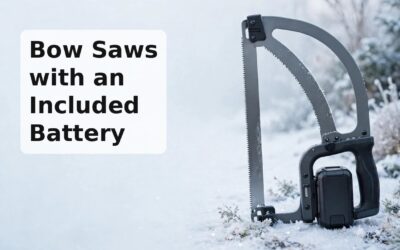
This LinTimes mini chainsaw is a supplementary pick, not a bow saw, and it earns its place on cutting power alone. Two 4.0 Ah batteries and a charger come in the box, and the brushless motor spins up to 5800 RPM, so a thick dry limb that would take minutes by hand falls in seconds. The interchangeable 6-inch and 8-inch bars let you match the bar to the limb, and automatic oiling keeps the chain fed without stopping. At about 7.63 lb it is heavier than any manual frame here, and it needs charged batteries to work at all. Use it for the thickest dry limbs, and keep a manual bow saw in hand for the rest.
Pros: Two batteries included; interchangeable bars; automatic oiling; strong cutting speed.
Cons: Heavier than manual saws; needs charged batteries; supplementary pick, not a bow saw.
Seesii M6 Ace 6 in Mini Chainsaw
- Bar: 6 in
- Motor: 1000W brushless
- Batteries: two 4000 mAh batteries
- Chain speed: 7.8 m per sec
- Oiling: automatic chain oiler
- Chains: two chains included
- Warranty: 24 month warranty
The Seesii M6 Ace is the second supplementary pick, and it suits tight spots where a bow saw frame cannot fit. The 6-inch bar reaches between branches, the 1000W brushless motor drives the chain at 7.8 m per sec, and two 4000 mAh batteries come in the box with two chains. Automatic oiling keeps the chain moving, and the maker lists a 24-month warranty. Like the LinTimes, it is a battery tool, so it stops when the batteries run out, and it needs oil in the tank. Use it where the frame of a bow saw will not go, and let the manual saws handle the open cuts.
Pros: Compact 6-inch bar for tight spots; two batteries and two chains included; automatic oiler.
Cons: Short bar limits cut size; needs charged batteries; supplementary pick, not a bow saw.
Buying guide
Start with the branches, not the saw. Walk the yard and look at the thickest dry limb you need to cut. A wrist-thick limb suits a 21-inch or 24-inch frame, while a forearm-thick limb wants a 30-inch frame or a battery-powered saw. Dry wood is hard and the fibers resist the blade, so a longer stroke helps more than a stronger arm. If most of your dry branches are thin, a short frame gives you control and keeps the saw light in the hand.
Tooth pattern matters more on dry wood than on green wood. Peg teeth are shaped to cut dry, seasoned fibers and clear the chips they make. Raker teeth suit green, wet wood and can clog on dry dust. The Bahco models in this list ship with a peg-tooth blade for dry wood, which is the right starting point for this keyword. If a saw ships with one blade only, check that the blade matches dry wood before you buy, and keep a spare blade in the shed so a dull edge never stops a job halfway.
Frame stiffness decides whether the blade tracks straight. A bow saw blade is only as good as the tension holding it, so look for a tension system you can work with gloves on. The Bahco ERGO frames use a high-tension design, the Truper uses a cam lever, and the Fiskars uses a safety tension lever. All three approaches work; the difference is how fast you can change a blade and how firmly the blade sits after a season of use. A blade that wobbles will bind in dry wood and tire your arm, so test the tension before the first cut and re-check it after the first few strokes.
Weight counts on a long day. The Fiskars 7029 weighs 0.39 kg, the Bahco 21-inch weighs 680 g, and the battery-powered supplementary picks weigh several pounds each. A light saw lets you prune for an hour without a sore shoulder, while a heavy saw makes sense only when its motor does the work. If you carry the saw across a large property, favor the lightest frame that still cuts the thickest limb you face.
Handle design protects your hand from bark, thorns and the blade itself. A knuckle guard, like the one on the Bahco ERGO handle, keeps your fingers off rough wood when a stroke runs long. A plain handle works fine on open limbs but leaves the hand exposed in dense shrubs. Gloves help either way, and they are worth wearing with any saw in this list, since dry branches snap and throw sharp splinters.
Battery-powered supplementary saws change the math on thick limbs. A mini chainsaw cuts a dry limb in seconds where a bow saw needs minutes, but it adds weight, noise and a battery to keep charged. Treat these picks as helpers for the hardest cuts, not as replacements for a manual frame. Keep the batteries charged, keep the chain oiled, and keep the manual saw ready for everything else. A battery saw with a dead battery is a paperweight, while a bow saw works whenever you pick it up.
Storage matters more than most buyers expect. A bow saw blade stays sharp longer when it is covered, so use the guard if one is supplied and hang the saw where the blade cannot touch other tools. Keep the saw dry, wipe the blade after use, and oil the blade lightly before winter storage so rust does not start on the teeth. A little care keeps a low-cost saw cutting well for years, and it costs nothing but a few minutes after each job.
Safety deserves a plain note. Dry branches can snap without warning, so stand to the side of the cut and never pull a branch toward your face. Wear eye protection, because dry wood throws chips, and wear gloves to guard against splinters. Never cut above shoulder height with a bow saw; a pole saw is the right tool beyond arm's reach. If a limb is under tension, cut it in stages from the far side so it cannot spring back toward you.
Blade care decides how long a low-cost bow saw stays useful on dry wood. Dry branches dull a blade faster than green limbs do, because the hard fibers grind the edge with every stroke. A sharp blade cuts with light pressure and a smooth rhythm, while a dull blade needs force, wanders off the line and tires your arm. Check the edge after a heavy day: run a fingertip lightly across the teeth and look for shiny flats where the points have worn down. When the points look rounded or the saw starts to skate across the surface instead of biting, it is time for a new blade.
Keep a spare blade in the shed so a dull edge never ends a job halfway. Spare blades cost little and store flat in a drawer, and swapping one takes a minute with a cam lever or a tension screw. Store the spare in its sleeve so the teeth do not nick each other, and keep it dry, because rust starts on a bare blade faster than most owners expect. A light wipe with oil before storage keeps the steel bright through winter, and a blade guard over the mounted blade stops the teeth from catching on other tools.
Sharpening a bow saw blade by hand is possible with a round file, but most owners find a fresh blade cheaper than the time a file takes. If you do file, match the file to the tooth size, work each tooth with the same number of strokes, and keep the angle steady. A blade filed unevenly cuts in a curve and binds in the kerf. For most yards, a new blade every season or two is the simpler answer, and the cost is small next to the time a sharp saw saves.
FAQ
What blade length suits dry branches best?
A 21-inch blade suits thin dry branches and tight shrubs, a 24-inch blade covers most yard work, and a 30-inch blade suits thick limbs and firewood. Match the blade to the thickest limb you cut most often, and favor a shorter frame when you work inside dense growth.
Are peg-tooth blades better than raker-tooth blades for dry wood?
Peg teeth are shaped for dry, seasoned wood and clear dry chips well. Raker teeth suit green, wet wood. For dry branches, start with a peg-tooth blade and keep a raker-tooth blade for green limbs.
How do I keep a bow saw blade from binding in dry wood?
Keep the blade tension high, let the teeth do the work, and use long smooth strokes instead of short fast ones. A dull blade binds more than a sharp one, so replace the blade when cuts slow down.
Can a battery-powered mini chainsaw replace a bow saw?
It can help on thick limbs, but it does not replace a manual frame. A mini chainsaw needs charged batteries and oil, while a bow saw works any time. Use the battery saw for the hardest cuts and the bow saw for the rest.
How often should I replace a bow saw blade?
Replace the blade when cuts slow down, the teeth look dull, or the blade starts to wander. Dry wood dulls blades faster than green wood, so check the edge after a heavy day of cutting.
What should I check before buying a bow saw in this price band?
Check the blade length, the tooth pattern, the tension system, the handle design and the weight. Confirm the blade matches dry wood, and confirm the price on the product page before you buy, since prices change.
Conclusion
Dry branches reward a saw that holds tension, carries the right teeth and fits the limb. The Bahco 21-Inch Ergo Bow Saw (10-21-51) leads this list because its peg-tooth blade and protective handle match the job exactly, while the 24-inch and 30-inch Bahco models cover thicker limbs with longer strokes. The Fiskars 7029 and the Truper AJT-21 give you lighter and faster-changing options at lower cost, and the two battery-powered supplementary picks handle the thickest dry limbs when arm power runs out. Pick the frame that matches your thickest branch, keep the blade sharp and tight, and the saw will do the rest.
Related guides
More ways to save on your garden
Programs that pair well with the guide above. Offers and eligibility are set by Amazon and may change.
Fast, free shipping on eligible items, plus Prime Video and more. Eligible new members can start with a free trial.
Start a Prime free trialSet up recurring deliveries of everyday items on eligible products. Terms and savings are set by Amazon.
Explore Subscribe & SaveRead from a huge library of eBooks, including how-to guides and cookbooks. Eligible new members can start with a free trial.
Try Kindle UnlimitedAudiobooks and podcasts for the commute, the garage or the kitchen. Eligible new members can start with a free trial.
Try Audible freeAs an Amazon Associate we earn from qualifying purchases. Using these links costs you nothing extra.




Write Your Review
No reviews yet. Be the first to share your experience!