
Key takeaways
- Tall summer grass needs a gas push mower with real cutting power. Compare six verified models, their decks, engines, and clipping options for thick growth.
What's inside
As an Amazon Associate I earn from qualifying purchases. This post may contain affiliate links at no extra cost to you.
Summer grass grows fast, and by July a lawn that looked neat in June can stand several inches taller than the mower setting you used last month. Tall growth is harder on a mower than a routine trim: the blade meets more material on every pass, clippings pack under the deck, and a weak engine can bog down and leave ragged tips behind. The best gas push mowers under three hundred dollars for tall summer grass handle that extra load with a steel deck, a mid-size engine, and a clipping system that keeps the deck clear instead of choking it.
A gas push mower suits this job because it carries its own power and never asks for a cord or a charged battery in the middle of a hot afternoon. Push models are also lighter than self-propelled machines, which matters when you are turning a mower through tall, damp grass that drags at the wheels. The six models in this guide all sit inside the same spending band, and each one was checked against a live retail or maker listing before it earned a place here.
Tall grass also changes how you should mow. Cutting no more than about one-third of the blade at a time keeps the turf from stressing, and that rule matters twice as much when growth has run ahead of your schedule. A mower with a wide height range lets you take a tall lawn down in two passes instead of forcing one deep cut, and a side-discharge option gives heavy clippings somewhere to go when mulching alone would leave clumps.
Quick verdict
For tall summer grass on a modest budget, the PowerSmart DB8621C is the pick that covers the most ground: a 21-inch steel deck, a 144 cc engine, and a two-way clipping system that mulches light growth and throws heavy growth clear. The Troy-Bilt TB110 is the closest rival, with a bag included for lawns where clippings need to be collected rather than scattered. The Troy-Bilt TB90B is the lightest and simplest machine here, a good match for a smaller lawn that grows fast but stays level. The Yard Force YF22-3N1SP is the only self-propelled model in this set, and its rear-wheel drive helps on lawns where tall grass makes pushing hard work. The Craftsman M210 and the Yard Machines 12B-A0SD700 are both self-propelled 21-inch machines with the same cutting-height range, and either one suits a homeowner who wants drive assistance without leaving the band.
| product | key spec | best for |
| PowerSmart DB8621C | 21 in steel deck; 144 cc engine; push; 2-in-1 mulch and side discharge | Tall growth that needs side discharge |
| Troy-Bilt TB110 | 21 in steel deck; 140 cc engine; push; bag and mulch | Tall grass with clippings collected |
| Troy-Bilt TB90B | 20 in steel deck; 125 cc engine; push; side discharge | Small level lawns with fast growth |
| Craftsman M210 | 21 in deck; 140 cc engine; self-propelled front-wheel drive | Drive help through thick patches |
| Yard Machines 12B-A0SD700 | 21 in steel deck; 140 cc engine; self-propelled | Steady drive on uneven tall lawns |
| Yard Force YF22-3N1SP | 22 in steel deck; 150 cc engine; self-propelled rear-wheel drive | Wide cuts across open tall grass |
How we chose
Every model in this guide is a gas push or gas self-propelled walk-behind mower with a steel deck and a four-cycle engine, and every one was verified inside the band on a page that was actually opened. A model counted only when a retail or maker listing showed it available inside the band, so no model here rests on a memory, a roundup mention, or a price seen in a search snippet. That filter is strict, and it is the reason the set holds six models instead of eight: two candidates that looked promising on paper could not be confirmed inside the band on an opened page, so they were left out.
Deck size came first in the comparison because tall grass rewards width and punishes narrow decks that need too many passes. Five of the six models cut 21 inches or wider, and the one 20-inch model makes up for its narrower deck with a lighter frame that is easy to push through heavy growth. Engine size came second. Tall summer grass asks more of an engine than a weekly trim does, and the engines here run from 125 cc to 150 cc, which is the range where a residential push mower keeps blade speed up without becoming hard to start or heavy to handle.
Clipping handling came third, and it matters more for tall grass than for any other lawn condition. A mower that only mulches will struggle when growth is heavy, because the deck has to chop a large volume of material into fine pieces and drop them back into the turf. A side-discharge option lets the mower throw that volume clear, and a bag option collects it when the lawn needs to look tidy right after the cut. Each model here offers at least two clipping modes, and the guide notes which ones each model supports.
Height adjustment came fourth. Tall grass should be cut high, and a mower that tops out near four inches gives the lawn a better finish than one that forces a short cut. All six models adjust to at least three and three-quarter inches, and two reach close to four inches. Wheel size and weight came last, because pushing a mower through tall grass is physical work: larger rear wheels roll over ruts and thick patches more easily, and a lighter mower is easier to turn at the end of each pass.
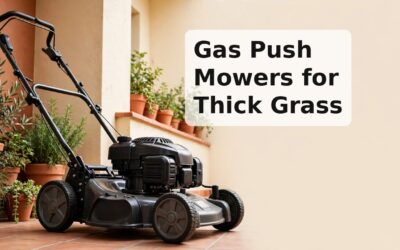
PowerSmart DB8621C
- 21-inch steel deck
- 144 cc four-stroke OHV engine
- Push drive, no self-propelled system
- 2-in-1 mulch and side discharge, no bag
- 6 cutting height positions, 1.5 to 3.9 inches
- Weight 59 pounds per the retail listing
- Foldable handle for storage
- Sold and shipped by Amerisun Inc through Best Buy
The DB8621C leads this set because it pairs the widest useful height range here with a clipping system built for heavy growth. Tall summer grass often needs to be cut at the top of the height range, and this mower reaches 3.9 inches, which leaves enough leaf blade standing to keep the turf healthy through hot weeks. When the grass is too tall to mulch cleanly, the side-discharge chute throws the volume clear instead of packing it under the deck, and the 144 cc engine holds blade speed through patches that would slow a smaller motor. At 59 pounds it is light enough to push through draggy grass without tiring the operator, and the folding handle helps it fit a crowded shed between cuts. The missing bag is the real trade-off: if the lawn must look spotless right after mowing, another model in this set collects clippings instead.
Pros: Widest height range in this set; side discharge handles heavy growth; light frame for a 21-inch gas mower; folding handle saves storage space.
Cons: No bagging option; push drive only, so the operator supplies all forward motion; weight figures differ between retail listings, with one listing showing 61.6 pounds.
Troy-Bilt TB110
- 21-inch steel deck
- Briggs and Stratton 140 cc ReadyStart engine
- Push drive
- 2-in-1 bag and mulch
- 6 cutting height positions, 1.25 to 3.75 inches
- 1.9 bushel grass bag included
- 11-inch rear wheels
- Weight not stated on the opened page
The TB110 is the pick for a homeowner who wants tall grass cut and the clippings taken away in the same pass. Its bag holds 1.9 bushels, which is generous for a 21-inch mower, and the ReadyStart engine removes the priming step from the starting routine. The 11-inch rear wheels roll over the uneven ground that tall grass often hides, and the six height positions run from a close trim to a tall cut that suits summer growth. Mulching is the second mode, so a homeowner can bag the first heavy cut of the season and mulch later trims when growth slows. The push drive keeps the machine simple and light, though it also means the operator does the work on slopes and through the thickest patches.
Pros: Bag included for tidy results; ReadyStart engine starts without priming; large rear wheels handle rough ground; six height positions cover tall and short cuts.
Cons: No side-discharge option for the heaviest growth; push drive only; weight not stated on the opened page.
Troy-Bilt TB90B
- 20-inch steel deck
- 125 cc OHV Briggs and Stratton engine
- Push drive
- Side discharge
- 3 cutting height positions, 1.25 to 3.75 inches
- Collapsible handles for storage
- 2-year limited warranty
- Built in America with United States and global parts
The TB90B is the simplest mower in this guide, and that simplicity is its strength on a small lawn that grows fast. A 20-inch deck covers less ground per pass than the 21-inch models, but the lighter frame and smaller engine make it easy to push, easy to turn, and easy to store. Side discharge is the only clipping mode, which suits tall grass well: the mower throws cut material clear rather than asking the deck to chop a heavy volume into mulch. Three height positions are fewer than the six offered elsewhere, but the range still runs from 1.25 to 3.75 inches, so a tall summer cut is available. The collapsible handle folds the mower down for a tight shed, and the two-year limited warranty covers the machine through its first seasons of use.
Pros: Light and easy to push; side discharge suits heavy growth; collapsible handle for small storage spaces; two-year limited warranty.
Cons: Narrowest deck in this set; only three height positions; no mulching or bagging option; smallest engine here.
Craftsman M210
- 21-inch deck
- Briggs and Stratton 140 cc engine
- Self-propelled single-speed front-wheel drive
- 2-in-1 mulch and bag
- 6 cutting height positions, 1.25 to 3.75 inches
- Weight not stated on the opened page
The M210 adds drive assistance to the same 21-inch format as the push models, and that assistance shows its value when tall grass drags at the wheels. Front-wheel drive pulls the mower forward at a single steady speed, so the operator steers and guides rather than pushing through every thick patch. The 140 cc engine matches the TB110 for displacement, and the six height positions run the same 1.25 to 3.75 inch range. Mulching and bagging cover the two most common clipping choices, though side discharge is absent, so a very heavy first cut of the season may need two passes: one high cut to take the top off, then a second pass at the final height. The single-speed drive is simple to use but cannot be slowed for tight turns or sped up for open stretches.
Pros: Front-wheel drive helps through thick grass; six height positions; bag and mulch both included; simple single-speed drive.
Cons: No side-discharge option; drive speed cannot be adjusted; weight not stated on the opened page.
Yard Machines 12B-A0SD700
- 21-inch steel deck
- Troy-Bilt 140 cc OHV engine
- Self-propelled drive
- Side discharge and mulch
- Dual-lever height adjustment, 1.25 to 3.75 inches
- Ship weight 69 pounds
The 12B-A0SD700 is the steady self-propelled option in this set, and its dual-lever height adjustment is a practical detail for tall grass. Two levers, one for the front axle and one for the rear, let the operator set the deck level quickly and check that both ends sit at the same height, which matters when the lawn is uneven and the grass is tall enough to hide dips. Side discharge and mulching are the two clipping modes, so heavy growth can be thrown clear and lighter growth can be mulched back into the turf. The 140 cc Troy-Bilt OHV engine is the same displacement class as the other mid-size models here, and the 69-pound ship weight is listed plainly on the retail page. No bag is offered, so a homeowner who wants clippings collected will need a different model.
Pros: Dual-lever height adjustment is quick to set; side discharge plus mulch covers heavy and light growth; self-propelled drive reduces pushing effort.
Cons: No bagging option; no bag capacity to compare; ship weight may differ slightly from the assembled weight.
Yard Force YF22-3N1SP
- 22-inch steel deck
- Briggs and Stratton EX625 150 cc engine
- Self-propelled rear-wheel drive
- 3-in-1 bag, mulch, and side discharge
- 7 cutting height positions, 1.25 to 3.75 inches
- 12-inch rear wheels
- Weight not stated on the opened page
The YF22-3N1SP is the widest and most powerful mower in this guide, and it is the only one that offers all three clipping modes. A 22-inch deck covers more ground on every pass, which shortens the job on an open lawn, and the 150 cc engine is the largest here, giving the blade more reserve when it meets a dense patch of summer growth. Rear-wheel drive pushes from behind the operator, which keeps traction on slopes and through thick turf, and the 12-inch rear wheels roll over ruts that would stop a smaller wheel. Seven height positions give fine control over the cut, from a low trim to a tall summer setting. The trade-off for that width and power is size: a 22-inch deck needs more storage room and more turning space at the end of each pass, and the weight is not stated on the opened page, so the operator should expect a heavier machine than the push models here.
Pros: Widest deck and largest engine in this set; all three clipping modes; rear-wheel drive with large rear wheels; seven height positions.
Cons: Largest deck needs more storage and turning room; weight not stated on the opened page; retail price evidence rests on a clearance listing.
Buying guide
Tall summer grass is a different job from a routine trim, and the mower that handles it well is the one that keeps blade speed up, keeps the deck clear, and lets the operator cut high. Blade speed matters because a fast blade slices cleanly while a slowing blade tears, and torn tips dry out and turn brown in summer heat. Engine displacement is the simplest guide to blade speed under load: a 140 cc or 150 cc engine holds its speed through a thick patch better than a 125 cc engine, though the smaller engine still cuts well on a level lawn that is mowed often. Deck design matters just as much. A deep steel deck gives clippings room to circulate before they drop, and a deck that packs full of wet clippings will leave clumps and streaks no matter how strong the engine is.
Height adjustment deserves a close look before buying. The rule of cutting no more than one-third of the blade at a time means a lawn that has grown to six inches should first be cut to four inches, not straight to three. A mower with six or seven height positions makes that two-pass approach easy, and a top setting near four inches leaves the turf with enough leaf to shade its own roots through a hot spell. Mowers with only three positions can still do the job, but the steps between settings are larger and the operator has less room to fine-tune the cut.
Clipping mode is the third decision. Mulching returns nutrients to the soil and saves the work of emptying a bag, but it works best on dry grass at a moderate height. When growth is tall and heavy, mulching can leave visible clumps that smother the turf underneath. Side discharge avoids that problem by throwing clippings clear, though it scatters material across paths and beds that then need sweeping. Bagging gives the tidiest finish and removes the most material from the lawn, which helps when the grass has gone to seed or when the lawn sits beside a patio or a play area. A mower with two or three modes lets the operator switch as conditions change through the summer, and that flexibility is worth more than any single feature on the spec sheet.
Drive type is the fourth decision, and it comes down to the shape of the lawn. A push mower is lighter, simpler, and cheaper to maintain, and it suits a level lawn where the operator can walk at a steady pace. A self-propelled mower carries its own weight forward, which helps on slopes, on large lawns, and in grass so tall that it drags at the wheels. Front-wheel drive pulls the mower and is easy to steer around obstacles, while rear-wheel drive pushes and holds traction better on grades. Either drive type beats pushing by hand on a big or hilly lawn, but neither one replaces the need to walk the lawn first and clear sticks, stones, and hidden objects that tall grass can conceal.
Weight and storage close the list. A mower that weighs under sixty pounds is easy to lift over a curb or into a shed, while a mower near seventy pounds needs a ramp or a second pair of hands. Folding or collapsible handles shrink the storage footprint, which matters when the shed already holds a trimmer, a blower, and a stack of pots. Warranty length is worth a glance too: a two-year limited warranty is common at this level, and it covers the engine and deck through the seasons when a new mower is most likely to show a fault. Finally, check the starting system. A no-prime or auto-choke engine starts with fewer steps on a hot afternoon, and a mower that starts on the first pull is a mower that gets used instead of left in the shed.
FAQ
How tall should summer grass be cut?
Most lawns stay healthiest when the blade stands between three and four inches tall through summer, because longer blades shade the soil and hold moisture better than a short cut. Set the mower near the top of its height range during hot weeks and take off no more than one-third of the length on any single pass.
Is side discharge better than mulching for tall grass?
Side discharge usually works better when growth is heavy, because it throws the volume clear instead of asking the deck to chop it into fine mulch. Mulching works well on lighter growth and on lawns mowed often, so the best setup is a mower that offers both modes and lets the operator switch.
Does a bigger engine help with tall grass?
Yes, within the residential range. A 140 cc or 150 cc engine holds blade speed through a thick patch better than a 125 cc engine, which shows up as a cleaner cut and fewer stalls. Engine size is not the whole story, though: a sharp blade, a clean deck, and the right cutting height matter just as much.
Should tall grass be cut in one pass or two?
Two passes give a better result when the lawn has grown well past its usual height. Cut first at a high setting to remove the top third, then lower the deck one step and cut again at the final height. The second pass is faster because the mower meets less material, and the finish is far neater than a single deep cut.
Can a push mower handle tall grass without self-propelled drive?
Yes, on a level lawn of modest size. A push mower is lighter and simpler, and a strong operator can move it through tall grass without trouble. Self-propelled drive earns its keep on slopes, on large lawns, and in grass so dense that it drags at the wheels.
How often should the blade be sharpened during summer?
A blade that mows weekly through summer growth usually needs sharpening once or twice a season, and more often if the lawn has sandy soil or the mower has hit stones or roots. A dull blade tears grass instead of cutting it, and torn tips turn brown within a day or two in hot weather.
Conclusion
Tall summer grass asks a mower to do more than a routine trim, and the six models in this guide answer that demand in different ways. The PowerSmart DB8621C leads with the widest height range and a side-discharge option that keeps heavy growth moving through the deck. The Troy-Bilt TB110 adds a bag for lawns that need a tidy finish, while the Troy-Bilt TB90B keeps the job simple and light on a smaller lawn. The Craftsman M210 and the Yard Machines 12B-A0SD700 bring self-propelled drive to the same 21-inch format, and the Yard Force YF22-3N1SP covers the most ground with its 22-inch deck and three clipping modes. Any of the six will cut a tall summer lawn well; the right choice is the one whose deck width, drive type, and clipping modes match the shape of the lawn and the way its owner likes to mow.
Related guides
More ways to save on your garden
Programs that pair well with the guide above. Offers and eligibility are set by Amazon and may change.
Fast, free shipping on eligible items, plus Prime Video and more. Eligible new members can start with a free trial.
Start a Prime free trialSet up recurring deliveries of everyday items on eligible products. Terms and savings are set by Amazon.
Explore Subscribe & SaveRead from a huge library of eBooks, including how-to guides and cookbooks. Eligible new members can start with a free trial.
Try Kindle UnlimitedAudiobooks and podcasts for the commute, the garage or the kitchen. Eligible new members can start with a free trial.
Try Audible freeAs an Amazon Associate we earn from qualifying purchases. Using these links costs you nothing extra.



Write Your Review
No reviews yet. Be the first to share your experience!