
Key takeaways
- Black Friday manual garden weeders: compare seven stand-up pullers and hand tools, check claw count and handle length, and shop the sale with a clear plan.
What's inside
As an Amazon Associate I earn from qualifying purchases. This post may contain affiliate links at no extra cost to you.
Weeds do not wait for a convenient week, and the tool that pulls them matters more than most gardeners expect. A good manual weeder lifts the whole root, so the weed stays gone, while a poor one snaps the stem and leaves the root to grow back within days. The sale week is when many gardeners replace a bent hand tool or finally buy the stand-up puller they have been thinking about all summer. The best black friday manual garden weeders deals reward shoppers who match the tool to the weed and the soil, rather than shoppers who buy the longest handle on the page.
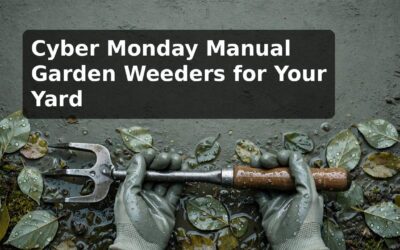
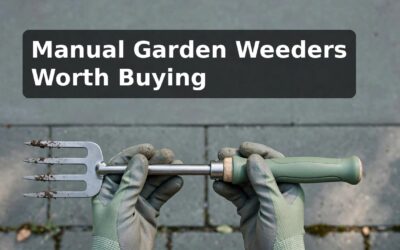
Manual weeders fall into three shapes. Stand-up pullers let you work without kneeling: a long handle, a claw head, and a footpad or pedal drive the claws into the soil and lift the weed out. Hand weeders are short tools for close work in beds and borders: a forked tip, a curved blade, or a digging knife that gets under the root. Long-handled hoes and rakes cover broad ground, shaving young weeds just under the surface before they take hold. Each shape suits a different weed, and most gardens need two of the three.
This guide compares seven manual weeders that cover all three shapes, from the classic four-claw stand-up puller to a Japanese digging knife. Each pick lists the handle length, claw or blade design, and weight that the maker or retailer page states, so you can match a tool to your soil and your back. Start with the weed you fight most, then the shape, and let the handle length follow.
Sale-week pages move quickly, and the pullers that fit most gardeners tend to sell out first, so it pays to arrive with a short list. Know the weed you fight, know your soil, and know your height, and the choice becomes a matter of matching numbers rather than guessing under pressure. A tool bought in a hurry and returned later costs more time than a tool chosen slowly once, so the notes below walk through head design, handle length, weight, and the small details that decide whether a weeder lasts for years.
Quick verdict
If dandelions and tap-rooted weeds are your main fight, start with a stand-up claw puller, because it lifts the whole root without kneeling. If you work in raised beds and tight borders, a hand weeder with a forked tip or a digging knife gives better control. If you clear broad paths and open beds, a long-handled hoe covers ground fast. The seven picks below span all three shapes, and each one is a real tool with stated dimensions, so you can buy the shape your garden needs rather than the shape with the loudest listing.
| Product | Key spec | Best for |
|---|---|---|
| Grampa's Weeder Original | 45 in bamboo handle, 4 steel claws | Tap-rooted lawn weeds |
| CobraHead Original Weeder | Curved tempered steel blade | Beds and borders |
| Nisaku NJP650 Hori Hori | One sharp edge, one serrated edge | Digging and cutting roots |
| Walensee WT-001G Weed Puller | 39 in handle, 3 steel claws | Stand-up pulling |
| CKLT Garden Hoe and Rake | 60.5 in handle, hoe plus rake | Broad-area weeding |
| WilFiks Weed Puller Tool | 44 in handle, 4-claw steel head | Lawns and open beds |
| RexWeed Weed Puller | Telescopes 32-46 in, 4 serrated claws | Rocky soil |
How we chose
We started from the verified pool of manual garden weeders and kept only models whose listing states handle length, head design, and weight or dimensions. A tool with no stated handle length cannot be matched to the gardener, so it did not make the list. We then sorted the survivors by shape: stand-up pullers, hand weeders, and long-handled hoes, so the final seven cover the weeds most gardens fight.
Head design came first. Four claws grip a tap root better than three, serrated claws hold in firm soil, and a curved blade suits cutting and loosening in beds. Handle length came second, because a stand-up tool should reach the ground without stooping and a hand tool should fit the palm. Weight came third, since a tool you carry across a garden all afternoon should not tire your arms. Soil notes came last, because some tools suit soft beds and others suit rocky ground, and the picks below note the soil each tool handles. Ejector design also mattered: a plunger or easy-eject mechanism keeps hands clean when you are clearing a lawn full of weeds, and a viewing window helps you center the weed before you pull.
1. Grampa's Weeder Original
- Handle: 45 in bamboo handle
- Head: 4 steel claws
- Weight: 2.3 lb
- Size: 8 x 46 in
- Footpad: yes
- Design: from 1913
The original stand-up weeder has been pulling dandelions since 1913, and the design has barely changed because it works. The forty-five-inch bamboo handle lets you work standing, the footpad drives four steel claws around the root, and a pull of the handle lifts the whole weed out of the lawn. At two point three pounds it is light enough to carry across a garden all afternoon, and bamboo keeps the handle warm in the hand on cold mornings. There is no ejector, so you flick the weed off by hand, and the maker stands behind the tool for life. For lawns full of dandelions and tap-rooted weeds, this is the tool to start with, and its age is the point: a design that has survived more than a century of gardens has survived because it does the job.
Pros: Classic four-claw design lifts whole roots; light bamboo handle; works standing, no kneeling.
Cons: No ejector; the weed must be flicked off by hand.
2. CobraHead Original Weeder

- Head: curved tempered steel blade with spoon-shaped tip
- Handle: recycled-material handle
- Made in: Wisconsin
- Use: loosens soil and cuts furrows
- Warranty: 1-year warranty
The CobraHead is the hand tool for gardeners who weed in beds and borders, where a stand-up puller cannot reach. The curved tempered steel blade slides under a weed and levers it out, and the spoon-shaped tip digs into tight soil without disturbing the plants beside it. It also loosens soil and cuts furrows for seed, so one tool covers weeding, planting, and soil work in a single pass. The handle is made from recycled material, and the tool is made in Wisconsin. At hand-tool size it fits the palm and the tool belt, and it suits gardeners who weed a little every day rather than in one long session.
Pros: Curved blade levers weeds out of tight beds; doubles as a furrow and soil tool; compact hand size.
Cons: Hand tool only, so it suits beds rather than broad lawns; short reach means kneeling.
3. Nisaku NJP650 Hori Hori

- Type: Japanese digging knife
- Blade: one sharp edge, one serrated edge
- Markings: blade depth marks
- Made in: Japan
- Handle: wooden handle
The hori hori is the most versatile hand tool in the group, because it is a knife, a trowel, and a weeder in one blade. One edge is sharp for cutting, the other is serrated for sawing through tough roots, and the blade depth marks tell you how deep you have dug, which matters when planting bulbs or dividing perennials. The wooden handle sits well in the hand, and the blade is slim enough to work between plants without tearing up the bed. Use the sharp edge to cut a weed at the root, or slide the blade under a tap root and lever it out whole. It is the tool for gardeners who want one hand tool that does five jobs, and it earns its place in the tool belt beside a trowel and a pair of snips.
Pros: Two edges cover cutting and sawing; depth marks guide planting; slim blade works between plants.
Cons: A knife needs care in storage and handling; not a stand-up tool for lawns.
4. Walensee WT-001G Weed Puller
- Handle: 39 in handle (39.5 x 9.5 x 2.5 in)
- Head: 3 steel claws
- Weight: 16 oz
- Features: foot pedal, plunger ejector
- Head material: stainless steel
The Walensee is the lightest stand-up puller in the group at sixteen ounces, and the plunger ejector is the feature that sets it apart. Step on the foot pedal to drive three steel claws around the root, pull the handle to lift the weed, and press the plunger to push the weed off the claws without touching it. That cycle matters when you are clearing a lawn full of dandelions, because touching every weed slows the work. The stainless steel head resists rust, and the thirty-nine-inch handle suits gardeners of average height. Avoid gravelly soil, where the claws can catch on stones instead of roots, and work after rain when the soil is soft, because damp soil lets the claws slide in and the root come out cleanly.
Pros: Plunger ejector keeps hands clean; very light at sixteen ounces; stainless steel head resists rust.
Cons: Three claws grip less than four in firm soil; avoid gravelly soil.
5. CKLT Garden Hoe and Rake
- Handle: 60.5 in handle
- Head: sharp trapezoid hoe plus 3.75 in rake
- Weight: 3.08 lb
- Use: dual-purpose head for broad-area work
The CKLT is the broad-area tool: a sixty-and-a-half-inch handle with a hoe on one side and a rake on the other. The sharp trapezoid hoe shaves young weeds just under the surface, and the three-and-three-quarter-inch rake pulls the cut weeds into a pile in the same pass. At three point zero eight pounds it has enough weight to bite into firm soil without tiring the arms, and the long handle covers ground fast on paths and open beds. This is the tool for the gardener who weeds a large vegetable patch or a long border, not the gardener who picks dandelions one by one from a lawn.
Pros: Hoe and rake in one head; long handle covers broad ground; sharp edge cuts young weeds at the surface.
Cons: Broad tool, poor for tight beds; heavier than a hand weeder.
6. WilFiks Weed Puller Tool
- Handle: 44 in bamboo-styled wooden handle
- Head: 4-claw steel head
- Features: foot-pedal platform, handle splits into 3 sections (28 in short version), hanging hole
- Claws: stainless steel
The WilFiks is the adjustable stand-up puller: the forty-four-inch handle splits into three sections, and the short version measures twenty-eight inches, so one tool covers both lawn work and closer work in beds. The four-claw steel head grips a tap root firmly, the foot-pedal platform drives the claws in, and the stainless steel claws resist rust. A hanging hole on the handle keeps the tool on a shed hook between sessions, and the bamboo-styled wooden handle looks at home beside wooden tool handles. For a gardener who wants one stand-up puller that adjusts to the job, this is a strong pick.
Pros: Handle splits into three sections for two lengths; four stainless steel claws; foot-pedal platform.
Cons: Wooden handle needs dry storage; short version still requires bending.
7. RexWeed Weed Puller
- Handle: 46 in steel handle, telescopes 32-46 in
- Head: 4 serrated steel claws
- Material: reinforced steel
- Soil: rocky soil
Rocky soil breaks ordinary weeders, and the RexWeed is built for it. The reinforced steel handle telescopes from thirty-two to forty-six inches, so you can set the length to your height and the job, and the four serrated steel claws bite into firm, stony ground where smooth claws slip. Serrations grip the root as you pull, which matters when the soil holds tight. The steel build is heavier than bamboo, but the weight is the trade for a tool that survives stones. If your garden sits on rocky ground, this is the stand-up puller to buy; if your soil is soft loam, a lighter puller will do the same job with less effort. Set the handle to your height before the first pull, because a handle that is too short forces you to stoop and a handle that is too long is hard to control.
Pros: Telescoping steel handle fits any height; serrated claws grip in firm soil; reinforced build survives rocky ground.
Cons: Steel build is heavier than bamboo; overbuilt for soft, loose soil.
Buying guide
Start with the weed you fight most. Tap-rooted weeds like dandelions need a claw puller that grips the root and lifts it whole, because a snapped stem grows back within days. Shallow weeds in beds need a hand tool with a forked tip or a curved blade that gets under the root without disturbing nearby plants. Young weeds on paths and open ground need a hoe that shaves them just under the surface before they take hold. Most gardens need two shapes: a stand-up puller for the lawn and a hand tool for the beds.
Handle length follows the shape. A stand-up puller should let you work without stooping: forty to forty-six inches suits most adults, and a telescoping handle lets you set the length to your height. A hand tool should fit the palm and the tool belt, and a long-handled hoe should reach across a bed without stepping into it. Weight matters too: a tool you carry across a garden all afternoon should stay under three pounds, and a hand tool should stay light enough for an hour of close work.
Claw count and blade shape decide how the tool grips. Four claws hold a tap root better than three, serrated claws hold in firm soil, and a curved blade suits cutting and loosening in beds. Check the head material: stainless steel resists rust, tempered steel holds an edge, and a foot pedal or plunger ejector keeps your hands clean when you are clearing a lawn full of weeds. Check what is included in the box before you buy: some pullers ship as a single tool, some split into sections, and a telescoping handle is only useful if the locking mechanism holds. One more check belongs to the listing itself: read the full description rather than the headline, and note the handle length, the claw count, and the weight in your own words before you order. If a listing leaves a question open, the return policy is the safety net, and a clear policy matters more than a bright banner. Photos of the head from the side tell you more than a studio shot of the whole tool, because the claw shape and the blade angle are the parts that do the work.
Sale-week shopping adds a few checks of its own. Stock moves fast, so have your weed list and a short list of acceptable tools ready before the sale opens. Read the return policy before ordering, because a tool that does not suit your soil is only a good buy if you can send it back without a fight. Check the warranty terms too, and keep the order confirmation and the product page details until the tool arrives, so you can compare what was listed with what was delivered. Finally, look at the delivery timing: a tool bought in the sale should arrive in time for the next weeding session, not after the weeds have set seed.
Care and storage decide how long a weeder lasts, and they cost nothing but a few minutes after each session. Knock the soil off the head, wipe the blade or claws dry, and oil the metal lightly before storage, because rust starts fast on a damp blade. Wooden handles last longer when kept dry, and a hanging hook keeps the tool off a damp shed floor. A blade that is kept sharp cuts cleaner and needs less force, so sharpen a hoe or a digging knife when the edge dulls rather than forcing a blunt edge through the soil. A tool that is cleaned, dried, and hung up after every use will still be pulling weeds years after a neglected tool has rusted through.
FAQ
What is the best manual weeder for dandelions?
A stand-up claw puller is the best tool for dandelions, because the claws grip the tap root and lift it whole. A forked hand tool also works in beds, but it means kneeling. The key is the root: a dandelion pulled by the stem grows back, while a dandelion lifted by the root stays gone. Water the lawn the day before if the soil is dry, because damp soil lets the claws slide in and the root come out cleanly, while dry soil holds the root tight and snaps the stem.
Do stand-up weed pullers work in rocky soil?
A reinforced steel puller with serrated claws works in rocky soil, because the serrations grip the root and the steel survives stones. A light puller with smooth claws will slip or bend on stones. Check the listing for rocky-soil notes before ordering, and avoid gravelly ground with any claw tool. If the soil is mostly stone, a hand tool with a narrow blade may work better than a claw puller, because the blade slides between stones where claws catch.
How do I clean a manual weeder after use?
Knock the soil off the head, wipe the blade or claws dry, and oil the metal lightly before storage. Wooden handles last longer when kept dry, and a hanging hook keeps the tool off a damp floor. Never put a wet steel tool away, because rust starts fast on a damp blade.
Is a hori hori knife a good weeder?
Yes, a hori hori is a strong weeder for beds and borders. One edge cuts, the other saws through tough roots, and the slim blade works between plants without tearing up the bed. It is a hand tool, so it suits close work rather than broad lawns, and it needs care in storage because it is a knife.
Should I buy a weed puller or a hoe?
Buy a puller for tap-rooted weeds on lawns and a hoe for young weeds on paths and open beds. Most gardens need both: the puller lifts established weeds by the root, and the hoe shaves new weeds before they take hold. A dual-purpose head with a hoe and a rake covers broad ground in one tool, and a hand weeder covers the beds where neither a puller nor a hoe can reach. Start with the puller if dandelions are the main fight, and add the hoe when the paths need clearing.
Conclusion
The sale week is a good time to buy a manual garden weeder, but only when the tool matches the weed and the soil. A stand-up claw puller lifts tap roots without kneeling, a hand tool with a forked tip or a curved blade works the beds, and a long-handled hoe covers broad ground. The seven picks above span all three shapes, and each one lists the handle, head, and weight that the maker states. Buy the shape your garden needs, check the return policy and the delivery timing, and the tool you buy now will still be pulling weeds when the next season starts.
Related guides
More from Amazon
Programs that pair well with the guide above. Offers and eligibility are set by Amazon and may change.
Send a Prime gift membership to someone who would use free shipping and Prime Video.
Gift Amazon PrimeGive audiobooks to someone who loves to listen. Plans and prices are set by Amazon.
Gift AudibleCollect the home and kitchen items you want in one registry that guests can shop from.
Create a wedding registrySet up recurring deliveries of everyday items on eligible products. Terms and savings are set by Amazon.
Explore Subscribe & SaveAs an Amazon Associate we earn from qualifying purchases.
More ways to save on your garden
Programs that pair well with the guide above. Offers and eligibility are set by Amazon and may change.
Fast, free shipping on eligible items, plus Prime Video and more. Eligible new members can start with a free trial.
Start a Prime free trialSet up recurring deliveries of everyday items on eligible products. Terms and savings are set by Amazon.
Explore Subscribe & SaveRead from a huge library of eBooks, including how-to guides and cookbooks. Eligible new members can start with a free trial.
Try Kindle UnlimitedAudiobooks and podcasts for the commute, the garage or the kitchen. Eligible new members can start with a free trial.
Try Audible freeAs an Amazon Associate we earn from qualifying purchases. Using these links costs you nothing extra.






Write Your Review
No reviews yet. Be the first to share your experience!