
Key takeaways
- Shaping ornamental hedges takes clean, even cuts and steady control. These seven dual-action trimmers cover boxwood, topiary and sculpted shrubs beautifully.
What's inside
As an Amazon Associate I earn from qualifying purchases. This post may contain affiliate links at no extra cost to you.
Ornamental hedges reward patience and punish rough tools. A boxwood ball, a sculpted cone, or a low parterre border shows every uneven pass, every torn leaf tip, and every flat spot left by a blade that drags instead of slicing. The right tool for this work pairs two moving blades so the cut stays smooth, the vibration stays low, and the line you set with the first pass holds through the last. best dual action hedge trimmers for shaping ornamental hedges are the ones that give a gardener that kind of control: blades that meet cleanly, enough reach to work around a form without shifting stance every few seconds, and a cutting capacity matched to the soft new growth that ornamental shrubs put out each season.
This guide looks at seven dual-action models that suit shaping work, from a light corded trimmer for small boxwood borders to a pole model that reaches the top of a tall sculpted hedge. Each one was chosen for blade action, weight, balance, and the kind of cut it leaves behind, because ornamental shaping is mostly about the finish. The sections below explain what to look for, compare the seven side by side, and walk through each model in detail so you can match a tool to the shrubs in your own garden.
Quick verdict
For most ornamental shaping, the Greenworks 80V HT80L213 is the strongest all-round pick: a 26-inch brushless blade, a 1.1-inch cutting capacity, and a rotating handle that keeps your wrist neutral on vertical faces and flat tops alike. If your ornamental work is mostly small boxwood and low borders, the BLACK+DECKER BEHT200 gives you a short, light 18-inch blade that is easy to steer around curves. For tall sculpted hedges, the STIHL HLA 135 pole trimmer reaches the crown without a ladder. The table below sets out the seven models at a glance.
| Product | Key spec | Best for |
|---|---|---|
| Greenworks 80V 26-Inch Brushless Hedge Trimmer HT80L213 | 26-in blade, 80V, brushless, 7.1 lb, 1.1-in capacity, 4000 SPM | All-round ornamental shaping |
| Greenworks 22122 22-Inch 4.0 Amp Corded Hedge Trimmer with Rotating Handle | 22-in blade, 4.0 amp corded, 6.06 lb, 5/8-in capacity | Precise edging on shaped faces |
| BLACK+DECKER BEHT200 18-Inch Corded Hedge Trimmer | 18-in blade, 3.5 amp corded, 4.5 lb, 5/8-in capacity | Small boxwood and low borders |
| CRAFTSMAN CMEHTS8022 22-Inch Corded Hedge Trimmer with POWERSAW | 22-in blade, 3.8 amp corded, 6.8 lb, 3/4-in capacity, POWERSAW to 1.5 in | Ornamental shrubs with woody stems |
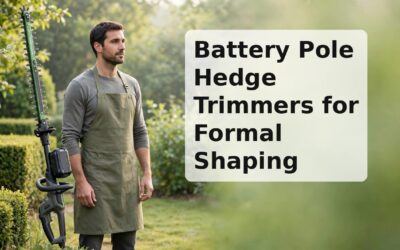
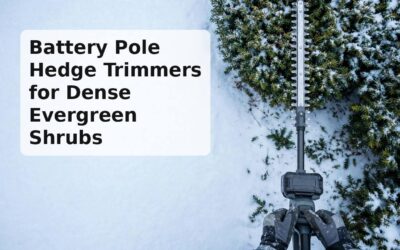
| STIHL HLA 135 Battery Pole Hedge Trimmer | 24-in blade, 36V AP System, 12.3 lb without battery, 145-degree head | Tall sculpted hedges |
| ECHO SHC-2620 | 21-in blade, 25.4 cc gas, 13.2 lb, 51-in shaft | Large ornamental plantings |
| WORX WG217 24-Inch 4.5 Amp Corded Hedge Trimmer with Rotating Head | 24-in blade, 4.5 amp corded, 6.4 lb, 3/4-in capacity | Long straight runs on formal hedges |
How we chose
We looked for dual-action blades first, since two blades moving against each other cut cleaner and shake the tool less than a single moving blade, and that matters when the finish is the whole point. We weighed blade length against the size of the shrubs being shaped, favouring shorter blades for tight curves and longer blades for flat faces. Cutting capacity was weighed against the soft growth ornamental shrubs produce, and weight and balance were weighed because shaping is slow, careful work that keeps your arms raised for long stretches. We also noted where the maker lists a figure and where sources disagree, and we say so plainly in the notes below.
Greenworks 80V 26-Inch Brushless Hedge Trimmer HT80L213
- Blade: 26 in
- Power: 80V battery, brushless DigiPro motor
- Weight: 7.1 lb
- Cutting capacity: 1.1 in
- Blade action: dual-action
- Speed: 4000 SPM
- Handle: 180-degree rotating handle
The HT80L213 leads this set because it covers the widest range of ornamental shaping jobs without a weak spot. The 26-inch blade is long enough to sweep a flat face in one pass, which keeps the surface level, and the 1.1-inch cutting capacity handles the thicker stems that appear where an ornamental shrub has been left a little too long between trims. The brushless motor runs at 4000 strokes per minute, and at that speed the dual-action blades slice soft growth instead of tearing it, which leaves the leaf tips intact and the shaped surface looking crisp the day after the cut. The rotating handle is the feature that matters most for shaping: turn it and the grip stays comfortable whether the blade is vertical on the side of a cone or horizontal across the top of a boxwood cube. At 7.1 lb it is light enough for extended sessions, and the battery platform means no cord to drag across a bed of low planting.
Pros: Long blade sweeps flat faces evenly; 1.1-inch capacity covers neglected stems; rotating handle suits vertical and horizontal cuts; brushless motor runs at a fast 4000 SPM.
Cons: The 26-inch blade can feel long inside a tight spiral or a small topiary form; battery and charger add to the cost of the kit.
Greenworks 22122 22-Inch 4.0 Amp Corded Hedge Trimmer with Rotating Handle
- Blade: 22 in
- Power: 4.0 amp corded, 120V
- Weight: 6.06 lb per the owner manual
- Cutting capacity: 5/8 in per the owner manual
- Blade action: dual-action
- Handle: 180-degree rotating handle, turns 90 degrees left or right
The 22122 is the precision instrument of this set. Its 22-inch blade is short enough to steer around the curves of a ball or a cone, and the rotating handle lets you change the cutting plane without twisting your wrist, which is exactly what shaping work demands. One note on the figures: the owner manual lists the weight at 6.06 lb and the cutting capacity at 5/8 inch, while a retailer listing gives 7.4 lb and 3/4 inch. We use the manual figures here and flag the difference, since the manual is the maker's own document. Either way, this is a light, manageable trimmer, and the corded motor gives steady power for as long as the session lasts. The 5/8-inch capacity suits the soft new growth that ornamental shrubs throw out after spring, and the dual-action blades leave a clean edge on boxwood and privet alike.
Pros: Rotating handle keeps the wrist neutral on angled cuts; light and easy to steer around curves; corded power never fades mid-session.
Cons: The weight and capacity figures differ between the manual and a retailer listing; cord length limits how far you can roam from an outlet.
BLACK+DECKER BEHT200 18-Inch Corded Hedge Trimmer
- Blade: 18 in
- Power: 3.5 amp corded, 120V
- Weight: 4.5 lb
- Cutting capacity: 5/8 in
- Blade action: dual-action
- Handle: full wrap-around front handle
The BEHT200 is the smallest and lightest tool here, and for small ornamental work that is a real advantage. An 18-inch blade follows the curve of a boxwood ball without overshooting the line, and at 4.5 lb you can hold it at shoulder height for the whole of a shaping session without your arms tiring. The 3.5-amp motor is modest, but it is well matched to the soft growth of ornamental shrubs, and the dual-action blades cut cleanly at a 5/8-inch capacity. This is the trimmer to reach for when the job is a low border, a small topiary, or the finishing pass on a larger form that needs a delicate touch. It is not the tool for thick woody stems, and it does not pretend to be.
Pros: Very light at 4.5 lb; short blade follows curves well; simple corded design with nothing to charge.
Cons: 3.5-amp motor is modest for thicker stems; 18-inch blade is slow on long flat faces; cord tethers you to an outlet.
CRAFTSMAN CMEHTS8022 22-Inch Corded Hedge Trimmer with POWERSAW
- Blade: 22 in
- Power: 3.8 amp corded
- Weight: 6.8 lb
- Cutting capacity: 3/4 in, with a POWERSAW branch cutter for stems up to 1.5 in
- Blade action: dual-action
- Handle: full bale handle
Ornamental shrubs are not always soft. An older boxwood or a neglected laurel can hide woody stems inside the foliage, and a standard trimmer blade will stall or jam on them. The CMEHTS8022 answers that with a built-in POWERSAW branch cutter that handles stems up to 1.5 inches, so you can clear the woody growth and then shape the soft outer foliage with the same tool. The 22-inch dual-action blade cuts at 3/4 inch, which is generous for shaping work, and the 3.8-amp motor holds its speed through denser patches. At 6.8 lb it is heavier than the lightest corded models here, but the weight sits well in the hands and the bale handle gives a secure grip from several angles.
Pros: POWERSAW cutter clears woody stems up to 1.5 inches; 3/4-inch blade capacity suits mixed growth; dual-action blades cut cleanly.
Cons: Heavier than the other corded models in this set; the POWERSAW adds bulk at the blade tip.
STIHL HLA 135 Battery Pole Hedge Trimmer
- Blade: 24 in (60 cm), double-sided
- Power: 36V AP System, brushless motor
- Weight: 12.3 lb without battery
- Tooth spacing: 1.3 in (34 mm)
- Blade action: dual-action
- Speed: 3200, 3600 or 4000 SPM
- Head: 145-degree adjustable head, 97.2-in length
- Rating: IPX4
The HLA 135 is the reach tool in this set. Ornamental hedges are often taller than they look once you start shaping the crown, and this pole trimmer lets you work the top of a tall sculpted hedge from the ground. The 145-degree adjustable head tilts to meet the cutting plane, so you can shape the top face without holding the blade at an awkward angle, and the three speed settings let you slow down for delicate finishing work or speed up for bulk removal. The 24-inch double-sided blade cuts on both edges, and the 1.3-inch tooth spacing takes thick stems in stride. Note that a shorter HLA 135 K variant exists at 219 cm, so check the length when you order. At 12.3 lb without the battery it is the heaviest tool here, but the length does the work of reaching, and the pole format keeps your arms lower than a standard trimmer would at the same height.
Pros: Long reach shapes tall hedges from the ground; adjustable head meets the cutting plane; three speeds suit delicate and heavy work.
Cons: Heavy at 12.3 lb before the battery; pole format is less nimble on small low forms; sold as a tool only, so the battery is separate.
ECHO SHC-2620

- Blade: 21 in
- Power: 25.4 cc 2-stroke gas engine
- Weight: 13.2 lb
- Blade action: dual-action, double-sided, double-reciprocating
- Shaft: 51 in
The SHC-2620 is the workhorse for large ornamental plantings. A gas engine gives it the stamina for a long session across a big garden, and the 51-inch shaft puts the 21-inch double-sided blade out where it can reach into the middle of a wide hedge without you leaning into the foliage. The dual-action, double-reciprocating blades cut cleanly through dense growth, and the 25.4 cc engine holds its speed where a smaller motor would bog down. At 13.2 lb it is the heaviest tool in this set, and it is best suited to a gardener who is comfortable with a shafted tool and has a large area to cover. For a single small topiary it is more tool than the job needs, but for a garden full of sculpted shrubs it earns its place.
Pros: Gas power runs all day; long shaft reaches into wide hedges; double-reciprocating blades cut dense growth cleanly.
Cons: Heaviest tool in this set at 13.2 lb; gas engine needs fuel mixing and regular care; louder than the battery and corded models here.
WORX WG217 24-Inch 4.5 Amp Corded Hedge Trimmer with Rotating Head
- Blade: 24 in
- Power: 4.5 amp corded, 120V
- Weight: 6.4 lb
- Cutting capacity: 3/4 in
- Blade action: dual-action
- Head: rotating cutting head, 180 degrees
The WG217 closes the set with a long blade and a clever head. The 24-inch dual-action blade covers long straight runs on a formal hedge in fewer passes, and the rotating cutting head turns 180 degrees so you can cut the top face and the side face without changing your grip. The 4.5-amp motor is the strongest corded motor here, and the 3/4-inch capacity handles the thicker stems that show up on a hedge that has had a season to grow. At 6.4 lb it balances well, and the corded design means the power stays constant from the first cut to the last. For a long, straight formal hedge that needs a level top and a flat face, this is a strong choice.
Pros: Long 24-inch blade covers straight runs quickly; rotating head suits top and side cuts; strongest corded motor in this set.
Cons: The rotating head adds a joint that needs care over time; corded range is limited by the outlet.
Buying guide
Shaping ornamental hedges is different from cutting a boundary hedge back to size. The goal is a clean surface and a true line, so blade action matters more than raw power. Dual-action blades, where both blades move against each other, cut with less vibration and leave a smoother finish than a single moving blade, and they are the first thing to look for. A blade that tears leaf tips will leave brown edges across the whole shaped surface within a day, so the quality of the cut is not a small detail.
Blade length is the next decision. Short blades, around 18 to 22 inches, follow curves and fit inside tight forms such as spirals and small balls. Long blades, 24 to 26 inches, sweep flat faces level and cover long straight runs in fewer passes. Most gardens with ornamental shrubs need both kinds of work, so think about which form dominates your planting. A garden of boxwood balls favours a short blade; a long formal hedge favours a long one.
Weight and balance decide how long you can work. Shaping is slow by nature: you step back, look, cut a little, step back again. A tool that weighs 4.5 lb lets you hold a line at shoulder height without strain, while a 12-lb pole tool trades weight for reach. If your ornamental hedges are taller than your shoulders, a pole trimmer is worth the extra weight because it keeps you off a ladder. If they are low borders and small topiary, a light handheld tool is the better call.
Cutting capacity should match the growth you actually cut. Ornamental shrubs put out soft new growth each season, and a 5/8-inch or 3/4-inch capacity covers that easily. Thicker stems appear where a shrub has been left untrimmed, or where an older plant has woody growth inside the canopy. If your shrubs have woody stems, look for a larger capacity or a branch cutter, and do not force a small blade through wood it cannot handle.
Power source shapes the session. Corded trimmers give steady power and never run flat, but the cord limits your range and needs care around the blade. Battery trimmers move freely and are quiet, but the battery adds weight and the session ends when the charge does. Gas trimmers run longest and cut hardest, but they are heavier and need fuel and maintenance. For ornamental shaping, where the work is careful and often close to the house, corded and battery tools are usually the easiest fit.
Finally, check the figures the maker lists and note where sources disagree. The 22122 in this set is a good example: the owner manual and a retailer listing give different weights and capacities. When figures conflict, the manual is the better source, and a small difference in weight is worth knowing before you buy. The same applies to pole trimmers, where a model may be sold in a standard and a short-shaft variant. Read the listing carefully and confirm the length, the blade size, and whether the battery is included.
After a shaping session, the blades deserve a few minutes of care, since sap and leaf residue left on the steel will dry hard and drag on the next cut. Wipe both blades with a dry cloth first, then with a cloth dampened with warm water and a drop of washing-up liquid, and dry them fully before the tool goes away. A light wipe of blade oil along the cutting edges keeps the two blades sliding smoothly against each other, and it also keeps rust from forming on a tool that lives in a damp shed. Check the blade bolts at the same time: a loose bolt lets the blades chatter, while a bolt set too tight makes the motor work harder than it should. Store the trimmer with the blade cover on and the blade pointing away from anything it could catch, and keep the cord coiled loosely rather than wound tight around the body. A tool that is cleaned and covered after each session holds its edge longer, and the next shaping pass starts with a clean cut instead of a ragged one.
FAQ
What makes a dual-action blade better for shaping ornamental hedges?
A dual-action blade has two blades moving against each other, which cuts with less vibration and leaves a cleaner edge than a single moving blade. On ornamental shrubs, where the finish is visible, that cleaner cut means fewer torn leaf tips and a surface that stays green after trimming.
How short should the blade be for a small topiary?
An 18-inch to 22-inch blade suits small topiary forms such as balls, cones, and spirals. The shorter blade follows curves without overshooting the line, and a light tool is easier to hold steady while you work around the form.
Can a pole trimmer shape the top of a tall ornamental hedge?
Yes, a pole trimmer with an adjustable head is made for that job. It lets you shape the crown from the ground, and the head angle can be set to meet the top face squarely. Check the length and the weight before you buy, since a long pole tool is heavier than a handheld one.
How often should ornamental hedges be shaped?
Most ornamental shrubs benefit from shaping once or twice a season, timed to the growth of the plant. Light, frequent shaping keeps the form true and avoids the need to cut back thick woody stems, which is harder on both the plant and the tool.
What cutting capacity do I need for boxwood?
A 5/8-inch to 3/4-inch capacity covers the soft new growth of boxwood and most ornamental shrubs. If the shrub has woody stems inside the canopy, a larger capacity or a branch cutter is useful, and the woody growth should be cleared before the shaping pass.
Conclusion
Ornamental shaping rewards a tool that cuts cleanly, holds a line, and stays comfortable in the hands through a slow, careful session. The seven dual-action trimmers in this guide cover that work from different angles: the Greenworks HT80L213 leads for all-round shaping, the BEHT200 suits small borders and topiary, the STIHL HLA 135 reaches tall crowns, and the ECHO SHC-2620 covers large plantings. Match the blade length and the weight to the shrubs you actually grow, check the capacity against the thickest stems you expect to meet, and choose a power source that fits how long your sessions run. With the right tool and a patient eye, a shaped hedge holds its line for the whole season.
Related guides
More from Amazon
Programs that pair well with the guide above. Offers and eligibility are set by Amazon and may change.
Collect the home and kitchen items you want in one registry that guests can shop from.
Create a wedding registrySet up recurring deliveries of everyday items on eligible products. Terms and savings are set by Amazon.
Explore Subscribe & SaveFree shipping on eligible items, Prime Video and more. Eligible new members can start with a free trial.
Start a Prime free trialAudiobooks and podcasts to listen to on the go. Eligible new members can start with a free trial.
Try Audible freeAs an Amazon Associate we earn from qualifying purchases.
More ways to save on your garden
Programs that pair well with the guide above. Offers and eligibility are set by Amazon and may change.
Fast, free shipping on eligible items, plus Prime Video and more. Eligible new members can start with a free trial.
Start a Prime free trialSet up recurring deliveries of everyday items on eligible products. Terms and savings are set by Amazon.
Explore Subscribe & SaveRead from a huge library of eBooks, including how-to guides and cookbooks. Eligible new members can start with a free trial.
Try Kindle UnlimitedAudiobooks and podcasts for the commute, the garage or the kitchen. Eligible new members can start with a free trial.
Try Audible freeAs an Amazon Associate we earn from qualifying purchases. Using these links costs you nothing extra.




Write Your Review
No reviews yet. Be the first to share your experience!