
Key takeaways
- Seven dual-action hedge trimmers for dense evergreen shrubs, compared on long blade length, cutting capacity, weight, and motor power for thick woody growth.
What's inside
As an Amazon Associate I earn from qualifying purchases. This post may contain affiliate links at no extra cost to you.
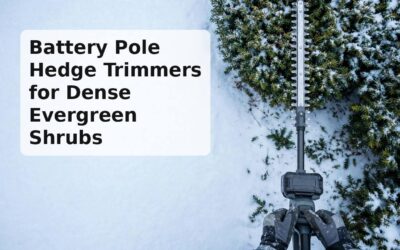
Dense evergreen shrubs are the hardest test of a hedge trimmer. Yew, holly, juniper, and arborvitae pack their branches tight, and the wood inside a mature shrub is far harder than the soft tips on the outside. A trimmer that only handles soft growth will stall, tear, and leave a ragged face that stays visible all season. Dual-action blades answer that problem directly: two blades move against each other, shearing each stem instead of beating against it, which keeps the tool steadier and the cut cleaner when the growth gets thick. The best dual action hedge trimmers for dense evergreen shrubs pair that cutting action with enough blade length, motor power, and cutting capacity to work through a mature shrub without stopping every few feet.
The seven models below cover corded electric, battery, and gas power, because dense evergreens grow in places that suit different power sources. A corded model suits a shrub beside the house, a battery model suits a shrub at the far end of the garden, and a gas pole model suits a tall evergreen that needs reach. Blade lengths run from 18 inches to 24 inches, cutting capacities from five eighths of an inch to one and a quarter inches, and weights from 4.5 pounds to 13.9 pounds. The lead pick is the battery model with the largest cutting capacity in the set, and the rest cover the cases where a cord, a lighter body, or a pole makes the job easier. Every figure below comes from a page that was opened and read, and where a figure is not listed the entry says so.
Quick verdict
The EGO Power+ HT2500 leads this group because its cutting capacity of one and a quarter inches is the largest here, and its 25-inch brushless blade is built for the thickest part of a dense evergreen. Gardeners whose shrubs sit beside the house will get more from the WORX WG217, a corded 24-inch model with a rotating cutting head that turns 180 degrees for the top and the face of a tall shrub. The BLACK+DECKER BEHT200 is the light pick at 4.5 pounds, best for shorter sessions on smaller evergreens. The Husqvarna 525HE4 is the reach pick, a gas pole trimmer that extends to 13 feet for the top of a tall arborvitae. The STIHL HSE 52 adds a brushless corded motor for steady speed under load, and the Scotts HT10020S and WORX WG209 fill out the group as a light 20-inch corded model and a long 24-inch corded model.
| product | key spec | best for |
|---|---|---|
| EGO Power+ HT2500 56V 25-Inch Brushless Hedge Trimmer | 25 in blade; 1.25 in capacity; 8.4 lb | Thickest dense evergreen growth |
| BLACK+DECKER BEHT200 18-Inch Corded Hedge Trimmer | 18 in blade; 3.5 amp; 4.5 lb | Light handling on smaller evergreens |
| WORX WG217 24-Inch 4.5 Amp Corded Hedge Trimmer with Rotating Head | 24 in blade; 4.5 amp; 6.4 lb | Tall shrubs beside the house |
| STIHL HSE 52 20-Inch Corded Hedge Trimmer (US) | 20 in blade; brushless DC motor; 6.8 lb | Steady speed under load |
| Scotts HT10020S 20-Inch 3.2 Amp Corded Hedge Trimmer | 20 in blade; 3.2 amp; 4.8 lb | Light 20-inch corded cutting |
| Husqvarna 525HE4 | 24 in blade; 25.4 cc; 13 ft reach | Tops of tall evergreens |
| WORX WG209 24-Inch 4 Amp Corded Hedge Trimmer | 24 in blade; 4 amp; 5.7 lb | Long level passes on broad faces |
How we chose
Dual-action blades were the first filter, because a single-action blade tears dense evergreen growth and leaves brown tips that show for months. Every model in this article uses dual-action blades, which shear the stem cleanly and keep vibration lower when the blade meets a knot of woody stems. Cutting capacity came second, because the stems inside a mature evergreen are the real test: a capacity of one inch or more handles the wood that a five-eighths-inch blade will only chew. Blade length came third, since a longer blade levels a broad shrub face in fewer passes, while a shorter blade turns better inside a dense, rounded shrub.
Power source was read as a question of where the shrub grows rather than as a ranking. Corded models suit shrubs near the house and run as long as the job lasts. Battery models suit shrubs at the far end of the garden and free the gardener from cord management. Gas models suit tall evergreens and long sessions where a pole is needed. Weight was the last filter, because dense evergreen work means holding the trimmer up and into the shrub for long stretches, and a heavy tool makes the arms drop and the cut wander. Where two sources disagreed on a figure, the entry notes the conflict instead of hiding it.
EGO Power+ HT2500 56V 25-Inch Brushless Hedge Trimmer
- Blade length: 25 inches
- Power: 56 volt ARC Lithium battery
- Motor: brushless
- Weight: 8.4 pounds
- Cutting capacity: 1.25 inches
- Dual-action blades: yes
- Blade speed: 3200 strokes per minute
The HT2500 leads this group on the figure that matters most for dense evergreens: cutting capacity. At one and a quarter inches it takes stems that no other model here will touch, which means the woody core of a mature yew or holly can be cut with the trimmer instead of by hand. The 25-inch blade is the longest here, so a broad shrub face levels in a few passes, and the brushless motor holds speed when the blade bites into a dense patch. At 8.4 pounds it is one of the heavier models in this set, so it suits gardeners who work with both hands and take breaks between shrubs. The 3200 strokes per minute keep the cut moving through thick growth without dragging. For a neglected evergreen that has gone two seasons without a trim, this is the model to reach for first.
Pros: Largest cutting capacity here at 1.25 inches; 25-inch brushless blade; holds speed in dense growth; battery power frees the gardener from a cord.
Cons: Heavy at 8.4 pounds; battery and charger add to the cost of the kit; long blade needs room to turn inside a rounded shrub.
BLACK+DECKER BEHT200 18-Inch Corded Hedge Trimmer
- Blade length: 18 inches
- Motor: 3.5 amp, corded, 120 volt
- Weight: 4.5 pounds
- Cutting capacity: 5/8 inch
- Dual-action blades: yes
- Rotating rear handle: no
- Motor type: not stated by the maker
The BEHT200 is the light pick in this group, and its job is the smaller dense evergreen: a young holly, a rounded juniper, or the lower skirt of a larger shrub. At 4.5 pounds with an 18-inch blade it turns easily inside a dense, rounded shape, where a long blade would catch on the far side. The 3.5 amp motor and five-eighths-inch capacity suit the seasonal growth and the smaller woody stems, and the dual-action blades keep the cut clean on the soft tips that show from the street. Corded power means it runs as long as the session lasts, which suits a shrub beside the house. It will not cut the thickest stems in a mature evergreen, and those should be taken with hand pruners, but for shaping and light cut-back work it is the easiest model here to hold steady.
Pros: Lightest model here at 4.5 pounds; short blade turns inside rounded shrubs; corded power runs as long as the job lasts.
Cons: Five-eighths-inch capacity will not take thick woody stems; 18-inch blade needs more passes on a broad face; motor type not stated.
WORX WG217 24-Inch 4.5 Amp Corded Hedge Trimmer with Rotating Head
- Blade length: 24 inches
- Motor: 4.5 amp, corded, 120 volt
- Weight: 6.4 pounds
- Cutting capacity: 3/4 inch
- Dual-action blades: yes
- Rotating rear handle: no, rotating cutting head 180 degrees
- Motor type: not stated by the maker
The WG217 carries the strongest corded motor in this set at 4.5 amp, and its rotating cutting head is the feature that sets it apart for tall evergreens. The head turns 180 degrees, so the gardener can cut the flat top of a shrub and then turn the head for the vertical face without twisting the wrist or moving a ladder. The 24-inch blade levels a broad face in few passes, and the three-quarter-inch capacity handles the woody stems that sit a few inches inside a mature shrub. At 6.4 pounds it sits in the middle of this group for weight, light enough for a full session with breaks. The rotating head is not the same as a rotating rear handle, and the entry states that plainly: the head turns, the handle does not. For a tall evergreen beside the house, where the top and the face both need work, this is the most flexible corded pick here.
Pros: Strongest corded motor here at 4.5 amp; rotating cutting head turns 180 degrees; 24-inch blade with three-quarter-inch capacity.
Cons: Rotating head is not a rotating rear handle; 6.4 pounds needs breaks on long sessions; motor type not stated.
STIHL HSE 52 20-Inch Corded Hedge Trimmer (US)
- Blade length: 20 inches
- Motor: 3.8 amp, corded, 120 volt, brushless direct-current motor per STIHL feature copy
- Weight: 6.8 pounds
- Cutting capacity: not listed by the maker
- Dual-action blades: yes, double-edged blades
- Rotating rear handle: no
- Motor type: brushless direct-current
The HSE 52 is the steady-speed pick in this group. Its brushless direct-current motor holds speed when the blade meets resistance, which is exactly what happens inside a dense evergreen, where the blade moves from soft tips into hard wood and back again several times a pass. The 20-inch blade is the most common length for this work: long enough to level a face, short enough to steer around a branch that should stay. At 6.8 pounds it is on the heavier side of this set, so it suits shorter sessions or a gardener who works with both hands and rests between shrubs. The maker does not list a cutting capacity figure, so that entry stays blank; a gardener who needs a stated capacity should look at the WG217 or the HT2500 instead. What this model offers is a motor that does not fade as the cut gets harder.
Pros: Brushless motor holds speed under load; 20-inch blade suits most evergreen shrubs; double-edged dual-action blades cut cleanly.
Cons: Heavier than most models here at 6.8 pounds; no cutting capacity figure listed by the maker.
Scotts HT10020S 20-Inch 3.2 Amp Corded Hedge Trimmer
- Blade length: 20 inches
- Motor: 3.2 amp, corded
- Weight: 4.8 pounds
- Cutting capacity: 5/8 inch
- Dual-action blades: yes
- Rotating rear handle: no
- Motor type: not stated by the maker
The Scotts HT10020S is the light 20-inch corded pick, pairing a full-length blade with a 4.8-pound body. That combination suits gardeners who want the levelling power of a 20-inch blade without the weight of the heavier models in this group. The 3.2 amp motor and five-eighths-inch capacity handle the seasonal growth and the smaller woody stems of a well-kept evergreen, and the dual-action blades keep the tips clean. It will slow on the thickest stems inside a neglected shrub, and those stems belong to hand pruners, but for a twice-a-year shaping routine it is the easiest 20-inch model here to hold level. Corded power keeps it running as long as the session lasts, and the light body means the arms stay steady for the last shrub as well as the first.
Pros: Light at 4.8 pounds with a full 20-inch blade; dual-action blades give a clean cut; corded power runs all session.
Cons: 3.2 amp motor will slow on thick woody stems; five-eighths-inch capacity limits the thickest cuts; motor type not stated.
Husqvarna 525HE4
- Blade length: 24 inches, 600 mm cutting length
- Engine: 25.4 cc gas
- Weight: 13.9 pounds
- Cutting capacity: maximum cutting thickness 30 mm
- Dual-action blades: yes, double-sided blades
- Reach: pole model, up to 13 feet
- Shaft: pole and shafted design
The 525HE4 is the reach pick, and it is the only pole model in this group. Its shafted design extends to 13 feet, which puts the 24-inch blade at the top of a tall arborvitae or a mature holly without a ladder. The 25.4 cc gas engine gives steady power for a long session, and the 30 mm maximum cutting thickness handles the woody stems at the top of a tall shrub. At 13.9 pounds it is by far the heaviest model here, and it is meant to be carried with a harness and worked in short passes, not held overhead for long stretches. The dual-action double-sided blades cut cleanly on the tips that show from the ground. For the top of a tall evergreen, where no handheld trimmer can reach, this is the only model in the group that does the job at all.
Pros: Reaches up to 13 feet for tall evergreen tops; 24-inch dual-action blade; gas power runs a long session; 30 mm cutting thickness.
Cons: Heaviest model here at 13.9 pounds; needs a harness and short passes; gas engine needs fuel and routine care.
WORX WG209 24-Inch 4 Amp Corded Hedge Trimmer
- Blade length: 24 inches
- Motor: 4 amp, corded, 120 volt
- Weight: 5.7 pounds
- Cutting capacity: 3/4 inch
- Dual-action blades: yes
- Rotating rear handle: no
- Motor type: not stated by the maker
The WG209 is the long-blade value pick for broad evergreen faces. Its 24-inch blade spans most of a shrub face in a single sweep, which keeps the finished surface level instead of stepped, and at 5.7 pounds it is lighter than most 24-inch models, so the extra reach does not tire the arms quickly. The 4 amp motor and three-quarter-inch capacity handle the woody stems inside a mature shrub, and the dual-action blades keep the cut clean across the face. It has no rotating head or handle, so the gardener turns the wrist for vertical cuts, but for the long, flat faces that dense evergreens present, the blade length matters more than the handle. This is the model to pick when the job is mostly long, level passes across a row of evergreens beside the house.
Pros: 24-inch blade levels broad faces in few passes; light for its length at 5.7 pounds; three-quarter-inch capacity handles woody stems.
Cons: No rotating head or handle for vertical cuts; motor type not stated; long blade is awkward inside a small rounded shrub.
Buying guide
Dense evergreens punish a weak trimmer, so the first buying question is cutting capacity, not blade length. The stems inside a mature yew or holly are woody and close together, and a blade that only takes five eighths of an inch will chew them instead of cutting them. A capacity of one inch or more, such as the HT2500 at one and a quarter inches, cuts the core of the shrub cleanly. A capacity of three quarters of an inch, such as the WG217 or the WG209, handles most mature growth. A capacity of five eighths of an inch suits shrubs that are trimmed twice a year and never left to grow woody. Whatever the capacity, stems thicker than the rating should be cut with hand pruners, because forcing them through the trimmer strains the motor and leaves a torn stem that browns and shows.
Dual-action blades are the second question, and for dense evergreens they are close to a requirement. Two blades moving against each other shear the stem, while a single blade tears it, and torn tips on an evergreen turn brown and stay visible for months. Dual-action blades also vibrate less, which matters when the blade is buried in a dense shrub and the gardener cannot see the cutting edge clearly. Every model in this article uses dual-action blades, so the choice moves to the other figures. Gardeners who already own a single-action trimmer and wonder why their evergreens look ragged after a trim will find the answer in the blade action.
Blade length decides how the finished shrub looks. A 24-inch or 25-inch blade levels a broad face in a few passes, which gives a flat, even finish on a hedge row. An 18-inch or 20-inch blade follows the curve of a rounded shrub and turns inside a dense shape without catching the far side. Tall evergreens often need both: a long blade for the faces and a short blade for the corners and the top. Gardeners with a mix of hedge rows and rounded specimen shrubs should weigh which shape they own more of, and pick the blade length that matches the larger share of the work.
Power source should be matched to where the shrub grows. A corded trimmer suits shrubs beside the house, where an outlet is close and the cord can be managed along a wall. A battery trimmer suits shrubs at the far end of the garden, where a cord would cross lawn and beds. A gas pole trimmer suits tall evergreens, where reach matters more than weight. Battery run time is the limit to plan around: a large evergreen row can take more than one battery charge, so a second battery is worth having for a big session. Gas models need fuel mixed to the maker ratio and routine care, but they run as long as the tank lasts and carry the most power for the thickest growth.
Weight decides how long the arms hold the cut level, and dense evergreen work is done with the trimmer pushed into the shrub at chest and shoulder height. A trimmer under five pounds, such as the BEHT200 at 4.5 pounds or the Scotts at 4.8 pounds, stays steady for a whole shrub face. A trimmer over eight pounds, such as the HT2500 at 8.4 pounds, still cuts well but asks for breaks between shrubs. The pole model at 13.9 pounds is a different case: it is carried with a harness and worked in short passes, and it should never be held overhead for long. A tired grip makes an uneven cut, and an uneven cut on a dense evergreen shows from the street.
Maintenance decides how the next trim looks. Evergreen sap is sticky and holds moisture against the blades, so wipe the blades after each session and give them a light wipe with an oily cloth before storage. Check for nicks after any session that met a fence wire or a stone hidden in the shrub. Sharpening should be even across the blade, and a blade sharpened unevenly cuts worse than a dull one, so gardeners who are unsure should have the work done by a shop. Store the trimmer with the blade cover on in a dry place, and keep the cord loosely coiled rather than wrapped tight around the body. For battery models, store the battery at room temperature and away from damp.
Safety starts with the eyes, because a dense evergreen throws cuttings straight back at the gardener. Wear eye protection and gloves with a firm grip, and wear closed shoes with a good sole, since evergreen beds often hide roots and stones. Keep both hands on the handles while the blades run, and never reach across the blade line to pull a branch clear. Work in daylight, stop when the arms tire, and unplug a corded model or remove a battery before clearing a jam. Keep children and pets away from the work area, and check the shrub for nesting birds before trimming in spring, since evergreens are a favoured nesting place.
FAQ
What cutting capacity do I need for dense evergreen shrubs?
A capacity of three quarters of an inch handles most mature evergreen growth, while a capacity of one inch or more, such as the HT2500 at one and a quarter inches, cuts the woody core of a neglected shrub. A capacity of five eighths of an inch suits shrubs trimmed twice a year that never grow woody. Stems thicker than the rating should be cut with hand pruners rather than forced through the trimmer.
Why do dual-action blades matter so much for evergreens?
Dual-action blades shear each stem cleanly because two blades move against each other, while a single blade tears the stem. Torn tips on an evergreen turn brown and stay visible for months, since evergreens grow slowly and do not hide damage quickly. Dual-action blades also vibrate less, which helps the gardener hold a level cut when the blade is buried in dense growth.
Is a battery trimmer strong enough for dense evergreens?
Yes, if the cutting capacity and motor match the job. The HT2500 in this group runs on a 56 volt battery with a brushless motor and a one-and-a-quarter-inch capacity, which is the largest capacity here. Battery run time is the limit to plan around, so a second battery is worth having for a long row. Corded and gas models still suit shrubs beside the house and tall evergreens, but battery power is no longer the weak option.
How do I trim the top of a tall evergreen?
Use a pole trimmer such as the Husqvarna 525HE4, which reaches up to 13 feet, and work in short passes with the tool carried on a harness. A ladder and a handheld trimmer is a poor combination, because both hands are needed on the tool and the footing is never steady. Trim the top in level passes and step back often to check the line from the ground.
How often should dense evergreens be trimmed?
Most dense evergreens do best with one or two trims a year, once in late spring after the first flush of growth and, if needed, once in mid to late summer to hold the shape. Heavy cutting late in the season can push soft growth that frost will damage, so the second trim should be light. Slow growers such as yew often need only one shaping pass a year.
Why do my evergreen tips turn brown after trimming?
Brown tips usually come from torn cuts, dull blades, or trimming in hot sun. A dull or single-action blade tears the stem instead of shearing it, and the torn end dries and browns. Trim on a dry, mild day, keep the blades sharp and clean, and use a dual-action blade. If the browning is widespread rather than at the tips, the cause may be drought or winter damage rather than the trim itself.
Conclusion
Dense evergreen shrubs ask more of a trimmer than any other garden plant, and the dual-action models in this article answer from several directions. The EGO HT2500 leads with the largest cutting capacity here at one and a quarter inches, while the WORX WG217 pairs the strongest corded motor with a rotating head for tall shrubs beside the house. The BLACK+DECKER BEHT200 and the Scotts HT10020S keep the work light at 4.5 and 4.8 pounds, the STIHL HSE 52 holds speed under load with a brushless motor, the Husqvarna 525HE4 reaches the tops of tall evergreens, and the WORX WG209 levels broad faces with a 24-inch blade. Pick the capacity that matches the thickest stems in the shrub, the blade length that matches its shape, and the power source that matches where it grows, and trim twice a year on a dry, mild day. The evergreens will hold their shape and their colour.
Related guides
More from Amazon
Programs that pair well with the guide above. Offers and eligibility are set by Amazon and may change.
Collect the home and kitchen items you want in one registry that guests can shop from.
Create a wedding registrySet up recurring deliveries of everyday items on eligible products. Terms and savings are set by Amazon.
Explore Subscribe & SaveFree shipping on eligible items, Prime Video and more. Eligible new members can start with a free trial.
Start a Prime free trialAudiobooks and podcasts to listen to on the go. Eligible new members can start with a free trial.
Try Audible freeAs an Amazon Associate we earn from qualifying purchases.
More ways to save on your garden
Programs that pair well with the guide above. Offers and eligibility are set by Amazon and may change.
Fast, free shipping on eligible items, plus Prime Video and more. Eligible new members can start with a free trial.
Start a Prime free trialSet up recurring deliveries of everyday items on eligible products. Terms and savings are set by Amazon.
Explore Subscribe & SaveRead from a huge library of eBooks, including how-to guides and cookbooks. Eligible new members can start with a free trial.
Try Kindle UnlimitedAudiobooks and podcasts for the commute, the garage or the kitchen. Eligible new members can start with a free trial.
Try Audible freeAs an Amazon Associate we earn from qualifying purchases. Using these links costs you nothing extra.





Write Your Review
No reviews yet. Be the first to share your experience!