
Key takeaways
- Seven dual-action hedge trimmers for formal hedge shaping, compared on blade length, tooth spacing, weight, and handle control for crisp lines and flat faces.
What's inside
As an Amazon Associate I earn from qualifying purchases. This post may contain affiliate links at no extra cost to you.
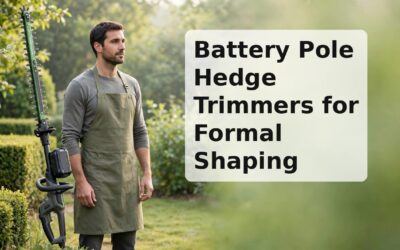
A formal hedge is judged by its lines. The top must be level, the faces must be flat, and the corners must be square, and the eye notices a wobble of half an inch from across the garden. That standard asks more of a trimmer than ordinary hedge work: the blades must cut cleanly enough that the tips stay green, the tool must hold a straight line without wandering, and the handle must let the gardener turn from the top to the face without losing the angle. Dual-action blades are the starting point, because two blades moving against each other shear the stem cleanly and keep the tool steadier in the hand than a single blade. The best dual action hedge trimmers for formal hedge shaping add precise tooth spacing, a blade length that matches the hedge, and a handle that turns for the vertical face.
The seven models below cover battery, gas, and corded power, because formal hedges grow in every part of a garden: beside the house, along a boundary, and around a lawn. Blade lengths run from 18 inches to 28 inches, weights from 6.06 pounds to 12.5 pounds, and tooth spacing from fine to wide. The lead pick is an articulating pole trimmer that holds its angle across a tall formal hedge, and the rest cover the cases where a short blade, a gas engine, or a rotating handle matters more. Every figure below comes from a page that was opened and read, and where two sources disagree the entry notes the conflict rather than hiding it.
Quick verdict
The Makita GNU01M1 leads this group because its articulating head holds six angle settings across a 115-degree working range, which lets the gardener keep the blade flat on the top and square on the face of a tall formal hedge. Gardeners shaping a low formal hedge by hand will get more from the RedMax CHT220, a light gas model with an 18-inch blade that turns easily at corners. The Husqvarna 122HD60 is the balanced gas pick for medium formal hedges, with a 24-inch blade and a 21.7 cc engine. The STIHL HS 82 R suits fast shaping of large formal hedges, with wide 38 mm tooth spacing for rough cutting, though its wide spacing makes it less suited to fine detail work. The ECHO HC-2810 covers long formal rows with a 28-inch blade, and the two Greenworks corded models bring rotating handles and steady household power to hedges beside the house.
| product | key spec | best for |
|---|---|---|
| Makita 40V max XGT Brushless 24-Inch Articulating Pole Hedge Trimmer GNU01M1 | 24 in blade; 6 angle settings; 8.6 lb | Tall formal hedges, top and face |
| Husqvarna 122HD60 | 24 in blade; 21.7 cc; 10.8 lb | Balanced gas shaping |
| RedMax CHT220 | 18 in blade; 21.7 cc; 9.9 lb | Low formal hedges and corners |
| STIHL HS 82 R | 24 or 30 in blade; 38 mm spacing; 11.7 lb | Fast shaping of large hedges |
| ECHO HC-2810 | 28 in blade; 21.2 cc; 11.4 lb | Long formal rows |
| Greenworks 22122 22-Inch 4.0 Amp Corded Hedge Trimmer with Rotating Handle | 22 in blade; rotating handle; 6.06 lb | Handle control beside the house |
| Greenworks 2200102 22-Inch 4 Amp Corded Hedge Trimmer | 22 in blade; 4 amp; 7.2 lb | Broad faces on taller plants |
How we chose
Tooth spacing came first, because formal shaping is fine work and the spacing between the teeth decides how small a stem the blade can take cleanly. Fine spacing suits the small, soft tips of a boxwood hedge, while wide spacing suits the thicker stems of a large formal hedge that needs fast shaping. The group covers both ends, and each entry states the spacing where the maker or a dealer page lists it, so the gardener can match the tool to the hedge. Dual-action blades were the second filter, since a clean shear keeps the tips green and a torn cut browns and shows on a formal hedge for months.
Blade length came third, because a long blade levels a formal face in fewer passes and a short blade turns a square corner cleanly. A 24-inch blade is the most common length for formal work, long enough to hold a line and short enough to stop at a corner. Handle control came fourth: an articulating head or a rotating handle lets the gardener move from the top of the hedge to its face without changing grip or losing the angle, and that matters more on a formal hedge than on any other kind. Weight came last, because formal work is slow, careful work done at chest and shoulder height, and a heavy tool makes the line wander before the row is finished.
Makita 40V max XGT Brushless 24-Inch Articulating Pole Hedge Trimmer GNU01M1
- Blade length: 24 inches
- Power: 40 volt max XGT battery
- Motor: brushless
- Weight: 8.6 pounds without battery, 10.8 pounds with battery
- Cutting capacity: 1 inch maximum branch diameter
- Dual-action blades: yes
- Blade speed: 4000 strokes per minute
- Head: 6 angle settings, 115-degree working range, overall length 89-1/2 inches
The GNU01M1 leads this group because its articulating head solves the hardest part of formal shaping: holding the blade at the same angle across the top and the face of a tall hedge. Six angle settings across a 115-degree working range let the gardener set the blade flat for the top, then tilt it square for the face, without climbing or stretching. The 24-inch blade is the standard length for formal work, and the one-inch maximum branch diameter handles the woody stems inside a mature formal hedge. The brushless motor runs at 4000 strokes per minute, which keeps the cut moving through dense growth without dragging. At 8.6 pounds without the battery it is a two-handed tool, and the pole length of 89-1/2 inches puts the blade at the top of a hedge that a handheld trimmer cannot reach. For a tall formal hedge where the line has to stay true from the ground to the top, this is the most capable model here.
Pros: Articulating head with six angle settings; 24-inch blade with one-inch capacity; brushless motor at 4000 strokes per minute; pole reach for tall hedges.
Cons: Heavy at 10.8 pounds with the battery; pole length needs room to swing; battery and charger add to the cost of the kit.
Husqvarna 122HD60

- Blade length: 24 inches, 590 mm cutting length
- Engine: 21.7 cc gas
- Weight: 10.8 pounds
- Cutting capacity: not listed by the maker
- Dual-action blades: yes, double-sided blades
- Tooth spacing: not listed in the opened manual pages
The 122HD60 is the balanced gas pick for medium formal hedges. Its 24-inch double-sided blade is the length that formal work favours, long enough to hold a straight line across a face and short enough to stop cleanly at a corner. The 21.7 cc gas engine runs a full session without a cord or a battery change, which matters when a formal hedge row takes an hour to shape. At 10.8 pounds it is a two-handed tool, and it suits gardeners who work slowly and check the line often. The maker does not list a cutting capacity or a tooth spacing figure in the opened manual pages, so both entries stay blank rather than guessed; a gardener who needs a stated capacity should look at the GNU01M1 or the CHT220 instead. What this model offers is a steady gas engine and a blade length that matches the formal standard.
Pros: 24-inch double-sided blade suits formal lines; gas engine runs a full session; balanced weight for a gas model.
Cons: No cutting capacity figure listed; tooth spacing not listed in the opened manual pages; gas engine needs fuel and routine care.
RedMax CHT220

- Blade length: 18 inches, knife length 17.7 inches
- Engine: 21.7 cc gas
- Weight: 9.9 pounds excluding cutting equipment
- Cutting capacity: recommended maximum twig diameter 0.8 inch
- Dual-action blades: yes, double-sided blades
- Tooth spacing: not listed by the dealer page
The CHT220 is the short-blade pick for low formal hedges and square corners. An 18-inch blade turns a corner cleanly where a 24-inch blade would overshoot, and it follows the curve of a rounded formal shrub without catching the far side. The recommended maximum twig diameter of 0.8 inch suits the small stems of a well-kept formal hedge, and the double-sided dual-action blades shear the tips cleanly so they stay green. At 9.9 pounds excluding the cutting equipment it is the lightest gas model in this group, and the 21.7 cc engine gives steady power for a full row. The dealer page does not list a tooth spacing figure, so that entry stays blank. For a low boxwood hedge where the corners matter as much as the faces, this is the easiest gas model here to steer.
Pros: Short 18-inch blade turns corners cleanly; lightest gas model here at 9.9 pounds; 0.8-inch twig capacity suits formal tips.
Cons: Short blade needs more passes on a long face; tooth spacing not listed; gas engine needs fuel and routine care.
STIHL HS 82 R
- Blade length: 24 or 30 inches
- Engine: 22.7 cc gas
- Weight: 11.7 pounds for the 24-inch model, 12.5 pounds for the 30-inch model
- Cutting capacity: tooth spacing 38 mm, branches up to 30 mm
- Dual-action blades: yes, double-sided blades
- Blade type: rough-cut version, wide tooth spacing
The HS 82 R is the fast-shaping pick for large formal hedges, and it needs a plain note about what it is. The R version is the rough-cut model, with wide 38 mm tooth spacing that takes branches up to 30 mm and clears thick growth quickly. That wide spacing makes it fast on a large formal hedge that needs its shape restored, but it makes the model less suited to fine detail work on small tips, where a finer tooth spacing gives a cleaner finish. The 24-inch and 30-inch blade options let the gardener match the blade to the hedge: the 24-inch blade for medium hedges and the 30-inch blade for long, straight rows. At 11.7 pounds for the 24-inch model it is a two-handed tool that suits steady, level passes. Gardeners who want fine detail should pair it with a short-blade model for the corners and the tips.
Pros: Wide 38 mm spacing clears thick growth fast; 24-inch and 30-inch blade options; strong 22.7 cc engine; double-sided dual-action blades.
Cons: Rough-cut spacing is less suited to fine detail work; heavy at 11.7 to 12.5 pounds; gas engine needs fuel and routine care.
ECHO HC-2810
- Blade length: 28 inches
- Engine: 21.2 cc gas
- Weight: 11.4 pounds
- Cutting capacity: not listed by the maker
- Dual-action blades: yes, double-sided, double-reciprocating blades
- Tooth spacing: not listed by the maker
The HC-2810 is the long-row pick for formal hedges. Its 28-inch blade is the longest here, and it levels a long, straight formal face in the fewest passes, which is how a flat finish is achieved: fewer passes mean fewer chances for the line to step. The double-sided, double-reciprocating blades cut on both strokes, which keeps the cut smooth across a wide face, and the 21.2 cc gas engine holds speed through a full row. At 11.4 pounds it is a two-handed tool, and the long blade needs room to swing, so it suits open formal rows rather than tight corners. The maker does not list a cutting capacity or a tooth spacing figure, so both entries stay blank. For a long formal hedge where the face must read as one flat plane from the street, this is the fastest model here.
Pros: Longest blade here at 28 inches; double-reciprocating blades cut smoothly; gas power runs a full row; levels a face in few passes.
Cons: No cutting capacity figure listed; tooth spacing not listed; long blade needs room to swing and is awkward at corners.
Greenworks 22122 22-Inch 4.0 Amp Corded Hedge Trimmer with Rotating Handle
- Blade length: 22 inches
- Motor: 4.0 amp, corded, 120 volt
- Weight: 6.06 pounds per owner manual, with a retailer listing 7.4 pounds
- Cutting capacity: 5/8 inch per owner manual, with a retailer listing 3/4 inch
- Dual-action blades: yes
- Rotating rear handle: yes, 180 degrees, 90 degrees left or right
- Motor type: not stated by the maker
The 22122 is the handle-control pick for formal hedges beside the house. Its rear handle rotates 180 degrees, 90 degrees to the left or right, so the gardener can cut the flat top and then turn the handle for the vertical face without twisting the wrist, and that wrist turn is what makes a formal face wander. The 22-inch blade is close to the formal standard length, and the 4.0 amp motor holds speed through the woody stems at the base of a formal hedge. Two figures need a plain note: the owner manual lists 6.06 pounds and a five-eighths-inch capacity, while a retailer lists 7.4 pounds and three quarters of an inch. This guide uses the manual figures, because the manual is the maker document, and gardeners should expect the trimmer to handle stems up to five eighths of an inch. For a formal hedge beside the house, where the face shows from the street, the rotating handle is worth more than extra power.
Pros: 180-degree rotating rear handle keeps the wrist straight; 22-inch dual-action blade; light manual weight at 6.06 pounds; corded power runs all session.
Cons: Weight and capacity figures differ between the manual and a retailer; motor type not stated; capacity is the smallest among the corded picks here.
Greenworks 2200102 22-Inch 4 Amp Corded Hedge Trimmer
- Blade length: 22 inches
- Motor: 4 amp, corded, 120 volt
- Weight: 7.2 pounds
- Cutting capacity: 3/4 inch per RONA, with other pages listing 9/16 inch
- Dual-action blades: yes
- Rotating rear handle: yes
- Motor type: not stated by the maker
The 2200102 is the heavier corded pick for broad formal faces on taller plants. Its 22-inch blade and rotating rear handle suit the same top-and-face work as the 22122, with the difference that this model is heavier at 7.2 pounds and lists a larger cutting capacity. The capacity figure needs a plain note: RONA lists three quarters of an inch while other pages list nine sixteenths of an inch, so gardeners should expect the smaller figure to be the safe guide for thick stems. The 4 amp motor is a solid middle figure for corded work, strong enough for a spring cut-back and calm enough for fine shaping. The rotating rear handle helps with vertical side cuts, where the same shrub needs a horizontal top cut and then a vertical face cut without moving the feet. For a taller formal hedge beside the house, where the blade must reach up and the face must stay flat, this is a steady corded choice.
Pros: Rotating rear handle helps with vertical faces; 22-inch blade suits taller formal plants; 4 amp motor handles a full season of growth.
Cons: Heaviest corded model here at 7.2 pounds; cutting capacity figures conflict between sources; motor type not stated.
Buying guide
Formal shaping starts with the line, not the tool. Before buying, the gardener should look at the hedge and ask three questions: how tall is it, how long is its longest straight run, and how fine are its tips. A tall hedge needs reach, either a pole trimmer such as the GNU01M1 or a ladder-free approach that keeps both hands on the tool. A long straight run needs a long blade, because a 28-inch blade levels a face in fewer passes than a 20-inch blade, and fewer passes mean fewer steps in the finish. Fine tips need fine tooth spacing and sharp dual-action blades, because a torn tip on a formal hedge browns and shows for months. The answers to those three questions point to the blade length, the power source, and the tooth spacing that matter.
Tooth spacing is the figure most buyers overlook, and it decides the quality of the finish on a formal hedge. Fine spacing takes small stems cleanly and leaves a smooth surface on boxwood and other small-leafed shrubs. Wide spacing, such as the 38 mm on the STIHL HS 82 R, clears thick growth fast but leaves a rougher finish on fine tips. A gardener shaping a large formal hedge that has grown thick should use the wide-spacing model for the heavy cut and a fine-spacing model for the final pass. That two-step approach takes longer, but it is how a formal hedge keeps both its shape and its smooth surface. Where a maker does not list tooth spacing, the cutting capacity and the blade description are the next best guide.
Blade length should match the longest straight run of the hedge. A 24-inch blade is the formal standard because it holds a line across a face and stops cleanly at a corner. A 28-inch or 30-inch blade suits long, straight rows where the face must read as one flat plane. An 18-inch blade suits low hedges, square corners, and rounded formal shrubs, where a long blade would overshoot. Gardeners who own both long rows and low hedges often keep two trimmers, and that is a fair choice: one tool rarely does both jobs well. When in doubt, pick the blade that matches the longest run, and finish the corners by hand.
Handle control decides whether the face stays square. A formal hedge needs a flat top and a vertical face, and the change from one to the other is where the line wanders. An articulating head, such as the six angle settings on the GNU01M1, or a rotating rear handle, such as the 180-degree turn on the Greenworks models, lets the gardener change the cutting angle without twisting the wrist. A fixed handle works well too, but the gardener should practise the wrist turn on a low section before cutting the face at eye level, because a crooked face on a formal hedge shows from the street. Gloves with a firm grip help here, since a slipping grip changes the angle mid-cut.
Weight decides how long the line stays true. Formal work is slow work, done at chest and shoulder height with frequent pauses to step back and check the line. A trimmer under seven pounds, such as the Greenworks 22122 at 6.06 pounds, stays steady for a whole face. A trimmer over ten pounds, such as the gas models here, still cuts well but asks for breaks between sections, and the line should be checked after each break. A pole trimmer carried on a harness spreads the weight across the shoulders, which helps on tall hedges. Whatever the weight, the gardener should stop when the arms tire, because a tired grip is the most common cause of a wandering line on a formal hedge.
Maintenance for a formal hedge trimmer is stricter than for an ordinary trimmer, because the finish shows every dull spot. Wipe the blades after each session, since sap holds moisture against the steel and dulls the edge. A light wipe with an oily cloth keeps the blades moving freely and slows rust. Check for nicks after any session that met a wire or a stone, and sharpen evenly: a blade sharpened unevenly cuts worse than a dull blade, so gardeners who are unsure should have the work done by a shop. Store the trimmer with the blade cover on in a dry place, and keep a corded model cord loosely coiled. For battery models, store the battery at room temperature and away from damp, and for gas models, follow the maker fuel ratio and drain the tank before long storage.
Safety on formal work starts with the eyes and the footing. Wear eye protection, because the trimmer throws small cuttings forward and formal work puts the face close to the blades. Wear gloves that grip well and closed shoes with a firm sole. Keep both hands on the handles while the blades run, and never reach across the blade line to pull a branch clear. Use a string line or a level board as a guide for the top of the hedge, and step back often to check the line from a distance rather than trusting the view from close up. Work in daylight, stop when the arms tire, and unplug a corded model or remove a battery before clearing a jam. Keep children and pets away from the work area.
FAQ
What blade length is best for formal hedge shaping?
A 24-inch blade is the formal standard, because it holds a straight line across a face and stops cleanly at a corner. A 28-inch or 30-inch blade suits long, straight rows, while an 18-inch blade suits low hedges and square corners. Match the blade to the longest straight run of the hedge, and finish the corners by hand or with a short-blade model.
Why does tooth spacing matter for a formal hedge?
Tooth spacing decides how small a stem the blade takes cleanly. Fine spacing suits the small, soft tips of a boxwood hedge and leaves a smooth surface. Wide spacing, such as the 38 mm on the STIHL HS 82 R, clears thick growth fast but leaves a rougher finish on fine tips. For the best finish, use a wide-spacing model for the heavy cut and a fine-spacing model for the final pass.
Is a pole trimmer good for formal shaping?
Yes, for tall formal hedges a pole trimmer such as the Makita GNU01M1 is the best choice, because its articulating head holds the blade angle across the top and the face without a ladder. A ladder and a handheld trimmer is a poor combination, since both hands are needed on the tool. Work in short, level passes and step back often to check the line from the ground.
How do I keep the top of a formal hedge level?
Stretch a string line between two stakes at the wanted height and cut to the line, or rest a straight board across the top as a guide. Cut in level passes from one end to the other, and step back after each pass to check the line from a distance. A long blade helps, because it spans more of the top in each pass and leaves fewer steps in the finish.
How often should a formal hedge be trimmed?
Most formal hedges need two or three trims a year, in late spring, midsummer, and early autumn, with light passes that hold the shape rather than one heavy cut. Boxwood and yew grow slowly and may need only two passes, while faster growers need three. Avoid heavy cutting late in the season, since it can push soft growth that frost will damage.
Why do the tips of my formal hedge turn brown after trimming?
Brown tips usually come from torn cuts, dull blades, or trimming in hot sun. A single-action blade or a dull blade tears the stem instead of shearing it, and the torn end dries and browns. Use sharp dual-action blades, trim on a dry, mild day, and keep the blades clean and oiled. If browning is widespread rather than at the tips, the cause may be drought or winter damage rather than the trim.
Conclusion
Formal hedge shaping rewards patience, a straight line, and a trimmer that cuts cleanly enough to keep the tips green. The Makita GNU01M1 leads this group with an articulating head that holds its angle across the top and the face of a tall hedge, while the RedMax CHT220 turns square corners on low formal hedges and the Husqvarna 122HD60 balances gas power with a 24-inch blade. The STIHL HS 82 R shapes large hedges fast with wide tooth spacing, with the plain note that it suits rough shaping better than fine detail, and the ECHO HC-2810 levels long rows with a 28-inch blade. The two Greenworks corded models bring rotating handles and steady household power to formal hedges beside the house. Pick the blade length that matches the longest straight run, the tooth spacing that matches the tips, and the handle that keeps the wrist straight, then trim two or three times a year on a dry, mild day. The hedge will hold its lines, and the garden will show it.
Related guides
More from Amazon
Programs that pair well with the guide above. Offers and eligibility are set by Amazon and may change.
Collect the home and kitchen items you want in one registry that guests can shop from.
Create a wedding registrySet up recurring deliveries of everyday items on eligible products. Terms and savings are set by Amazon.
Explore Subscribe & SaveFree shipping on eligible items, Prime Video and more. Eligible new members can start with a free trial.
Start a Prime free trialAudiobooks and podcasts to listen to on the go. Eligible new members can start with a free trial.
Try Audible freeAs an Amazon Associate we earn from qualifying purchases.
More ways to save on your garden
Programs that pair well with the guide above. Offers and eligibility are set by Amazon and may change.
Fast, free shipping on eligible items, plus Prime Video and more. Eligible new members can start with a free trial.
Start a Prime free trialSet up recurring deliveries of everyday items on eligible products. Terms and savings are set by Amazon.
Explore Subscribe & SaveRead from a huge library of eBooks, including how-to guides and cookbooks. Eligible new members can start with a free trial.
Try Kindle UnlimitedAudiobooks and podcasts for the commute, the garage or the kitchen. Eligible new members can start with a free trial.
Try Audible freeAs an Amazon Associate we earn from qualifying purchases. Using these links costs you nothing extra.






Write Your Review
No reviews yet. Be the first to share your experience!