
Key takeaways
- Dense evergreen shrubs need reach and cutting power. Compare seven long reach hedge trimmers, from pole models to long-blade handhelds, for thick, woody growth.
What's inside
As an Amazon Associate I earn from qualifying purchases. This post may contain affiliate links at no extra cost to you.
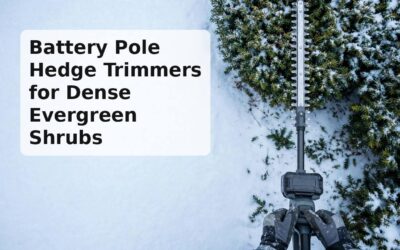
Dense evergreen shrubs are the hardest hedges to trim. The growth is thick, the branches are woody, and the shrubs grow tall and wide, so the top and the far face sit out of reach of a normal handheld trimmer. A short blade cannot get through the tangle, and a short body cannot reach the top without a ladder. The best long reach hedge trimmers for dense evergreen shrubs solve both problems at once: pole and shafted models that lift the blade to the top of a tall shrub, and long-blade handheld models that cut a wide swath through thick growth in a single pass.
Reach and power have to come together here. A pole trimmer that cannot cut woody stems will stall in the middle of a dense evergreen, and a powerful handheld trimmer that cannot reach the top will leave the shrub ragged and uneven. The models in this guide cover both needs. Four are pole or shafted models that extend the blade to the top of a tall shrub, and three are long-blade handheld models that bring reach across a wide hedge face. Every specification comes from a maker or retailer page, and the guide notes where two sources disagree on a figure.
This guide compares seven models drawn from battery, corded, and gas lines. Battery pole models are quiet and clean, gas shafted models bring the most torque for the thickest stems, and long-blade handheld models give reach without the weight of a pole. The right choice depends on the height of the shrubs, the thickness of the growth, and how far the work sits from power.
Quick verdict
For most dense evergreen shrubs, the Makita GNU01M1 is the pick that balances reach, power, and control: a 24-inch articulating pole blade, a 40V brushless motor, and six angle settings that let the blade meet the shrub at the right angle. If the growth is very thick and woody, the Husqvarna 525HE3 brings a 25.4 cc gas engine and a shaft that reaches up to ten feet, with a cutting thickness of 30 mm. For the longest blade in a handheld body, the ECHO HCS-3810 stretches to 38 inches and cuts a wide face in a single pass, though its single-sided blade suits straight runs rather than fine shaping.
| product | key spec | best for |
|---|---|---|
| — | — | — |
| Makita 40V max XGT Brushless 24-Inch Articulating Pole Hedge Trimmer GNU01M1 | 24 in blade, 40V, 89.5 in long | best all-round pick for tall evergreens |
| Greenworks 40V 20-Inch Pole Hedge Trimmer PTF301 | 20 in blade, 40V, 13 ft max reach | longest battery reach in this guide |
| ECHO SHC-225 | 21 in blade, 21.2 cc, 33 in shaft | light gas shafted pick for mid-height shrubs |
| Husqvarna 525HE3 | 24 in blade, 25.4 cc, 10 ft reach | thick woody growth on tall shrubs |
| STIHL HS 87 T | 30 or 40 in blade, 22.7 cc | longest handheld blade for wide faces |
| ECHO HCS-3810 | 38 in blade, 21.2 cc, 10.8 lb | widest single pass across a hedge face |
| Greenworks 60V 26-Inch Brushless Hedge Trimmer HT60L211 | 26 in blade, 60V, 11.46 lb | long cordless blade with a wide cut |
How we chose
Dense evergreen shrubs need two things a normal trimmer cannot give: reach to the top of a tall shrub, and cutting power for woody stems. We looked for pole and shafted models that extend the blade well above head height, and for long-blade handheld models that cut a wide face in a single pass. Blade length is the first filter, since a longer blade covers more of the shrub in each pass and reaches further across a wide face. Cutting capacity is the second filter, since dense evergreens grow woody stems that a narrow cut cannot handle.
We also weighed the trade between reach and weight. A pole trimmer is longer and heavier than a handheld model, and holding it overhead for a long session takes strength, so the guide notes the weight of each model and the length of its shaft. Battery pole models are quieter and lighter than gas shafted models, but gas models bring more torque for the thickest growth. The guide includes both, and the buying guide below explains how to choose between them. Every specification comes from a maker or retailer page.
Makita 40V max XGT Brushless 24-Inch Articulating Pole Hedge Trimmer GNU01M1
- Blade length: 24 inches
- Battery system: 40V max XGT
- Motor: brushless
- Overall length: 89-1/2 inches
- Weight: 8.6 lb without battery, 10.8 lb with battery
- Cutting capacity: 1 inch maximum branch diameter
- Blade action: dual-action blades
- Blade speed: 4000 strokes per minute
- Head: 6 angle settings, 115-degree working range
The GNU01M1 leads this guide because its articulating head solves the hardest problem in tall evergreen trimming: getting the blade flat against the top and the far face of the shrub. The head adjusts through six angle settings across a 115-degree working range, so the blade can lie flat on a horizontal top, stand vertical against a face, or meet the shrub at any angle in between, all while the shaft stays in a comfortable position. The 24-inch blade is long enough to cover a wide stretch in each pass, and the brushless motor drives it at 4000 strokes per minute, which leaves a clean edge on dense growth. At 8.6 pounds without its battery, it is a fair weight for a pole trimmer of this length, and the 40V max XGT battery is shared with a wide range of Makita tools. For a tall evergreen that needs its top levelled and its faces shaped, the GNU01M1 gives the reach and the angles to do the whole job from the ground.
Pros: articulating head with six angles, long 24-inch blade, fast 4000 SPM blade speed.
Cons: battery adds over two pounds, pole length takes strength to hold overhead.
Greenworks 40V 20-Inch Pole Hedge Trimmer PTF301
- Blade length: 20 inches
- Battery system: 40V lithium-ion
- Motor: brushed
- Telescoping shaft: to 6.5 feet, maximum reach 13 feet
- Weight: 8 lb
- Cutting capacity: 5/8 inch per spec table, marketing copy says 1 inch
- Blade action: dual-action blades
- Blade speed: 2800 strokes per minute
- Head: pivoting head
The PTF301 gives the longest reach in this guide, with a telescoping shaft that extends to 6.5 feet and a maximum reach of 13 feet, which puts the blade at the top of a tall evergreen without a ladder. The pivoting head lets the blade meet the shrub at an angle, though it does not offer as many settings as the Makita articulating head. The motor is brushed rather than brushless, so it is less efficient, and the blade speed of 2800 strokes per minute is the slowest in this guide, which shows on very dense growth where the blade can drag. One figure needs stating plainly: the spec table lists a cutting capacity of 5/8 inch, while the marketing copy says 1 inch, and this guide uses the spec table figure as the safer number. For a tall evergreen that needs its top reached from the ground, and where the growth is not too woody, the PTF301 gives the most reach for the least weight.
Pros: longest reach in this guide at 13 feet, light at 8 lb, telescoping shaft.
Cons: brushed motor, spec table and marketing copy disagree on cutting capacity.
ECHO SHC-225
- Blade length: 21 inches
- Engine: 21.2 cc gas
- Weight: 12.1 lb
- Shaft: 33 inches
- Blade action: double-sided, double-reciprocating blades
- Cutting capacity: not stated by maker
The SHC-225 is the lightest gas shafted model in this guide, and it suits a gardener who wants gas torque without the weight of the bigger shafted models. Its 21.2 cc engine drives a 21-inch double-sided blade through a 33-inch shaft, which gives enough reach for mid-height evergreens and for the far face of a wide shrub, without the long, heavy shaft that the taller models carry. At 12.1 pounds it is heavier than any battery model here, and that weight is the price of gas power, but the engine never fades and never needs charging, so it will cut all day on a large evergreen hedge. The maker does not state a cutting capacity, so the guide does not invent one, but the double-reciprocating blades and the gas torque handle woody stems that would stall a battery model. For a mid-height evergreen that needs steady gas power, the SHC-225 is the most manageable shafted pick.
Pros: lightest gas shafted model here, steady gas power, double-sided blades.
Cons: maker does not state cutting capacity, heavier than battery pole models.
Husqvarna 525HE3
- Blade length: 24 inches (600 mm cutting length)
- Engine: 25.4 cc gas
- Weight: 13.0 lb
- Reach: up to 10 feet
- Cutting capacity: maximum cutting thickness 30 mm
- Blade action: double-sided, dual-action blades
- Type: pole and shafted model
The 525HE3 is the heavy-duty pick for dense evergreens that have grown thick and woody. Its 25.4 cc engine is the largest in this guide, and it drives a 24-inch blade through a shaft that reaches up to ten feet, so the blade gets to the top of a tall shrub and still has the torque to cut stems up to 30 mm thick. That combination of reach and cutting thickness is what dense evergreens demand, since the growth at the base of an old shrub is often woody enough to stall a smaller engine. At 13 pounds it is a heavy tool, and holding it overhead for a long session takes strength and a steady stance, but the work it does is work that no battery model in this guide can match. For a tall, neglected evergreen that needs a firm first cut, the 525HE3 has the reach and the power to bring it back into shape.
Pros: largest engine in this guide, 30 mm cutting thickness, reach up to 10 feet.
Cons: heavy at 13 lb, gas engine needs fuel and maintenance.
STIHL HS 87 T
- Blade length: 30 or 40 inches
- Engine: 22.7 cc gas
- Weight: 11.5 lb (30-inch blade), 12.2 lb (40-inch blade)
- Tooth spacing: 30 mm
- Blade action: single-sided blade
The HS 87 T is the long-blade handheld pick for dense evergreens, with a blade of 30 or 40 inches that covers a wide face in a single pass. That length matters on a broad evergreen, where a short blade would take many passes and leave a wavy face, while a long blade leaves a straight, even edge. The 22.7 cc engine is strong enough for woody growth, and the tooth spacing of 30 mm suits the thicker stems on older shrubs. The blade is single-sided rather than double-sided, which means it cuts on one edge only, and that suits long, straight runs where the blade moves in one direction, but it is less handy for fine shaping than a double-sided blade. At 11.5 pounds with the 30-inch blade, it is a heavy handheld tool, and the long blade needs a steady two-handed grip. For a wide evergreen face that needs a straight, even cut, the HS 87 T gives the longest reach of any handheld model here.
Pros: longest handheld blade in this guide, strong engine, wide tooth spacing.
Cons: single-sided blade, heavy for a handheld model.
ECHO HCS-3810

- Blade length: 38 inches
- Engine: 21.2 cc gas
- Weight: 10.8 lb
- Blade action: single-sided, double-reciprocating blade
- Shield: full-length debris shield
The HCS-3810 is the widest single-pass pick in this guide, with a 38-inch blade that covers a huge stretch of hedge face in one sweep. That length suits a long, straight evergreen hedge, where the goal is a flat, even face and the blade can move in long, steady strokes. The single-sided, double-reciprocating blade cuts cleanly, and the full-length debris shield keeps cuttings from flying back toward the operator, which matters when the blade is cutting through dense growth at chest height. At 10.8 pounds it is the lightest of the long-blade gas models here, and the 21.2 cc engine is enough for the soft and semi-woody growth that makes up most evergreen trimming. The single-sided blade is less suited to fine shaping than a double-sided one, so this model earns its place on long, straight faces rather than on rounded shrubs.
Pros: 38-inch blade covers a wide face, debris shield, lightest long-blade gas model here.
Cons: single-sided blade, less suited to fine shaping.
Greenworks 60V 26-Inch Brushless Hedge Trimmer HT60L211
- Blade length: 26 inches
- Battery system: 60V
- Motor: brushless
- Weight: 11.46 lb
- Cutting capacity: 1.1 inches
- Blade action: dual-action blades
- Blade speed: 3200 strokes per minute
- Handle: 180-degree rotating handle
The HT60L211 is the long-blade cordless pick for dense evergreens, and it belongs in this guide because its 26-inch blade and 1.1-inch cutting capacity handle thick growth without a pole or a gas engine. The brushless motor makes good use of the 60V battery, and the blade speed of 3200 strokes per minute leaves a clean edge on dense stems. The 180-degree rotating handle helps when the blade has to run vertically up the face of a tall shrub, since it lets the wrist stay straight during the long pass. At 11.46 pounds it is the heaviest battery model here, and that weight, combined with the long blade, means it needs a firm two-handed grip and short sessions. For a gardener who wants a long blade and a wide cut without gas or a pole, and who works on shrubs that are wide rather than very tall, the HT60L211 gives the most cutting power of any cordless model in this guide.
Pros: long blade with a wide cut, brushless motor, rotating handle.
Cons: heaviest battery model here, long blade needs a firm grip.
Buying guide
Height decides the tool. Measure the tallest evergreen you need to trim, and choose a model that reaches its top from the ground, since working from a ladder with a running trimmer is risky and tiring. A pole trimmer with a reach of ten to thirteen feet covers most garden evergreens, and the Greenworks PTF301 reaches furthest at 13 feet, while the Husqvarna 525HE3 reaches up to ten feet. If the shrubs are under eight feet tall, a long-blade handheld model may be enough, since a 26 to 38-inch blade held overhead can reach the top without a pole. But for anything taller, a pole or shafted model is the safer and easier choice.
Cutting power is the second choice, and dense evergreens test it hard. The growth at the base of an old shrub is woody, and a trimmer with a narrow cut will jam or leave ragged ends that invite disease. Look for a cutting capacity or teeth opening of at least 1 inch, or 25 mm, if the shrubs are mature, and wider if they have been left untrimmed for a season or more. Gas engines bring the most torque for this work, and the Husqvarna 525HE3, with its 25.4 cc engine and 30 mm cutting thickness, is the strongest pick here. Battery models can handle dense growth too, but they need a brushless motor and a high blade speed to keep the blade moving through thick stems, and the Makita GNU01M1, at 4000 strokes per minute, is the best battery pick for that reason.
Weight and balance decide how long you can work, and pole trimmers are heavy by nature. A pole trimmer of eight to ten pounds can be held overhead for a short session, but a gas shafted model of twelve to thirteen pounds needs breaks and a steady stance. Look for a model with a good balance point, where the weight sits near the middle of the shaft rather than at the far end, and consider a harness or shoulder strap if the maker offers one. Take breaks often, and work in short passes rather than holding the blade overhead for minutes at a time.
Blade type matters for the finish. Double-sided blades cut on both edges and suit shaping and rounding, since they cut on the way up and the way down. Single-sided blades cut on one edge only and suit long, straight runs, where the blade moves in one direction and leaves a flat, even face. The ECHO HCS-3810 and the STIHL HS 87 T use single-sided blades and suit wide, straight faces, while the Makita GNU01M1 and the Husqvarna 525HE3 use double-sided blades and suit shaping work. An articulating head, like the one on the GNU01M1, is worth seeking out, since it lets the blade meet the shrub at the right angle without twisting the shaft.
A few habits help with dense evergreens. Trim the top first, working from the ground with a pole model, then shape the faces, so the cuttings fall clear of the work. Take light passes and let the blade do the work, rather than forcing it into thick growth, which is how blades jam and engines stall. Clear the base of the shrub of fallen branches before you start, and wear eye protection and gloves, since dense evergreens hide dead branches and sharp twigs. With the right reach and enough cutting power, even the thickest evergreen can be shaped neatly from the ground.
FAQ
How tall a shrub can a pole hedge trimmer reach?
A battery pole trimmer typically reaches ten to thirteen feet, depending on the shaft length and the height of the operator. The Greenworks PTF301 in this guide reaches up to 13 feet, and the Husqvarna 525HE3 reaches up to ten feet. For shrubs taller than that, a longer pole model or a professional arborist may be needed. Always work from the ground with a pole trimmer, and never climb a ladder while holding a running trimmer.
Is gas or battery better for dense evergreen shrubs?
Gas brings more torque, which matters when the growth is thick and woody, and a gas engine never fades or needs charging during a long session. Battery models are quieter, lighter, and easier to start, and modern 40V and 60V systems cut well on most evergreen growth. For a tall, neglected evergreen with woody stems, gas is the stronger choice. For a well-kept evergreen that is trimmed often, a battery pole model is quieter and easier to handle.
What is an articulating head, and why does it help?
An articulating head is a blade head that pivots through a range of angles, so the blade can lie flat on a horizontal top, stand vertical against a face, or meet the shrub at any angle in between. It helps because the top and the face of a tall shrub need the blade at different angles, and without an articulating head the operator has to twist the whole shaft to change the angle, which is tiring and leaves an uneven cut. The Makita GNU01M1 in this guide offers six angle settings across a 115-degree range.
Can a long-blade handheld trimmer replace a pole trimmer?
It depends on the height of the shrub. A long-blade handheld model, like the 38-inch ECHO HCS-3810, can reach the top of a shrub up to about eight feet tall when held overhead, and it covers a wide face in a single pass. For shrubs taller than that, a pole trimmer is needed, since no handheld blade can reach the top safely. Long-blade handheld models also suit wide, straight faces, while pole models suit tall shrubs and hard-to-reach tops.
How often should dense evergreen shrubs be trimmed?
Most dense evergreens need trimming once or twice a year, with a shaping cut in late spring after the first flush of growth and a lighter cut in midsummer if needed. Trimming little and often keeps the shrub dense and the stems thin, which makes the work easier and the cut cleaner. Avoid heavy cutting in late autumn, when soft new growth may not harden before cold weather, and avoid trimming in very hot sun, when fresh cuts can scorch.
Conclusion
Dense evergreen shrubs need reach and cutting power together, and the seven models in this guide bring both in different combinations. The Makita GNU01M1 is the best all-round pick, with an articulating head, a 24-inch blade, and a fast brushless motor that handles dense growth from the ground. The Greenworks PTF301 reaches furthest at 13 feet for the tallest shrubs, while the Husqvarna 525HE3 brings the most torque for the thickest woody stems. The ECHO SHC-225 gives gas power in a lighter shafted body, and the long-blade handheld models, the STIHL HS 87 T and the ECHO HCS-3810, cover wide faces in a single pass.
Measure the tallest shrub first, choose a tool that reaches its top from the ground, and pick the cutting power the growth demands. A trimmer with enough reach and enough bite will keep even the thickest evergreen neat, dense, and healthy through the season.
Related guides
More from Amazon
Programs that pair well with the guide above. Offers and eligibility are set by Amazon and may change.
Collect the home and kitchen items you want in one registry that guests can shop from.
Create a wedding registrySet up recurring deliveries of everyday items on eligible products. Terms and savings are set by Amazon.
Explore Subscribe & SaveFree shipping on eligible items, Prime Video and more. Eligible new members can start with a free trial.
Start a Prime free trialAudiobooks and podcasts to listen to on the go. Eligible new members can start with a free trial.
Try Audible freeAs an Amazon Associate we earn from qualifying purchases.
More ways to save on your garden
Programs that pair well with the guide above. Offers and eligibility are set by Amazon and may change.
Fast, free shipping on eligible items, plus Prime Video and more. Eligible new members can start with a free trial.
Start a Prime free trialSet up recurring deliveries of everyday items on eligible products. Terms and savings are set by Amazon.
Explore Subscribe & SaveRead from a huge library of eBooks, including how-to guides and cookbooks. Eligible new members can start with a free trial.
Try Kindle UnlimitedAudiobooks and podcasts for the commute, the garage or the kitchen. Eligible new members can start with a free trial.
Try Audible freeAs an Amazon Associate we earn from qualifying purchases. Using these links costs you nothing extra.





Write Your Review
No reviews yet. Be the first to share your experience!