
Key takeaways
- Seven telescoping tree loppers compared for spring fruit tree pruning, with reach, cut capacity, weight and handle details to help you pick the right pair.
What's inside
As an Amazon Associate I earn from qualifying purchases. This post may contain affiliate links at no extra cost to you.
Spring is the season when fruit trees ask for the most careful attention. Before buds swell and sap starts to move in earnest, dead wood, crossing branches and last year's crowded growth need to come out, and the cuts you make now shape the way the tree grows for the rest of the year. A pair of best telescoping tree loppers for spring fruit tree pruning earns its place in the shed because it reaches the branches you cannot climb to and still gives you the leverage to cut cleanly, without tearing bark or leaving ragged stubs that invite trouble later.
Telescoping handles change the job in two ways. Extended, they put the blades a full arm's length further up into the canopy, so you can work from the ground on lower scaffold branches. Collapsed, the same tool shortens into something you can carry one-handed between trees and store in a crowded shed. The seven models below all extend and retract, but they differ in cut capacity, head type, weight and the way their handles lock, and those differences matter more in spring than in any other season, when you are cutting live wood and every cut needs to be clean.
Quick verdict
If you want one pair that covers most spring fruit tree work, the Corona DualLINK SL4364 leads this group: a bypass head with a compound mechanism, a cut capacity of one and three-quarter inches, and handles that extend from about twenty-nine and a half inches to about thirty-seven and a half inches. For lighter work and longer reach on a smaller budget of effort, the WORKPRO WP332007 is a strong second choice, with a gear mechanism and a weight of about three and seven-tenths pounds. The anvil models in this set suit dead wood and older, harder branches, while the bypass models suit live green wood, which is most of what spring pruning removes.
| Product | Key spec | Best for |
|---|---|---|
| Corona DualLINK Extendable Bypass Lopper SL4364 | Bypass head, 1-3/4 in cut, 29.5 to 37.5 in reach | Most spring fruit tree work |
| WORKPRO Telescoping Bypass Lopper WP332007 | Bypass head, gear mechanism, 3.7 lb | Light, long-reach cutting |
| Fiskars SmartFit Telescopic Lopper L86 | Bypass head, 26.2 to 36 in reach, 2.8 lb | Lightest carry between trees |
| AIRAJ 2717 Telescoping Anvil Lopper | Anvil head, 2 in cut, 27 to 41 in reach | Longest reach on dead wood |
| HAUTMEC HT0461 Extendable Anvil Lopper | Anvil head, 2 in fresh cut, 27 to 37 in reach | Hard, dry branches |
| THANOS B1102 Extendable Anvil Lopper | Anvil head, 2 in cut, 27 to 41 in reach | Long reach with a firm grip |
| YRTSH Heavy Duty Loppers Branch Cutter | Anvil head, 2 in cut, 28 to 41 in reach | Heavy branch removal |
How we chose
We chose these seven models from a verified pool of telescoping loppers, keeping only models whose telescoping range, head type, cut capacity and weight were listed on a page we opened. Every model here extends its handles, and every model lists a cut capacity of at least one and a half inches, which covers the branch sizes most spring fruit tree work involves. Bypass heads and anvil heads are both present, because spring pruning removes both live wood and dead wood, and the two head types suit different material.
We also checked each set against the thirty-nine earlier lopper articles in this program, so that no more than three models in this article appear together in any earlier article. That keeps the comparison fresh rather than a repeat of a set you may already have read. Where sources disagreed on a specification, the article states the disagreement plainly instead of picking one figure and hiding the other. Where a specification was missing from the pages we opened, the article says so with a dash rather than filling in a guess.
Corona DualLINK Extendable Bypass Lopper SL4364
- Head type: bypass, DualLINK compound mechanism
- Max cut capacity: 1-3/4 in
- Telescoping range: 29.5 to 37.5 in (some listings say 27.5 to 37.5 in)
- Weight: 4 to 4.2 lb
- Handles: steel, ComfortGEL grips
- Blade: –
The Corona DualLINK SL4364 is the lead pick here because it pairs a bypass head with a compound mechanism that spreads the cutting force across two pivot points, which matters when you are making dozens of cuts in a morning. The bypass head suits live wood, which is most of what spring fruit tree pruning removes: water sprouts, crossing branches and crowded growth from last season. The handles extend to about thirty-seven and a half inches, long enough to reach lower scaffold branches from the ground, and collapse to under thirty inches for carrying between trees. One point to note plainly is that listings disagree on the collapsed length, with some giving twenty-nine and a half inches and others twenty-seven and a half inches, so the exact collapsed length is worth confirming on the product page before you buy. The weight sits between four and four and two-tenths pounds depending on the listing, which is on the heavier side of this set but still manageable for a full session.
Pros: Bypass head suits live spring wood; compound mechanism adds cutting force; ComfortGEL grips stay comfortable over many cuts.
Cons: Heavier than the lightest models here; collapsed length differs across listings.
WORKPRO Telescoping Bypass Lopper WP332007
- Head type: bypass, gear mechanism per roundups (the maker page does not name the mechanism)
- Max cut capacity: 1.5 in per roundups (not stated on the maker page)
- Telescoping range: 655 to 910 mm per spec table vs 670 to 920 mm in the description (about 25.8 to 35.8 in)
- Weight: 1680 g (3.7 lb)
- Handles: –
- Blade: S50C steel
The WORKPRO WP332007 is the lightest bypass model in this set with a named gear mechanism, and it earns its place as the second pick for gardeners who want reach without carrying extra weight. At about three and seven-tenths pounds it is noticeably easier on the arms than the four-pound models when you are working overhead, and the gear mechanism helps the blades close through green wood with less hand effort. The maker page does not name the mechanism or the cut capacity, so both figures come from roundup coverage, and the article records that plainly. The telescoping range also differs between the spec table and the description by a small margin, roughly six hundred fifty-five to nine hundred ten millimetres against six hundred seventy to nine hundred twenty millimetres, so treat the reach as about twenty-six to thirty-six inches. For spring work on young fruit trees, where most cuts are under an inch and a half, this model covers the job well.
Pros: Light for a bypass telescoping lopper; gear mechanism eases cutting; S50C steel blade.
Cons: Cut capacity and mechanism rest on roundup coverage, not the maker page; handle material not stated.
Fiskars SmartFit Telescopic Lopper L86 (112500)
- Head type: bypass
- Max cut capacity: 50 mm per maker vs 24 mm per ManoMano and LS Engineers (conflict)
- Telescoping range: 665 to 915 mm (26.2 to 36 in)
- Weight: 1.28 kg (2.8 lb)
- Handles: aluminum and FiberComp
- Blade: non-stick stainless steel
The Fiskars SmartFit L86 is the lightest model in this set at about two and eight-tenths pounds, and that low weight shows in how easy it is to carry from tree to tree and to hold overhead for repeated cuts. The aluminum and FiberComp handles keep the weight down, and the non-stick stainless steel blade resists sap build-up, which is a real annoyance in spring when sap is moving. One honest caveat is that the maker lists a maximum cut of fifty millimetres while two retailers list twenty-four millimetres, a wide gap that the article states plainly rather than smoothing over. Until that figure is settled, treat this lopper as a light-duty choice for thinner branches rather than a heavy cutter. It is also a European-market model, so availability and support vary by region, and it should be read as a supporting pick in this set rather than the lead.
Pros: Lightest model here; non-stick blade resists sap; aluminum and FiberComp handles.
Cons: Cut capacity figures conflict widely across sources; European-market model.
AIRAJ 2717 Telescoping Anvil Lopper
- Head type: anvil (Amazon lists Anvil/Bypass, a conflict; treat as anvil)
- Max cut capacity: 2 in
- Telescoping range: 27 to 41 in
- Weight: 3.5 lb
- Handles: aluminum
- Blade: SK5 Teflon-coated, with a spare SK5 blade included
The AIRAJ 2717 offers the longest reach in this set alongside the THANOS and YRTSH models, extending to forty-one inches, which puts higher branches within reach without a ladder for the lower canopy. Its anvil head suits dead wood and older, harder branches, the kind of material that spring clean-up often uncovers once the leaves are off and dead limbs are easy to see. The two-inch cut capacity is the largest in this set, and the spare SK5 blade included in the box is a practical touch, since anvil blades dull faster on hard dead wood than bypass blades do on green wood. One point to state plainly is that one large retailer lists the head as both anvil and bypass, which cannot both be right; the pool records it as an anvil head, and the article follows that reading. At three and a half pounds it is mid-weight for this group.
Pros: Longest reach in the set; two-inch cut capacity; spare blade included.
Cons: Head type is listed inconsistently by one retailer; anvil heads crush rather than slice live wood.
HAUTMEC HT0461 Extendable Anvil Lopper
- Head type: anvil, compound mechanism (3x)
- Max cut capacity: 2 in fresh wood, 1.4 in dried wood
- Telescoping range: 27 to 37 in
- Weight: 1.53 kg (3.4 lb)
- Handles: aluminum oxide
- Blade: CrV steel, Teflon-coated
The HAUTMEC HT0461 is a useful anvil choice for spring work because it draws a clear line between fresh and dried wood, listing a two-inch cut on fresh branches and one and four-tenths inches on dried branches. That honesty matters in spring, when you are cutting a mix of last year's dead growth and this year's live wood, and it keeps expectations realistic. The compound mechanism multiplies hand force threefold according to the maker, which helps on the harder, drier material where anvil loppers earn their keep. The handles extend from twenty-seven to thirty-seven inches, a solid middle range, and the chromium-vanadium blade carries a Teflon coating that helps it slide through sap and resin. At about three and four-tenths pounds it is comfortable for repeated use.
Pros: Clear fresh and dried cut figures; threefold compound mechanism; Teflon-coated blade.
Cons: Shorter maximum reach than the forty-one-inch models; dried-wood capacity is lower than fresh.
THANOS B1102 Extendable Anvil Lopper
- Head type: anvil, compound 4-bar mechanism
- Max cut capacity: 2 in
- Telescoping range: 27 to 41 in (6-section)
- Weight: 3.52 lb
- Handles: aluminum, rubber grips
- Blade: SK-5 Teflon-coated
The THANOS B1102 pairs a long forty-one-inch reach with a four-bar compound mechanism, giving it both the length to reach high branches and the leverage to cut through two-inch dead wood. The six-section telescoping handle lets you set the length in smaller steps than a two-section design, which helps when you are working at different heights in the same tree. The aluminum handles with rubber grips stay comfortable when your hands are damp from morning dew, a common condition in spring. Its two-inch cut capacity matches the largest in this set, and the SK-5 blade with a Teflon coating holds an edge well on hard material. One note is that the price evidence for this model rests on a roundup page rather than a retailer page, so the article lists it as a supporting pick and does not lean on it as the lead.
Pros: Forty-one-inch reach with six length settings; four-bar compound mechanism; rubber grips.
Cons: Price evidence rests on a roundup page; anvil head is not the best choice for live green wood.
YRTSH Heavy Duty Loppers Branch Cutter
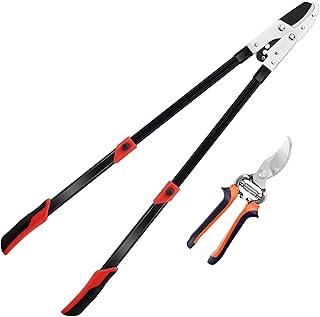
- Head type: anvil, compound mechanism
- Max cut capacity: 2 in
- Telescoping range: 28 to 41 in (6 steps)
- Weight: –
- Handles: aluminum alloy
- Blade: Teflon-coated alloy steel
The YRTSH Heavy Duty Loppers Branch Cutter closes the set as a straightforward heavy-duty anvil option for removing larger dead branches in spring. Its handles extend from twenty-eight to forty-one inches in six steps, so you can match the length to the branch rather than working at full extension all the time. The two-inch cut capacity covers the thickest dead limbs most home orchards need to remove, and the Teflon-coated alloy steel blade resists the sap and grime that build up on blades during spring work. The weight is not listed on the pages we opened, so the article records a dash rather than guessing, and that missing figure is worth checking on the product page if weight matters to you. The aluminum alloy handles keep the tool sturdy without the extra weight of steel.
Pros: Forty-one-inch reach in six steps; two-inch cut capacity; Teflon-coated blade.
Cons: Weight not listed on the pages opened; anvil head suits dead wood more than live wood.
Buying guide
Spring fruit tree pruning rewards patience and the right tool more than brute force. Before you buy, think about the branches you actually cut. Most spring work on apples, pears, plums and cherries involves branches between half an inch and two inches thick, with the bulk of the cuts on water sprouts and crossing growth under one inch. A lopper with a one and three-quarter-inch or two-inch capacity covers that range with room to spare, while a smaller capacity forces you to reach for a saw far more often. If your trees are older and carry a lot of dead wood, an anvil head earns its place; if most of your cuts are live green wood, a bypass head gives cleaner cuts that heal faster.
Reach is the second question. Telescoping handles in this set run from about twenty-six inches collapsed to about forty-one inches extended, and the difference between the shortest and longest models is real when you are standing on the ground. A forty-one-inch reach puts the blades roughly three and a half feet from your hands, enough for lower scaffold branches on a standard fruit tree, but it does not replace a pole saw for the upper canopy. When you compare models, look at both the collapsed length and the extended length: a short collapsed length is easier to carry and store, while a long extended length reaches further. The number of locking steps matters too, since a six-step handle lets you fine-tune the length for each branch instead of working at full extension all day.
Weight is the third question, and it matters more than most buyers expect. The lightest model here weighs about two and eight-tenths pounds and the heaviest about four and two-tenths pounds, a gap of roughly one and a half pounds. That gap sounds small on paper, but over an hour of overhead cutting it is the difference between steady hands and tired arms. If you prune several trees in one session, favour the lighter models and save the heavier ones for shorter jobs or for the few thick cuts where their extra leverage helps. Handle material plays into this: aluminum and FiberComp handles keep weight down, while steel handles add strength at the cost of extra pounds.
Head type deserves a clear decision before you buy. A bypass head has two blades that slide past each other like scissors, and it makes a clean slice through live wood, which is what you want in spring when the tree is about to grow. An anvil head has one straight blade that closes onto a flat plate, and it crushes the wood as it cuts, which is fine for dead wood but leaves a rougher wound on live branches. Many gardeners end up owning one of each, and this set includes both types for that reason. If you can only buy one pair, choose the head type that matches the wood you cut most often, and be honest about how much dead wood your trees actually carry.
Cut capacity figures need care. Makers list a maximum cut, but that figure is usually measured on soft, straight, green wood under ideal conditions. A lopper listed at two inches may struggle on a two-inch branch of hard, dry apple wood, and the HAUTMEC in this set is the only model that states separate figures for fresh and dried wood. When you read a cut capacity, treat it as an upper limit rather than a working size, and expect comfortable cutting at about three-quarters of the listed figure on typical orchard wood. That habit keeps you from forcing a cut, which is when blades chip and bark tears.
Spec conflicts are normal in this market, and this article has stated them plainly rather than hiding them. When two sources give different weights, lengths or cut capacities for the same model, the difference usually comes from different production runs, different ways of measuring, or a retailer copying an old specification. The safe approach is to check the maker page and one retailer page for the model you are considering, and to treat any figure that appears in only one place with care. Missing figures, such as the weight of the YRTSH model here, are marked with a dash in this article, and you should confirm them on the product page before deciding.
Finally, think about care. Telescoping handles collect grit in their locking collars, and spring work adds sap and damp to the mix. Wiping the blades and the sliding sections after each session keeps the mechanism moving freely, and a light coat of oil on the blade helps it resist rust during the months the lopper sits in the shed. A sharp blade cuts cleanly with less effort, so keep the edge dressed and replace the blade when the maker offers a spare, as the AIRAJ model does. A lopper that is easy to maintain is one you will reach for every spring, and that habit matters more than any single specification.
FAQ
When in spring should I prune fruit trees?
Prune in late winter or early spring, before buds open and while the tree is still dormant, so you can see the branch structure clearly and the cuts heal quickly once growth starts. Avoid pruning when frost is forecast in the next few days, since fresh cuts are more exposed to cold damage. For most temperate regions, the window runs from the last hard frosts through bud swell, and stone fruit such as plums and cherries are often pruned a little later than apples and pears.
Should I use a bypass or an anvil lopper for spring fruit tree pruning?
Use a bypass lopper for live wood, which is most of what spring pruning removes, because the scissor action makes a clean cut that heals well. Use an anvil lopper for dead wood, where the crushing action is less of a concern and the extra force helps on hard, dry branches. If you own one pair only, choose bypass for a young orchard with mostly live growth, and anvil for an older orchard with a lot of dead wood to clear.
How thick a branch can a telescoping lopper cut?
The models in this set list cut capacities from one and a half inches to two inches, and those figures are upper limits measured under good conditions. In practice, expect comfortable cutting at about three-quarters of the listed figure on typical orchard wood, and reach for a pruning saw for anything thicker. Forcing a lopper past its comfortable range risks chipping the blade and tearing bark.
How do I keep telescoping handles from slipping during a cut?
Extend the handles fully to the length you need and check that each locking collar or button is seated before you start the cut. A handle that slips mid-cut can twist the blades and tear the branch. After the session, wipe grit and sap from the sliding sections so the locks keep engaging cleanly, and avoid over-tightening the collars, which can wear the mechanism over time.
Can one telescoping lopper replace a pole saw?
No, not for the upper canopy. A telescoping lopper reaches about three and a half feet from your hands, which covers lower scaffold branches from the ground, but the upper branches of a standard fruit tree still need a pole saw or a ladder. The lopper is the right tool for the lower two-thirds of the tree and for detail work where you need to see the cut up close.
What should I do with the cut branches after spring pruning?
Remove the cut branches from under the tree, since dead wood left on the ground can shelter pests and disease over the season. Healthy green cuttings can go into the compost, while thicker branches can be cut into short lengths for firewood or chipped for mulch. Check local rules before burning garden waste, and keep diseased wood out of the compost pile.
Conclusion
Spring fruit tree pruning is a job where the right telescoping lopper makes the work faster, cleaner and easier on your arms. The Corona DualLINK SL4364 leads this set because it pairs a bypass head with a compound mechanism and a cut capacity of one and three-quarter inches, covering most live-wood cuts in a home orchard. The WORKPRO WP332007 follows as a lighter bypass option, and the Fiskars SmartFit L86 is the lightest carry of all, with the honest caveat that its cut capacity figures conflict across sources. On the anvil side, the AIRAJ 2717 and THANOS B1102 offer the longest reach at forty-one inches, the HAUTMEC HT0461 gives the clearest fresh and dried cut figures, and the YRTSH rounds out the set as a sturdy heavy-duty choice. Pick the head type that matches the wood you cut most, check the reach and weight against the trees you own, and confirm any disputed specification on the product page before you buy. With the right pair in hand, spring pruning becomes a straightforward morning's work, and your trees will show the difference in the season that follows.
Related guides
More from Amazon
Programs that pair well with the guide above. Offers and eligibility are set by Amazon and may change.
Collect the home and kitchen items you want in one registry that guests can shop from.
Create a wedding registrySet up recurring deliveries of everyday items on eligible products. Terms and savings are set by Amazon.
Explore Subscribe & SaveFree shipping on eligible items, Prime Video and more. Eligible new members can start with a free trial.
Start a Prime free trialAudiobooks and podcasts to listen to on the go. Eligible new members can start with a free trial.
Try Audible freeAs an Amazon Associate we earn from qualifying purchases.
More ways to save on your garden
Programs that pair well with the guide above. Offers and eligibility are set by Amazon and may change.
Fast, free shipping on eligible items, plus Prime Video and more. Eligible new members can start with a free trial.
Start a Prime free trialSet up recurring deliveries of everyday items on eligible products. Terms and savings are set by Amazon.
Explore Subscribe & SaveRead from a huge library of eBooks, including how-to guides and cookbooks. Eligible new members can start with a free trial.
Try Kindle UnlimitedAudiobooks and podcasts for the commute, the garage or the kitchen. Eligible new members can start with a free trial.
Try Audible freeAs an Amazon Associate we earn from qualifying purchases. Using these links costs you nothing extra.



Write Your Review
No reviews yet. Be the first to share your experience!