
Key takeaways
- Telescoping tree loppers for high tree limbs compared: maximum reach, weight and control, with seven models that keep overhead cuts steady, safe and controlled.
What's inside
As an Amazon Associate I earn from qualifying purchases. This post may contain affiliate links at no extra cost to you.
High tree limbs are the hardest lopper work because the cut happens overhead, at the end of a long handle, with tired arms. The best telescoping tree loppers for reaching high tree limbs extend to 40 or 41 in while staying light enough to control. This guide compares seven telescoping models built for height, led by an anvil lopper that reaches 41 in and carries a spare blade.
Overhead work punishes heavy tools. A lopper that feels fine at waist height becomes hard to control at full extension, and a cut that needs a lot of force is harder to finish when the arms are raised. Light builds, aluminum handles and mechanisms that multiply hand force all help, and the set below is chosen with those needs in mind. The trade is always the same: more reach means more weight at the far end.
The upper canopy mixes living and dead wood, so the set below carries both bypass and anvil heads. Bypass blades suit the living limbs, anvil heads suit the dry, brittle stems, and ratchet mechanisms help on limbs that cannot be finished in one squeeze. The seven models cover that range, and the right pick depends on how high the limbs sit and how much of the work is dead wood.
Quick verdict
For most high-limb work, the AIRAJ 2717 is the strongest single pick, with a 41 in reach, a 2 in cut capacity and a spare blade in the box. Gardeners who want the lightest tool should look at the HAUTMEC HT0461 at 1.53 kg, while the Fiskars 391681 is the best bypass option for living limbs overhead. The table below sets out the seven models at a glance.
The set is deliberately mixed: three bypass models for the living limbs and four anvil models for the dead stems, with extensions from 35.8 to 41 in and weights from 1.53 kg to 4.17 lb. That range covers the upper canopy, and the sections below explain where each model belongs.
| product | key spec | best for |
|---|---|---|
| AIRAJ 2717 Telescoping Anvil Lopper | 2 in; extends 27 to 41 in | High dead limbs |
| Fiskars Power-Lever Telescoping Bypass Lopper 391681-1008 | 1-3/4 in; extends 25 to 37 in | High green branches |
| HAUTMEC HT0461 Extendable Anvil Lopper | 2 in fresh, 1.4 in dried; extends 27 to 37 in | Mixed fresh and dry wood |
| Radius Garden 37 inch Ratcheting Bypass Lopper with Telescoping Handles | up to 1.77 in; extends to 37 in (collapsed length not stated) | Green branches at height |
| Spear & Jackson 8090RS Razorsharp Telescopic Ratchet Bypass Lopper | 42 mm per one listing vs 45 mm per another; extends 460 to 720 mm per one listing, but a listing Q&A says closed 27 in and extended 39 in | High green limbs |
| Spear & Jackson 8290RS Razorsharp Heavy Duty Telescopic Ratchet Anvil Lopper | 2 in; extends to 40-1/2 in (collapsed length not stated) | High dead limbs |
| THANOS B1102 Extendable Anvil Lopper | 2 in; extends 27 to 41 in (6-section) | High dead limbs |
How we chose
The seven models below were drawn from verified lopper pools, with each product checked against its listed specifications on pages that were actually opened. The set favours long telescoping reach and light builds because the work happens overhead, with bypass and anvil heads mixed because the upper canopy carries both living and dead wood. Where listings disagree on a figure, the conflict is stated plainly in the section for that model, and the conservative figure is the one to plan around.
The comparison also weighs how each tool behaves overhead rather than on a specification sheet alone. A light build that stays accurate at full extension is worth more than a slightly larger cut capacity on a heavy tool, and a ratchet that advances the cut in stages matters more than raw force when the arms are raised. The set was chosen so that every model has a clear role: a lead for the highest limbs, a light option for long overhead sessions, and a bypass model for the living wood. No single lopper does everything well, and the sections below make the trade-offs plain.
AIRAJ 2717 Telescoping Anvil Lopper
- Type: anvil
- Max cut: 2 in
- Telescoping: 27 to 41 in
- Weight: 3.5 lb
- Handles: aluminum
- Blade: SK5 Teflon-coated
- Spare SK5 blade included
The AIRAJ 2717 Telescoping Anvil Lopper leads this set because height is the whole job, and it reaches 41 in, the longest extension here. Its 2 in cut capacity covers most limbs in the upper canopy, the SK5 blade carries a Teflon coating that keeps dry bark from dragging, and a spare SK5 blade comes in the box, which is a thoughtful touch for a tool that works far from the shed. At 3.5 lb with aluminum handles it stays manageable at full extension, though the work is still overhead and tiring. Verification rests on a mirror listing page, so the details should be read with care, but for a dead limb high in a tree, the reach is the deciding feature.
Pros: Longest reach here at 41 in; Spare blade included; Teflon-coated SK5 blade.
Cons: Verification rests on a mirror listing page; Anvil head only.
Fiskars Power-Lever Telescoping Bypass Lopper 391681-1008
- Type: bypass
- Max cut: 1-3/4 in
- Telescoping: 25 to 37 in
- Weight: 3.55 lb per one retailer listing (other listings give 3.69 lb or 4 lb)
- Handles: steel with Softgrip covers
- Power-Lever compound leverage (not a ratchet)
The Fiskars Power-Lever Telescoping Bypass Lopper 391681-1008 is the bypass entry for high limbs, and it earns its place because the upper canopy holds living wood as well as dead. Its telescoping handles move from 25 to 37 in, the Power-Lever compound leverage keeps the cut smooth when the arms are tired, and the 1-3/4 in cut capacity covers most live limbs overhead. The bypass blade leaves a clean face that the tree can seal, which matters more on living wood than on dead. Weight listings disagree, with one retailer giving 3.55 lb and others giving 3.69 lb or 4 lb, and the steel handles add weight at full extension, so it suits short, deliberate cuts rather than a long overhead session.
Pros: Telescoping reach to 37 in; Compound leverage; Bypass blade gives clean cuts on green wood.
Cons: Weight listings disagree; Steel handles add weight at full extension.
HAUTMEC HT0461 Extendable Anvil Lopper
- Type: anvil
- Max cut: 2 in fresh, 1.4 in dried
- Telescoping: 27 to 37 in
- Weight: 1.53 kg (3.4 lb)
- Handles: aluminum oxide
- Blade: CrV steel Teflon-coated
- Compound mechanism (3x)
The HAUTMEC HT0461 Extendable Anvil Lopper is the light option for high work, weighing 1.53 kg while extending from 27 to 37 in. Overhead cutting punishes heavy tools, and this one stays accurate when the arms tire because the compound mechanism does much of the work. The CrV steel blade carries a Teflon coating, and the cut capacity is honest, giving 2 in on fresh wood and 1.4 in on dried wood, which helps the gardener pick the right limb for the tool. Verification rests on a mirror listing page, so the figures deserve a cautious reading, but for a long session of high dead-wood clearing, the light build is the feature that matters most.
Pros: 2 in fresh cut capacity; Light 3.4 lb build; Teflon-coated blade.
Cons: Dried-wood capacity drops to 1.4 in; Verification rests on a mirror listing page.
Radius Garden 37 inch Ratcheting Bypass Lopper with Telescoping Handles

- Type: bypass
- Max cut: up to 1.77 in
- Telescoping: to 37 in (collapsed length not stated)
- Ratchet mechanism
- Weight: not listed
- Handles: not listed
The Radius Garden 37 inch Ratcheting Bypass Lopper with Telescoping Handles brings a ratchet to high green limbs, and the combination suits overhead work well. The ratchet lets the cut advance in stages, which keeps the blade from slipping on a smooth green stem when the arms are extended, and the bypass edge leaves a clean face. It reaches 37 in at full extension, and the 1.77 in cut capacity covers most live limbs in the upper canopy. The maker does not state a collapsed length or a weight, so the tool is best used extended to a comfortable working length and carried open. For a green limb overhead, the staged cut is a real advantage.
Pros: Ratchet action works in stages; Reaches 37 in; Bypass blade for clean green cuts.
Cons: Collapsed length and weight not listed.
Spear & Jackson 8090RS Razorsharp Telescopic Ratchet Bypass Lopper
- Type: bypass
- Max cut: 42 mm per one listing vs 45 mm per another
- Telescoping: 460 to 720 mm per one listing, but a listing Q&A says closed 27 in and extended 39 in
- Weight: 1.62 kg (3.57 lb)
- Handles: aluminum
- Blade: C50 carbon steel PTFE-coated
The Spear & Jackson 8090RS Razorsharp Telescopic Ratchet Bypass Lopper is the compact reach option in this set, with a C50 carbon steel blade carrying a PTFE coating and aluminum handles. Its ratchet mechanism helps on green limbs overhead, and the 1.62 kg weight keeps the tool steady at full extension. Listings disagree on its dimensions, with one giving 460 to 720 mm and a listing Q&A giving a closed length of 27 in and an extended length of 39 in, and on its cut capacity, giving 42 mm in one place and 45 mm in another, so the conservative figures are the ones to plan around. Those conflicts mean the tool should be judged on its visible build, but the blade steel and the light build suit high green limbs.
Pros: PTFE-coated C50 blade; Aluminum handles; Ratchet action.
Cons: Length and cut listings disagree across sources.
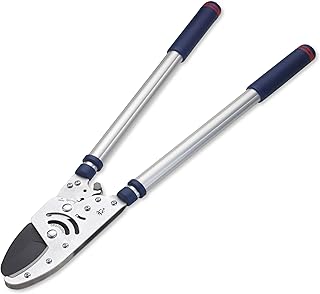
Spear & Jackson 8290RS Razorsharp Heavy Duty Telescopic Ratchet Anvil Lopper
- Type: anvil
- Max cut: 2 in
- Telescoping: to 40-1/2 in (collapsed length not stated)
- Weight: 4.17 lb
- Handles: aluminum telescopic shaft
- Blade: SK5 carbon steel PTFE-coated
- Ratchet mechanism
- Maker-backed 10-year coverage period
The Spear & Jackson 8290RS Razorsharp Heavy Duty Telescopic Ratchet Anvil Lopper is the heavy-duty anvil for high dead limbs. Its SK5 carbon steel blade carries a PTFE coating, the ratchet mechanism works in stages on brittle wood, and the telescoping shaft reaches 40-1/2 in. At 4.17 lb it is the heaviest tool in this set, and the collapsed length is not stated, so it suits gardeners who extend it once and work at that length rather than adjusting it constantly. The maker backs it with a 10-year coverage period, which is a useful sign for a tool that will see hard use. For a thick dead limb high in a tree, the combination of ratchet stages and long reach is exactly what the work calls for.
Pros: 2 in cut capacity; Reaches 40-1/2 in; SK5 PTFE-coated blade.
Cons: Heavy at 4.17 lb; Collapsed length not stated.
THANOS B1102 Extendable Anvil Lopper
- Type: anvil
- Max cut: 2 in
- Telescoping: 27 to 41 in (6-section)
- Weight: 3.52 lb
- Handles: aluminum with rubber grips
- Blade: SK-5 Teflon-coated
- Compound 4-bar mechanism
The THANOS B1102 Extendable Anvil Lopper closes this set with a 27 to 41 in extension in six sections and a 2 in cut capacity. Its compound 4-bar mechanism adds force through the cut, the SK-5 blade carries a Teflon coating, and the aluminum handles with rubber grips stay secure overhead. At 3.52 lb it is light enough for high work, and the six-section extension lets the gardener set the length in small steps. Verification rests on a roundup page rather than a maker page, so the figures deserve a cautious reading, and the anvil head means it belongs on dead wood. For a high dead limb that needs a long, steady reach, it is a practical final pick.
Pros: Reaches 41 in; 2 in cut capacity; Rubber grips.
Cons: Verification rests on a roundup page; Anvil head only.
Buying guide
Maximum extension is the first number to check on a high-limb lopper. The models here extend to 37, 39, 40, 40-1/2 or 41 in, and the right length depends on the height of the highest limb from a comfortable stance. Pin-locked stops and multi-section extensions hold the chosen length firmly, while friction collars can slip under load. A tool at full extension is heavier in the hands and harder to control, so the longest model is not always the most comfortable one.
Weight decides whether an overhead cut lands where it should. A tool around 1.53 kg or 3.5 lb stays accurate when the arms tire, while a 4.17 lb tool at full extension is tiring and the cut suffers. Aluminum handles save weight against steel, and a light build matters more overhead than on the ground. Gardeners who work overhead for long sessions should favour the lighter models here and accept a smaller cut capacity in return.
Bypass blades suit the living limbs in the upper canopy because they leave a clean face that the tree can seal, while anvil heads suit the dry, brittle stems that accumulate up high. The two heads behave differently overhead: a bypass blade needs a smooth, single motion, while an anvil head with a ratchet can advance in stages, which is easier when the arms are raised. Carry both types if the canopy mixes living and dead wood.
Ratchet mechanisms are worth more overhead than anywhere else, because a cut that cannot be finished in one squeeze is hard to hold at arm's length. A ratchet lets the blades advance in stages, with each squeeze holding its progress, so the gardener can pause and reset the grip. The mechanism adds moving parts, so the pivot needs to be kept clean of bark dust, and the locks should be checked before each session.
High limbs can fall without warning, so stand to the side of the limb, cut in short stages, and keep the area below clear. Wear eye protection and gloves, and avoid working overhead in wind. A sharp blade needs less force, which keeps the cut controlled, so wipe bark dust from the blades after each session and keep the pivot clean. Store the tool dry with the handles collapsed.
Choosing by the height of the limbs keeps the purchase simple. Limbs within 37 in of reach need only a light bypass tool, while limbs at 40 or 41 in need the longest models and a ratchet to finish the cut. Gardeners with several trees should favour the models with pin-locked stops or multi-section extensions, since a length that holds firm under load is worth more than a slightly longer maximum extension that slips. Gloves and eye protection matter as much as the tool here, since high limbs can fall without warning, and a sharp blade needs less force, which keeps every cut controlled. Check the collapsed length as well, since a tool that collapses short is easier to carry between trees and to store.
FAQ
How much reach do I need for high limbs?
The models here extend to 37, 39, 40, 40-1/2 or 41 in. Measure the highest limb from a comfortable stance and choose a maximum extension a little beyond it. A tool at full extension is heavier in the hands, so the longest model is not always the most comfortable one, and a ladder is still the safer choice for limbs far beyond these lengths.
Why does weight matter more overhead?
A lopper that feels fine at waist height becomes hard to control at full extension, because the weight sits at the far end of a long lever. A light build around 1.53 kg or 3.5 lb stays accurate when the arms tire, while a heavy tool makes the cut wander. Aluminum handles save weight against steel, and a light tool is the safer choice for long overhead sessions.
Should I use a bypass or an anvil lopper up high?
A bypass blade suits the living limbs in the upper canopy because it leaves a clean face that the tree can seal, while an anvil head suits the dry, brittle stems that accumulate up high. The upper canopy mixes both, so the practical answer is to carry a bypass model for the living wood and an anvil model for the dead stems.
Why do listings disagree on length or weight?
Listings disagree because different sellers measure or round figures differently, and because some pages carry older data. This guide states the conflict plainly in each product section and uses the conservative figure for planning. When two sources disagree by a wide margin, the tool should be judged on its visible build and on the figures that most sources agree on.
How does a ratchet help overhead?
A ratchet lets the blades advance in stages, with each squeeze holding its progress, so the gardener can pause and reset the grip. That matters overhead, where a cut that cannot be finished in one squeeze is hard to hold at arm's length. The mechanism adds moving parts, so the pivot needs to be kept clean of bark dust.
How do I stay safe cutting high limbs?
Stand to the side of the limb, cut in short stages, and keep the area below clear, since high limbs can fall without warning. Wear eye protection and gloves, and avoid working overhead in wind. A sharp blade needs less force, which keeps the cut controlled, so keep the blades clean and the pivot free of bark dust.
Conclusion
Long reach, a light build and a staged cutting mechanism are the three things that matter most on high tree limbs. The AIRAJ 2717 leads this set on reach, the HAUTMEC HT0461 is the lightest way to 37 in, and the Fiskars 391681 is the best bypass option for living limbs overhead. The ratchet models in the set cover the thick limbs that cannot be finished in one squeeze.
Choose by the height of the limbs and the share of dead wood in the canopy. A tall tree with mostly living growth needs a light bypass tool, while one with a lot of dead wood needs an anvil head and a ratchet. Keep the blades clean, cut in short stages, and let the reach of the tool do the work.
Start with the lead model if the high limbs are mixed, and add the lightest or longest specialist only when the height or the dead wood is a real share of the work. A sharp blade and clean habits matter more than any single feature, and a lopper that is wiped free of bark dust and stored dry will outlast one that is left dirty. The seven models above give a clear path for every tall tree, from a canopy with mostly living growth to one with a lot of dead wood, and the right choice is the one that fits the trees in the garden.
Related guides
More from Amazon
Programs that pair well with the guide above. Offers and eligibility are set by Amazon and may change.
Collect the home and kitchen items you want in one registry that guests can shop from.
Create a wedding registrySet up recurring deliveries of everyday items on eligible products. Terms and savings are set by Amazon.
Explore Subscribe & SaveFree shipping on eligible items, Prime Video and more. Eligible new members can start with a free trial.
Start a Prime free trialAudiobooks and podcasts to listen to on the go. Eligible new members can start with a free trial.
Try Audible freeAs an Amazon Associate we earn from qualifying purchases.
More ways to save on your garden
Programs that pair well with the guide above. Offers and eligibility are set by Amazon and may change.
Fast, free shipping on eligible items, plus Prime Video and more. Eligible new members can start with a free trial.
Start a Prime free trialSet up recurring deliveries of everyday items on eligible products. Terms and savings are set by Amazon.
Explore Subscribe & SaveRead from a huge library of eBooks, including how-to guides and cookbooks. Eligible new members can start with a free trial.
Try Kindle UnlimitedAudiobooks and podcasts for the commute, the garage or the kitchen. Eligible new members can start with a free trial.
Try Audible freeAs an Amazon Associate we earn from qualifying purchases. Using these links costs you nothing extra.

Write Your Review
No reviews yet. Be the first to share your experience!