
Key takeaways
- Five compact walk-behind broadcast spreaders with pneumatic tires for uneven, bumpy yards, compared on hopper capacity, tire size and edge control features.
As an Amazon Associate I earn from qualifying purchases. This post may contain affiliate links at no extra cost to you.
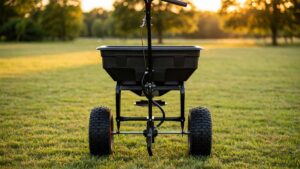
A spreader earns its keep on the worst part of the lawn, not the best. On smooth turf almost any wheeled hopper rolls evenly, but on rutted, sloping or frost-heaved ground the wheels decide everything: small hard wheels drop into every hollow and bounce the hopper, while air-filled tires roll over the same ground and keep the spinner plate turning at a steady height. The best compact lawn spreaders with pneumatic wheels for uneven bumpy yards are the smaller walk-behind broadcast models — hoppers of 40 to 60 pounds — that pair that air-filled ride with a compact frame that is easy to store and easy to push.
All five spreaders below were verified on opened product pages, and each one states pneumatic tires on its own page or its maker's dealer page. That gate matters more than it sounds. At least one current 50-pound push spreader that looks identical to a pneumatic model in photographs ships with flat-free solid tires, and its own listing says so; it was left out of this article for exactly that reason, and the exclusion is recorded in the research notes. Mechanism honesty matters too: every pick here is a broadcast (rotary) spreader, which throws material in a fan pattern. None of them is a drop spreader, and the buying guide explains when that difference should change the choice.
Compact sizing has a second benefit on rough ground. A 40- to 60-pound hopper, filled, keeps the total rolling weight low enough that the tires — rather than the operator — absorb the bumps, and the machine stays easy to turn at the headland instead of plowing straight when it hits a ridge.
Quick verdict
The EarthWay 2600A-Plus is the smallest and nimblest pick, a 40-pound hopper on pneumatic tires with EarthWay's three-hole drop shut-off. The Brinly P20-500BHDF-A is the most complete package, with a deflector kit and hopper grate in the box and stainless hardware throughout. The John Deere 60-pound spreader is the value pick: pre-assembled, pneumatic tires, and the largest hopper here at the lowest page price in the set. The EarthWay 2150 is the rough-ground specialist, with 13-inch stud tires its maker explicitly aims at uneven patches. The ECHO RB-60 is the commercial-flavored option, with a foot-operated deflector and a maintenance-free gear case.
| Product | Key spec | Best for |
|---|---|---|
| EarthWay 2600A-Plus | 40 lb hopper, pneumatic tires, 3-hole drop shut-off | Small, rough lawns and tight storage |
| Brinly P20-500BHDF-A | 50 lb hopper, 12 x 3 in pneumatic turf tires, deflector included | Buyers who want the full kit in one box |
| John Deere 45-0566-JD | 60 lb hopper, 10 x 3.5 in pneumatic tires, pre-assembled | Largest capacity with no assembly |
| EarthWay 2150 | 50 lb hopper, 13 in pneumatic stud tires | The roughest, most uneven ground |
| ECHO RB-60 | 60 lb hopper, 10 in pneumatic tires, foot-operated deflector | Frequent use and quick edge control |
How we chose
Each spreader was verified on an opened page — its Amazon product page in every case, plus the maker's dealer page for the ECHO, whose Amazon listing is a sparse marketplace page. The pneumatic requirement was applied strictly: the opened page had to state pneumatic (air-filled) tires for the specific model. A sibling Agri-Fab listing that shares its platform with one pick below was excluded because its page states flat-free tires instead; platform similarity was not allowed to substitute for the wording on the page.
Compact was defined by hopper capacity and format: walk-behind broadcast spreaders of 40 to 60 pounds of hopper capacity. Tow-behind models were out of scope for this keyword, as were the 80- to 130-pound push models, which are built for acreage rather than for the smaller, rougher yards this keyword describes. Drop spreaders were also left out: the genuine drop-spreader pool with pneumatic tires is a small, separate group of five models program-wide, and mixing mechanisms in one ranking would mislead a buyer about spread pattern.
Within the gate, the ranking weighs tire size and tread (larger, wider tires bridge ruts better), edge control (side deflectors and spread-pattern controls keep material off paths and beds), and drive-train protection (enclosed gearboxes survive fertilizer dust, which is abrasive and corrosive). Hopper material, grate inclusion and assembly state were recorded from each page as listed.
The picks in detail
EarthWay 2600A-Plus Broadcast Spreader, 40 lb
- Hopper: 40 lb rustproof poly
- Tires: pneumatic, all-terrain (diameter not stated on the product page)
- Metering: EV-N-SPRED 3-hole drop shut-off system
- Linkage: solid linkage (not a cable)
- Frame: epoxy powder-coated steel
- Gearbox: high-speed, factory sealed per the maker's material
The 2600A-Plus is the compact end of EarthWay's line and the easiest of these five to live with in a small shed. The maker lists a rustproof poly hopper on an epoxy powder-coated steel frame, pneumatic tires for all-terrain use, and the EV-N-SPRED three-hole shut-off, which meters material through three ports so the pattern stays balanced from side to side as the hopper empties. Solid linkage between the handle control and the shut-off plate is a quiet advantage on rough ground: unlike a cable, it does not stretch or change the rate setting when the frame flexes over a bump.
A 40-pound hopper means more refills than the 60-pound models here — roughly one fill for a medium suburban lawn with a typical fertilizer. For the smaller, bumpier yards in this keyword, that trade buys a lighter push and tighter turns. The tire diameter is not stated on the product page, so this article does not claim one; what the page states is pneumatic, all-terrain fitment.
Pros:
- Smallest, lightest format in the group
- Solid linkage holds its rate setting over rough ground
- Three-hole shut-off keeps the pattern even
- Rustproof hopper and coated frame suit fertilizer storage
Cons:
- 40 lb hopper needs refilling on larger lawns
- Tire diameter not stated on the product page
- No side deflector listed among its features
Brinly P20-500BHDF-A Push Spreader, 50 lb
- Hopper: 50 lb rust-proof, with hopper grate included
- Tires: 12 x 3 in pneumatic turf-tread
- Edge control: side deflector kit included, flips up out of the way
- Gearbox: fully enclosed, rust-resistant
- Hardware: stainless steel hardware, shaft and agitator
- Weight: 28.5 lb as listed
The Brinly is the most completely equipped spreader in this article. The deflector kit that most makers sell separately is in the box, and it flips down to keep material off driveways and beds, then up for open ground. The maker lists a fully enclosed, rust-resistant gearbox and stainless steel for the hardware, shaft and agitator — the three parts that fertilizer dust attacks first — plus a hopper grate to break up clumps before they reach the shut-off.
Its 12 x 3 inch pneumatic turf tires are a sensible middle size for bumpy yards: wide enough to bridge shallow ruts, with a turf tread that grips without tearing grass. At a listed 28.5 pounds empty it is easy to hang or shelve. Calibration controls are described as easy to reach, which matters when the rate needs changing mid-job between seed and fertilizer settings.
Pros:
- Deflector kit and hopper grate included
- Stainless shaft, agitator and hardware resist fertilizer corrosion
- Enclosed gearbox
- Mid-size pneumatic turf tires suit mixed ground
Cons:
- Highest page price in this set
- 50 lb hopper is mid-pack for capacity
- Deflector adds a step when swapping between edge and open work
John Deere 60 lb Push Broadcast Spreader (45-0566-JD)
- Hopper: 60 lb no-rust poly — the largest in this group
- Tires: 10 x 3.5 in pneumatic
- Coverage: up to 11,000 sq ft per fill, per the maker
- Control: cable flow control, steel U-shaped push handle
- Assembly: pre-assembled, per the maker
- Warranty: 2-year limited
- Build note: built by Agri-Fab, per the listing
The John Deere entry is the capacity-and-convenience pick. Its 60-pound hopper is the biggest here, the maker lists coverage of up to 11,000 square feet per fill, and it arrives pre-assembled — a real consideration for a buyer who would rather spread than build. The listing states 10 x 3.5 inch pneumatic tires, a cable flow control and a steel U-shaped handle, and the spreader carries a two-year limited warranty.
One disclosure belongs with this pick. The spreader is built by Agri-Fab on the 45-0566 platform, and the Agri-Fab-branded version of that platform states flat-free tires on its own product page. The two listings differ in the tire they describe, and this article follows each page's own wording: the John Deere listing states pneumatic tires, so it is the one included, and the Agri-Fab-branded listing was excluded. A buyer comparing the two side by side should read the tire line on whichever page they order from.
Pros:
- Largest hopper in the group at 60 lb
- Pre-assembled from the box
- Pneumatic tires stated on its own page
- Two-year limited warranty
Cons:
- Cable flow control can stretch over time compared with solid linkage
- Platform twin is sold with different tires under another brand — read the listing carefully
- 10 in tires are smaller than the EarthWay 2150's
EarthWay 2150 Commercial Broadcast Spreader, 50 lb
- Hopper: 50 lb rustproof poly
- Tires: 13 in pneumatic stud tires on rustproof poly rims
- Metering: EV-N-SPRED 3-hole drop with side-spread control and feathered edging
- Grate: clog-free grate included, slides in and out
- Gearbox: fully enclosed
- Warranty: 1-year limited with lifetime technical support, per the maker
The 2150 is the rough-ground specialist of the five. Its maker's first bullet is aimed squarely at this keyword: the 13-inch high-flotation pneumatic stud tires are described as gliding over rough, uneven patches of lawn. Thirteen inches is the largest tire diameter in this group, and diameter is what carries a wheel over a rut instead of into it; the stud tread adds grip on damp slopes. The side-spread control feathers the pattern edge, so the operator can keep material off paths without shutting down one side unevenly.
The enclosed gearbox and the slide-in clog-free grate suit it to fertilizer and seed alike, and the maker notes the same clog-free behavior under moist conditions, which is when cheap spreaders jam. It is a commercial-pattern machine — the heaviest-duty build here — and its page price is the joint-highest in the set, which is the honest trade for the tire size and the frame.
Pros:
- Largest tires in the group, aimed by the maker at uneven lawns
- Side-spread control with feathered edging
- Enclosed gearbox and clog-free grate
- Commercial-pattern build
Cons:
- Premium page price
- 50 lb hopper, mid-pack capacity
- Stud tread is more aggressive than delicate turf needs
ECHO RB-60 Heavy-Duty Spreader, 60 lb
- Hopper: 60 lb capacity
- Tires: 10 in pneumatic, per the maker's dealer page
- Edge control: foot-operated side deflector
- Gear case: maintenance-free, per the maker
- Frame: powder-coated steel, commercial T-handle
- Weight: 23 lb dry, per the dealer page
- Warranty: 5-year consumer / 90-day commercial, per the dealer page
The RB-60 is the professional's compact spreader. Its distinguishing feature is the foot-operated side deflector: approaching a bed or a path, the operator flips it with a boot without breaking stride or letting go of the T-handle, which is exactly how a spreader gets used on broken ground where stopping and restarting on a slope is awkward. The maker lists a maintenance-free gear case, a heavy-duty agitator, and a powder-coated steel frame, and the dry weight of 23 pounds is the lightest in this group despite the joint-largest hopper.
Verification for this model rests on two opened pages, because its Amazon listing is a thin marketplace page: the Amazon page confirms the model and a 23-pound item weight, and the ECHO dealer page supplies the tire, deflector and gear-case specifications quoted here. One conflict is worth recording: the Amazon spec table prints the warranty as five-year commercial and 90-day residential, while the dealer page states five-year consumer and 90-day commercial; the dealer wording is the one used in this article.
Pros:
- Foot-operated deflector works without stopping
- Lightest in the group at a listed 23 lb dry, with a 60 lb hopper
- Maintenance-free gear case
- Commercial T-handle frame
Cons:
- Amazon listing is sparse; most specifications sit on dealer pages
- Warranty terms are printed inconsistently between pages
- 10 in tires, smaller than the 2150's 13 in
Buying guide
Tire diameter is the rough-ground specification. A wheel rolls over a bump in proportion to its size: a 13-inch tire bridges ruts and frost heaves that stop a 9- or 10-inch tire, and a wider tire floats instead of cutting into soft ground. On genuinely uneven yards, choose the largest pneumatic tires the budget allows; on merely lumpy lawns, 10- to 12-inch tires are enough.
Pneumatic is a claim to verify, not a shape to assume. Air-filled and flat-free solid tires look alike in photographs and are sold on near-identical spreaders. The product page's own wording decides which is fitted — one spreader was excluded from this article on exactly that point. If the page says flat-free, the ride on bumpy ground will be harder and the hopper will bounce more, whatever the pictures suggest.
Broadcast or drop? Every spreader here is a broadcast model: fast, wide, and forgiving of walking pace, but it throws material sideways, so edges need a deflector or a shut-off side. A drop spreader lays material only between its wheels — slower and narrower, but precise along beds. For bumpy open lawn, broadcast with pneumatic tires is the practical choice; the deflectors on the Brinly and the ECHO, and EarthWay's side-spread control, close most of the precision gap.
Enclosed gearboxes survive fertilizer. Fertilizer dust is corrosive and abrasive, and it settles exactly where an open gear set lives. Four of the five picks here enclose the gearbox; the fifth seals it at the factory. After each use, a brush-down and dry storage matter more than any feature on the page.
Match hopper size to the lawn, not the ego. A 60-pound hopper on a small, rough yard means pushing a heavy machine over the worst ground. A 40-pound hopper refilled once can be the easier afternoon. The coverage figure on the John Deere page — up to 11,000 square feet per fill — is a useful yardstick for the class.
Rate settings and linkage. Solid linkage, as on the 2600A-Plus, holds a rate setting when the frame twists over bumps. Cable controls, as on the John Deere, are lighter and simpler but can stretch with age. Either works; what matters is calibrating on a driveway sweep-up before the first lawn pass, whatever the dial says.
Storage favors the compact end of the class. A 40- to 60-pound spreader hangs on a wall hook or stands in a corner without dominating the shed, and an empty, brushed-clean hopper stored dry is what keeps the metering plate and linkage moving freely when the next season starts.
FAQ
Why do pneumatic tires matter so much on bumpy ground?
An air-filled tire deforms over a bump and keeps the hopper level and the spinner turning evenly; a hard wheel drops into the hollow and tips the machine, which surges the flow gate and stripes the application. On rough yards the tire is, in effect, part of the metering system.
Are flat-free tires just as good?
They never puncture, which is their genuine advantage, but they ride harder and transmit more bounce to the hopper. For this keyword — uneven, bumpy yards — the softer ride of pneumatic tires is the point of the selection, and listings that state flat-free fitment were not counted as pneumatic.
What hopper size suits a quarter-acre lawn?
Most quarter-acre lawns take one fill of a 50- to 60-pound hopper for a standard fertilizer application, or two fills of a 40-pound hopper. The John Deere's maker lists up to 11,000 square feet per fill for its 60-pound model, which is a fair guide for the class.
Can these spreaders handle ice melt and salt in winter?
Broadcast spreaders of this class are commonly used for ice melt, and the enclosed gearboxes and rustproof hoppers here suit that work. Salt is harder on steel frames than fertilizer, so a rinse and dry storage after winter use is worthwhile; check the maker's material list for the specific model before the first winter.
How do I keep material off paths and flower beds?
Use the edge tools the spreaders provide: the Brinly's flip-down deflector, the ECHO's foot-operated deflector, or the side-spread control on the EarthWay 2150, which feathers one side of the pattern. Walking the boundary pass with the deflector down, then opening up for the middle of the lawn, is the standard technique.
Do I need to calibrate a new spreader?
Yes. Dial settings are starting points, not measurements. Spread over a clean hard surface for a measured distance, sweep up and weigh the material, and adjust. Granule size varies between brands of fertilizer and seed, so repeat the check when the material changes.
Conclusion
On uneven ground, a compact spreader succeeds or fails at its wheels. The EarthWay 2600A-Plus is the nimble small-yard pick with solid-linkage metering. The Brinly P20-500BHDF-A brings the most complete kit, deflector and grate included, on 12-inch pneumatic turf tires. The John Deere 45-0566-JD offers the largest hopper and no assembly, with pneumatic tires stated on its own listing. The EarthWay 2150 is the rough-terrain choice, its 13-inch stud tires aimed by its maker at exactly the lawns in this keyword. The ECHO RB-60 adds a foot-operated deflector and the lightest dry weight for frequent use. Every pick states pneumatic tires on an opened page — and the one look-alike model that states flat-free tires instead is named in the research notes, so the distinction survives the ordering process too.
Write Your Review
No reviews yet. Be the first to share your experience!