
Key takeaways
- Rotary broadcast spreaders with maker-stated pneumatic tires for spring lawn renovation work, compared on hopper size, spread width, and calibration controls.
As an Amazon Associate I earn from qualifying purchases. This post may contain affiliate links at no extra cost to you.
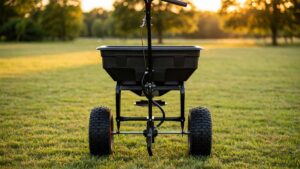
Spring lawn renovation is the heaviest spreading work of the year. In a few short weeks the same machine has to carry seed for bare patches, a full overseeding pass, starter fertilizer, and often a second feed once the new grass is up. Loads are heavy, the ground is still soft from winter, and a spreader on small solid wheels digs in, judders, and throws its pattern off exactly when even coverage matters most. That is why the shortlist of best rotary lawn spreaders with pneumatic wheels for spring lawn renovation starts with the tires: air-filled wheels roll over soft, uneven spring turf instead of ploughing through it.
Every spreader below states pneumatic tires in its maker's own copy on the opened product page. That gate removed several well-known models whose pages describe their wheels only as rubber or all-terrain without the word pneumatic, and those exclusions are named in How we chose. Capacities run from 50 to 130 lb, so the set covers everything from a single suburban lawn to a renovation covering several properties.
A note on sourcing: this programme has already covered compact broadcast spreaders with pneumatic wheels in several sibling articles, including one written for this same spring renovation job. The set below was deliberately rebuilt around models those articles did not use, so only one pick — the larger ZORYX — shares a brand with an earlier set, in a different size class, and that kinship is disclosed in its section and in the sources file.
Quick verdict
The Spyker ERGO-Pro SPY80-1S is the renovation-grade pick: a commercial 80 lb machine whose maker lists 13 by 5 inch pneumatic tires, a dial calibration system, and an adjustment feature aimed at balancing the spread pattern left to right. The VEVOR 130 lb is the capacity pick for big renovation jobs, with 13-inch pneumatic tires and 30 gate settings. The unbranded 100 lb model is the value pick with 25 settings and a rain cover in the box. The ZORYX 100 lb brings the widest tires and an enclosed gearbox, and the MOUMON 50 lb is the compact choice for smaller lawns, with pneumatic wheels and a rain cover of its own.
Comparison table
| Product | Key spec | Best for |
|---|---|---|
| Spyker ERGO-Pro SPY80-1S 80 lb | 13 x 5 in pneumatic tires, Spyker Dial calibration, AccuWay pattern adjustment | Precision renovation work and repeat seasons |
| VEVOR 130 lb Walk-Behind Broadcast Spreader | 13 in pneumatic tires, 30 settings, 12 ft spread width | Large lawns needing few refills |
| 100 lb Walk-Behind Broadcast Spreader (unbranded) | 10 in pneumatic wheels, 25 settings, rain cover included | Value pick with fine rate control |
| ZORYX 100 lb Walk-Behind Broadcast Spreader | 13 in pneumatic tires, enclosed gearbox with grease fitting | Rough or sloping ground during renovation |
| MOUMON 50 lb Push Broadcast Spreader | 12.4 in pneumatic wheels, anti-clog grate, rain cover | Smaller lawns and patch renovation |
How we chose
The pneumatic gate was applied to the maker's own words on each opened page. A spreader qualified only if its page states pneumatic tires or wheels. That rule excluded some familiar names: one 100 lb VEVOR model describes its 13-inch wheels as anti-slip rubber without the word pneumatic, a 100 lb Garvee describes rubber tires the same way, and an EAGWON model in this class fits solid tires, which are the opposite of what this keyword asks for. Those machines may be perfectly serviceable, but they do not meet the stated spec, so they are not in this guide.
The second screen was renovation workload. Spring renovation means repeated heavy loads and at least two different materials — seed and granular fertilizer — whose flow rates differ, so every pick here has a multi-position rate control the maker states, from the MOUMON's control dial to the VEVOR's 30 settings and Spyker's calibration dial. Hopper sizes were spread deliberately across the 50 to 130 lb range so the guide covers patch work and whole-lawn overseeding alike.
Set-building also respected the sibling articles in this programme. The compact pneumatic set used by earlier spring, narrow-strip, and bumpy-yard articles — EarthWay, Chapin, Agri-Fab, Titan, and the smaller VEVOR and ZORYX models among them — was avoided where a verified alternative existed. The result is a mostly fresh set; where a brand repeats, the model and size class differ and the repeat is disclosed rather than hidden.
The products
Spyker ERGO-Pro SPY80-1S 80 lb Walk-Behind Broadcast Spreader
- Hopper capacity: 80 lb per the maker's detailed specifications
- Tires: large pneumatic tires; wheel measurements listed at 13 x 5 inches
- Spread width: 4 to 12 ft per the specification table
- Calibration: Spyker Dial, described by the maker as its calibration system; AccuWay adjustment to balance the spread pattern by altering material flow forward or backward
- Frame and gears: all-welded powder-coated steel frame; all-metal gears fully enclosed, with greaseable zerk fittings
- Hopper design: impact-resistant, bridge-free hopper per the maker; fitted cover included
- Handle: adjustable, ergonomically designed, with a lift handle for moving a full hopper
- Dimensions and weight: 47 x 25 x 36.5 inches; 43 lb shipping weight
Spyker builds spreaders for the professional lawn trade, and the SPY80-1S reads that way on its page: the features list leads with calibration and pattern control rather than capacity. For renovation work that matters, because overseeding at the wrong rate wastes expensive seed on one pass and starves the next. The maker's AccuWay feature addresses the classic broadcast fault — a pattern that throws heavy to one side — by shifting material flow on the plate, and the bridge-free hopper claim addresses the other spring problem, damp fertilizer bridging over the gate on a humid morning.
The 13 by 5 inch pneumatic tires are the widest in this set, and width is what keeps a loaded spreader floating on soft spring soil instead of rutting it. The support stand, which the maker says allows maximum filling without tipping, is a small feature that anyone who has knocked over a full hopper of seed will appreciate. This is the most expensive route into the category among these five, and the price seen on the opened page is recorded in the sources file; what it buys is calibration hardware the others do not list.
Pros:
- Commercial build with dial calibration and pattern balancing
- Widest pneumatic tires in the set for soft ground
- Enclosed metal gears with grease fittings for long service
Cons:
- Highest price point in this group
- 80 lb capacity means more refills than the 130 lb pick on big lawns
VEVOR 130 lb Walk-Behind Broadcast Spreader
- Hopper capacity: 130 lb per the maker's listing
- Tires: 13-inch pneumatic tires, stated for all-terrain use across grass, gravel, and snow
- Spread width: 12 ft broadcast width per the maker
- Rate control: 30 settings, with multi-direction adjustment
- Frame: powder-coated steel frame with a UV-resistant, impact-tough hopper per the maker
- Assembly: key components pre-assembled, no drilling required per the maker
- Storage: detachable handle and hopper for compact storage
Renovation across a large lawn is a refill-count problem before it is anything else, and this is the biggest hopper in the guide. At 130 lb, a single fill carries enough seed for a substantial overseeding pass, and the maker states a 12 ft broadcast width, so wide lawns take fewer passes as well as fewer stops. The 30 gate settings give fine steps between the coarse flow that fertilizer pellets want and the much smaller openings that fine grass seed needs — the two materials a spring renovation alternates between.
The 13-inch pneumatic tires match the Spyker's diameter, which keeps the big hopper rolling over soft ground rather than digging in under its own load. VEVOR's page notes the detachable handle and hopper for storage, a practical touch once the renovation season ends and the machine has to share a shed with everything else. Assembly is stated as largely pre-assembled, which suits a tool most owners want working the same weekend the seed arrives.
Pros:
- Largest hopper in the set at 130 lb
- 30 settings for switching between seed and fertilizer rates
- 13-inch pneumatic tires under the heavy load
Cons:
- A full 130 lb hopper is heavy to push on slopes
- Brand support network is thinner than the professional makes
100 lb Walk-Behind Broadcast Spreader (unbranded)
- Hopper capacity: 100 lb per the listing (the maker text also describes holding up to 80 lb of material in one bullet — see the note below)
- Tires: 10-inch pneumatic wheels, stated to roll over grass, gravel, mud, and snow
- Spread width: up to 12 ft broadcast coverage per the maker
- Rate control: 25 settings for seed, fertilizer, weed control, and ice melt
- Frame: rust-resistant powder-coated steel frame with a UV-stable poly hopper
- Included extras: rain cover, gloves, and tools listed in the box
- Assembly: pre-assembled components, stated at about five minutes
This listing is sold without a brand name on its page, and it carries one internal inconsistency worth stating openly: the title and headline capacity say 100 lb, while one bullet describes the hopper as holding up to 80 lb of material. The conservative reading — plan your fills around the lower figure — is the one this article works from, and the conflict is recorded in the sources file. Even at the lower figure, it sits in the middle of this set for capacity, with a 12 ft stated spread width and the second-finest rate control here at 25 settings.
For spring work, the included rain cover is more useful than it sounds: renovation schedules slip, seed sits in the hopper overnight, and one shower can cake a load of fertilizer. The 10-inch pneumatic wheels are the smallest in the set, which makes this the least floaty option on very soft ground, but they keep the machine compact and easy to turn at the end of each pass on a typical suburban lawn.
Pros:
- 25 settings and a 12 ft stated spread width
- Rain cover included for loaded-hopper storage
- Compact wheels make it easy to manoeuvre in small gardens
Cons:
- Listing is unbranded and states two different capacity figures
- 10-inch wheels are the smallest here for soft spring soil
ZORYX 100 lb Walk-Behind Broadcast Spreader
- Hopper capacity: 100 lb, 56 L hopper per the maker
- Tires: 13-inch all-terrain pneumatic tires, stated in the maker's headline bullet
- Rate control: steel gate linkage with adjustable flow; trapezoidal hopper for distribution
- Frame: powder-coated carbon steel frame with a UV-resistant hopper
- Gearbox: enclosed gearbox with a grease fitting
- Handle: T-shaped handle with rubber grips
- Included extras: rain cover and hopper grate; key components pre-assembled
The ZORYX makes its pneumatic case in the first line of its own copy — 13-inch all-terrain pneumatic tires — and pairs them with the kind of hardware that suits a renovation season on rough ground: an enclosed gearbox with a grease fitting, so the drive that spins the plate is both protected from fertilizer dust and serviceable. The hopper grate earns its place in spring, when bagged fertilizer that has sat in a garage all winter arrives with lumps that would otherwise jam the gate.
Brand note, stated openly: a smaller 50 lb ZORYX appeared in an earlier sibling article in this programme. This is the line's 100 lb model — a different listing with a different hopper, frame, and gate linkage — included because the fresh range of pneumatic-stated spreaders is genuinely small, and the kinship is disclosed here and in the sources file rather than passed over. The T-handle with rubber grips is a comfort feature that matters over a full afternoon of passes.
Pros:
- Pneumatic tires stated in the maker's headline copy
- Enclosed, greasable gearbox and hopper grate included
- Rain cover in the box for spring showers
Cons:
- Brand kinship with a smaller model used in a sibling article
- Fewer rate-control details published than the VEVOR or Spyker
MOUMON 50 lb Push Broadcast Spreader
- Hopper capacity: 50 lb per the maker
- Tires: 12.4-inch pneumatic rubber wheels, stated to give traction without damaging the lawn
- Rate control: control dial for adjustable flow rate
- Frame: epoxy-coated steel frame with stainless steel components, per the maker
- Hopper features: rain cover included; built-in metal anti-clog grate
- Assembly: detailed manual and labelled hardware per the maker
The MOUMON is the compact end of this set, built for the renovation most homeowners actually do: a few bare patches, a thin corner under a tree, and a feed for the whole lawn. A 50 lb hopper is a sensible size for that work — big enough for a full pass over a small to mid-size lawn, light enough to push comfortably when the ground is soft. Its 12.4-inch pneumatic wheels are notably large for the capacity class, which is the right priority for spring: flotation first, capacity second.
The anti-clog grate and rain cover repeat the spring theme seen on the larger picks — lumpy fertilizer and sudden showers are the two routine renovation disruptions, and this maker addresses both in a budget-size machine. The control is a dial rather than a numbered gate, so rate changes between seed and fertilizer are less repeatable than on the Spyker or VEVOR; owners who renovate the same lawn every year may prefer a numbered setting they can write down. For a first renovation, though, the MOUMON covers the spec — pneumatic wheels, stated capacity, adjustable flow — at the smallest footprint here.
Pros:
- Large 12.4-inch pneumatic wheels for its size class
- Rain cover and anti-clog grate included
- Light, compact machine for patch renovation
Cons:
- Dial control is less repeatable than numbered settings
- 50 lb hopper needs refills on larger lawns
Buying guide
Tire size is the first decision, and it is a spring-specific one. Pneumatic tires earn their place because air gives: the tire flattens slightly under load, lengthens its contact patch, and rolls over soft soil and early-season bumps instead of cutting a rut that the next pass has to cross. Diameter matters most — the 13-inch wheels on the Spyker, VEVOR, and ZORYX float better than 10-inch wheels — and width matters next, which is where the Spyker's 13 by 5 inch fitment stands out. Whatever you choose, check the pressure before the season: a soft pneumatic tire is a feature, a flat one is a breakdown.
Match hopper size to the job, not the ego. A 130 lb hopper sounds efficient until you push it, full, up a damp slope; the load in the hopper is weight you supply. For lawns under a quarter acre, the 50 to 80 lb class covers a full overseeding in one or two fills. For half-acre and larger renovations, the 100 to 130 lb machines cut refill stops enough to matter. Remember the unbranded model's lesson: read the maker's own bullets for the working capacity, not just the headline number.
Rate control decides renovation quality. Seed and fertilizer flow differently, and each product's bag prints a target rate. A spreader with many settings — 25 or 30 in this set, or a calibrated dial like Spyker's — lets you land close to that rate and, just as important, return to it next season. Before the real pass, walk a measured test strip on a driveway, sweep up what fell, and weigh it against the bag rate. That ten-minute check is the difference between renovation and guesswork, whatever spreader you own.
Pattern balance is the quiet feature. Broadcast spreaders throw from a spinning plate, and many throw heavier to one side. Spyker's AccuWay exists to correct that; on machines without it, overlap your passes by walking wheel-track to wheel-track and alternate direction between the seed pass and the feed pass, which averages out any one-sided tendency.
Finally, plan for spring weather. A rain cover — included with the ZORYX, MOUMON, and the unbranded model — protects a loaded hopper during a shower break, and an anti-clog grate keeps winter-stored fertilizer flowing. Rinse the hopper and plate after fertilizing, dry the machine before storing it, and the spreader that renovated this spring's lawn will be ready for autumn's overseed.
FAQ
Why do pneumatic tires matter specifically in spring?
Spring soil is soft and often uneven after winter heaving. A pneumatic tire flexes and spreads the load, so a full spreader rolls across that surface instead of digging in and jolting the gate, which keeps both the pattern and the pace even. Every maker in this guide states pneumatic fitment on its page; models whose pages describe only rubber or solid wheels were excluded on that wording.
What size hopper does a spring renovation actually need?
For patch work and small lawns, 50 lb is enough and easier to push. For a full overseed of a quarter acre or more, 80 to 130 lb cuts refill stops. The working figure is the one in the maker's bullets — one listing in this guide headlines 100 lb but describes 80 lb of material in its own text, and the article works from the lower number.
How do I set the rate for seed versus fertilizer?
Start from the rate printed on each product's bag, set the spreader's control to the nearest listed setting, then verify with a test strip over a measured area on a hard surface. Numbered controls — 25 settings on the unbranded model, 30 on the VEVOR, and Spyker's calibration dial — make that setting repeatable next season.
Can these spreaders handle both seed and granular fertilizer?
Yes — that dual duty is the point of the set. Each maker lists seed and fertilizer among the intended materials, and several also list ice melt for winter. Pelletized lime and other dense granules flow more slowly, so expect to open the gate further and walk a test strip before committing to the lawn.
Is the ZORYX the same spreader an earlier guide covered?
No. An earlier sibling article in this programme used the brand's 50 lb model. This is the separate 100 lb listing, with a larger hopper, a different frame, and a greasable enclosed gearbox. The kinship is disclosed in its section and in the sources file.
Conclusion
Spring renovation rewards the spreader that floats, meters, and repeats. The Spyker ERGO-Pro SPY80-1S is the precision choice, with the widest pneumatic tires and genuine calibration hardware. The VEVOR 130 lb is the capacity choice for large lawns, the unbranded 100 lb the value choice with its capacity caveat stated openly, the ZORYX 100 lb the rough-ground choice with a serviceable gearbox, and the MOUMON 50 lb the compact choice for patch work. All five state pneumatic tires in their makers' own words — which, on soft spring ground, is where an even renovation begins.
Write Your Review
No reviews yet. Be the first to share your experience!